
Damping off is one of those gardening problems that can be incredibly frustrating.
You plant a whole tray of seeds, they germinate, and everything looks great. You go to bed feeling pretty pleased with yourself and the next morning a few of the seedlings have fallen over and died. Sometimes almost the entire tray is affected.
Damping off is particularly annoying because there usually isn't much you can do once a seedling has collapsed. The best approach is to prevent it happening in the first place. There are plenty of traditional remedies for damping off. Some have been used by gardeners for generations, some have properties that suggest they might work, and some seem to be mostly gardening folklore.
I've lost trays of seedlings to damping off before, and I've also had seedlings growing in what looked like remarkably poor conditions that suffered no problems at all. I thought it would be interesting to have a look at some of these traditional remedies and consider what we actually know about them.
What Is Damping Off?
Damping off isn't a single disease caused by one organism. It can be caused by several soil-borne fungi and fungus-like organisms, including Pythium, Rhizoctonia, Fusarium and Phytophthora. Some of these are technically oomycetes rather than true fungi, but gardeners generally don't need to worry too much about that distinction. We just want to know why our seedlings are dying.
Damping off can happen at slightly different stages. Sometimes a seed germinates but dies before it ever emerges from the soil. Other times the seedling emerges looking perfectly healthy and then suddenly collapses.
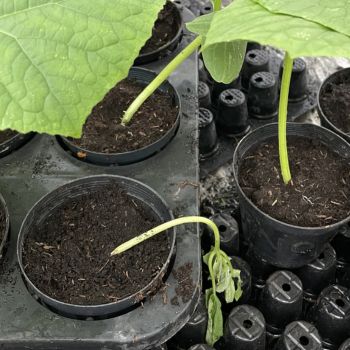
If you look closely at a collapsed seedling, the stem near the surface of the growing medium may be brown, black or unusually thin. It can almost look as though someone has tied a piece of string around the stem.
Once the stem has been damaged like this, the seedling generally isn't going to recover. This is why prevention is much more useful than trying to treat damping off after it appears.
.jpg)
Why Are Seedlings Vulnerable To Damping Off?
Young seedlings are vulnerable because they have tiny roots, tiny stems, and very little room for things to go wrong.
The organisms that cause damping off also thrive in conditions that gardeners often create when germinating seeds. Seeds need moisture to germinate, so we keep the seed-raising mix moist.
Unfortunately, keeping everything constantly wet can create conditions that favour damping off. Poor drainage, overcrowding, high humidity and insufficient air movement can all contribute. Seedlings that are growing slowly because they don't receive enough light can remain vulnerable for longer as well.
There is a bit of a balancing act when growing from seed. The seeds need enough water to germinate, but most seedlings don't want to live in a swamp.
Can A Seedling Recover From Damping Off?
Unfortunately, once the stem has collapsed, there usually isn't much to save. This is different from some other plant problems where a damaged plant can produce new growth or recover after the cause is corrected. With damping off, the tissue at the base of the stem has often been damaged badly enough that the seedling simply can't support itself.
That's why I don't think of damping off as something I want to treat. By the time I can clearly see it, the damage has often already been done. What I want to do is notice the conditions that are likely to cause it and change those before more seedlings are affected.
Don't Look For A Magic Cure
There are many traditional remedies for damping off. Some gardeners swear by chamomile tea. Other people sprinkle cinnamon over their seedlings. Hydrogen peroxide is another popular recommendation. You can also find recipes involving garlic, herbal teas, baking soda, and various other household ingredients.
Some of these substances genuinely have antimicrobial or antifungal properties. That doesn't necessarily mean they prevent damping off in a tray of seedlings. This distinction is important. Something can inhibit fungi in a laboratory experiment and still not be an effective treatment when a small amount is added to wet seed-raising mix.
I like experimenting with things in the garden, so I'm certainly not against trying traditional remedies. I just wouldn't sacrifice a whole tray of valuable seedlings to find out whether something works.
Traditional Remedies Aren't The Only Traditional Knowledge
There is also an important distinction between a traditional remedy and a traditional gardening practice.
When people talk about traditional remedies, they often mean something they can add to the plant or growing medium. But some of the oldest gardening knowledge is much less glamorous. Don't overcrowd your seedlings. Don't leave them sitting in saturated soil. Give them enough light. Keep your pots clean. Watch your plants. These are traditional gardening practices too.
In fact, I'd argue that some of the most useful gardening knowledge is made up of exactly these boring little habits that have been passed from gardener to gardener for generations. We sometimes seem to prefer a remedy that comes in a bottle, a packet, or a recipe because it feels like we're actively doing something. But sometimes the best thing you can do is simply give the plant better conditions.
Chamomile Tea
Chamomile tea is one of the traditional remedies that I find particularly interesting, partly because I have tried it myself several times and had variable results.
Chamomile contains compounds with antimicrobial and antifungal properties, so there is at least a reason why gardeners might have thought it could help with damping off. The problem is that having antifungal compounds in chamomile isn't the same thing as proving that a weak cup of chamomile tea poured onto a seed tray will prevent damping off.
There isn't enough evidence for me to consider chamomile tea a reliable replacement for good seed-raising practices. If you want to experiment with it, I see no particular reason why you couldn't try it on some seedlings. I just wouldn't assume that it is doing the important work.
The important work is still good drainage, sensible watering, clean containers, adequate spacing, and air movement.
Cinnamon
Cinnamon is probably one of the most commonly recommended kitchen remedies for damping off. There is a reasonable biological basis for the idea, because cinnamon contains compounds such as cinnamaldehyde that have antifungal activity. Experiments have also demonstrated antifungal effects from cinnamon and cinnamon extracts. That sounds promising.
But again, there is a difference between demonstrating antifungal activity in a laboratory and demonstrating that sprinkling supermarket cinnamon over your seedlings reliably prevents damping off.
This is a good example of how gardening folklore can develop. Someone discovers that cinnamon can inhibit fungi. Someone else tries sprinkling cinnamon on their seedlings and their seedlings survive. They tell a friend, the friend tries it, and eventually people are saying that cinnamon prevents damping off.
Cinnamon may help in some circumstances, but that isn't quite the same as having good evidence that it is a reliable treatment. I think this is a good example of the difference between a plausible gardening remedy, and one that has been properly demonstrated to work.
Hydrogen Peroxide
Hydrogen peroxide is another popular recommendation for damping off.
Hydrogen peroxide is an oxidising agent and can damage microorganisms, but concentration matters. A solution strong enough to kill unwanted organisms can also damage plant tissue and beneficial organisms.
Young seedlings are also rather delicate things. I therefore wouldn't be pouring strong hydrogen peroxide solutions onto a tray of seedlings simply because someone on the internet said it kills fungus.
There may be particular situations where properly prepared peroxide solutions are useful, but home gardeners don't need to start experimenting with strong disinfectants when there are much simpler ways to reduce the likelihood of damping off.
What About Garlic And Other Home Remedies?
There are plenty of recipes online involving garlic, baking soda, vinegar, herbal teas, and other household ingredients. Some of these ingredients definitely contain substances that can inhibit microorganisms. That doesn't mean they are all useful for growing seedlings. Vinegar is a good example. Vinegar can kill plants quite effectively. That doesn't make it a good treatment for a disease affecting plants.
There is also a problem with homemade treatments because the concentration is often unknown. A substance can be harmless at one concentration and damaging at another. With delicate seedlings, I would rather get the growing conditions right than start spraying random kitchen ingredients around.
The Boring Traditional Methods Are Probably The Best Ones
This is the part that I think sometimes gets overlooked.
Some of the oldest advice about preventing damping off is also some of the most sensible.
- Give seedlings plenty of air.
- Don't sow them too close together.
- Don't keep the growing medium saturated.
- Use clean pots and trays.
- Use a suitable seed-raising mix.
- Give seedlings enough light.
- Don't overwater.
None of this is particularly exciting. Unfortunately, gardening doesn't always give us an exciting solution. Sometimes the best solution is simply not creating the conditions that allow the problem to develop.
Don't Sow Too Many Seeds Together
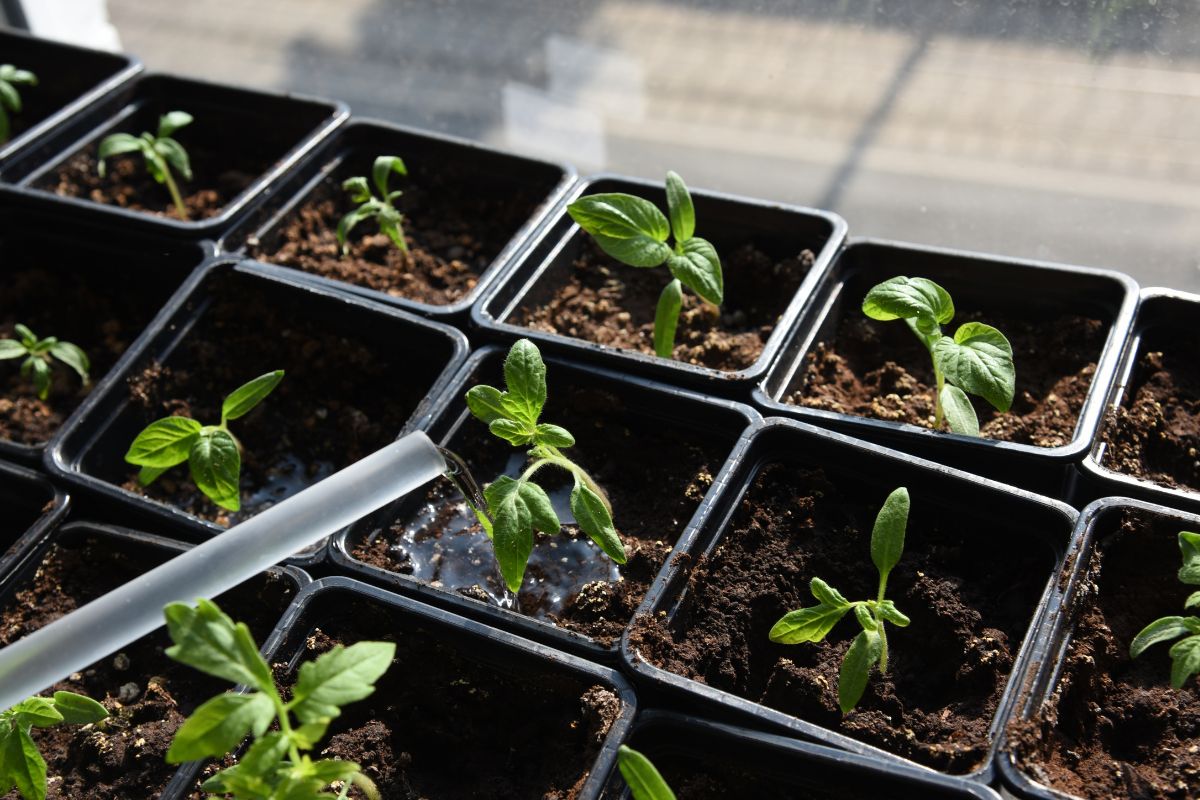
I am guilty of doing this. Seeds are small and there is always a temptation to sprinkle a whole lot into one punnet just in case some don't grow. Then they all germinate.
This is usually when the problem starts. I end up with dozens of seedlings packed together, all competing for light and air, and I don't have the heart to remove any. Humidity builds up around the stems and the growing medium can remain wet for longer.
If I sow fewer seeds and give each seedling some space, they generally grow better.
If you have sown too densely, thin them. It can seem wasteful to pull out healthy seedlings, but it is better to have ten healthy plants than fifty seedlings competing in one tiny container and then losing most or all of them to disease.
Be Careful With Over-Watering
Seeds need water. Seedlings don't need unlimited water.
I think this is one of the easiest mistakes to make when growing from seed. You see a tiny seedling and think it needs more water because it is so small. In reality, the opposite can sometimes be true.
The growing medium should be moist enough for the plant to grow, but it should also contain air spaces around the roots. Roots need oxygen as well as water. Good drainage is therefore very important.
I have grown plenty of plants in fairly simple mixtures containing lots of perlite because I prefer a mix that drains well rather than one that stays wet forever. There is no point having a seedling sitting in perfectly damp soil if the roots don't have enough oxygen.
Give Seedlings Some Air
Seedlings growing in still, humid air are more likely to have problems. You don't need to point a huge fan directly at them and blow them around the room. Gentle air movement is enough.
If you are using a humidity dome to help seeds germinate, remove it once the seedlings have emerged and no longer need that extra humidity. Spacing seedlings apart also helps. A crowded tray can become a surprisingly humid little jungle.
Keep Your Containers Clean
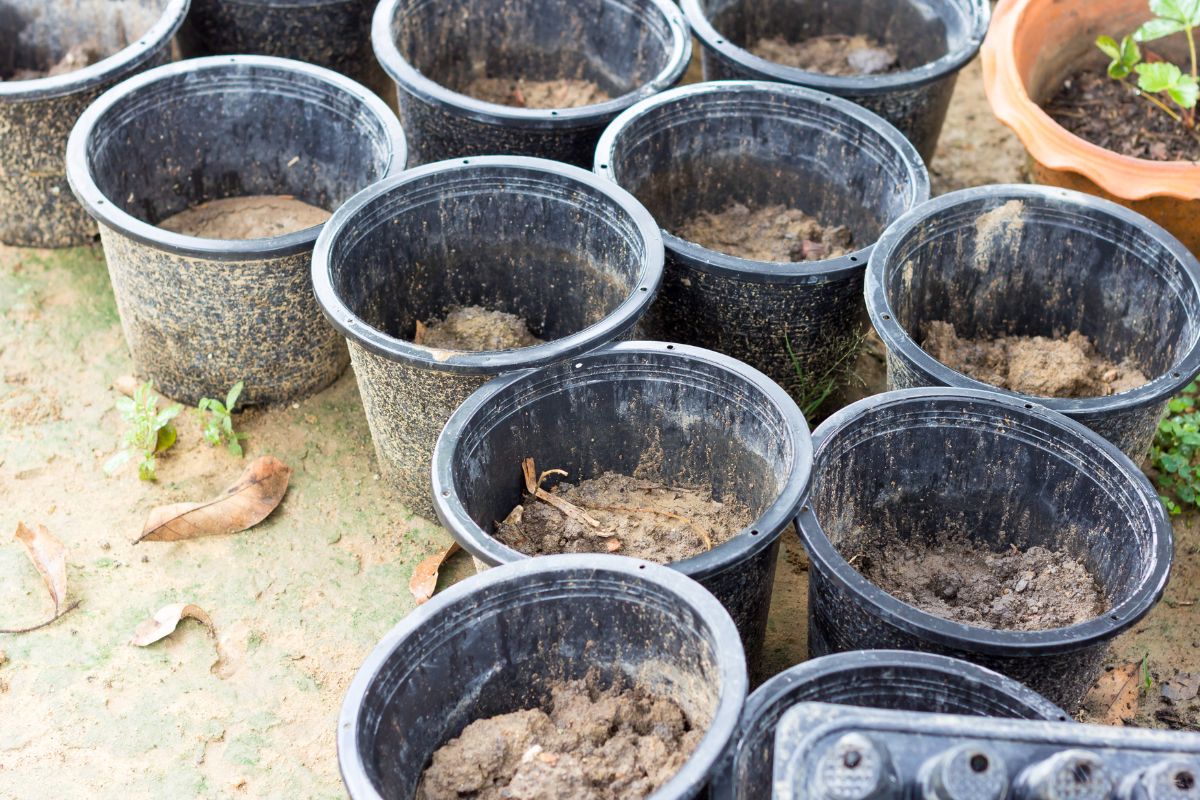
If you reuse seed trays, pots, and punnets, clean them before using them again.
Old pieces of growing medium and dead roots can remain in containers and potentially carry disease organisms from one batch of plants to the next. This is particularly important if the previous seedlings died from damping off.
I know cleaning seed trays isn't exciting. Neither is washing dishes. Unfortunately, both still need to be done. Using clean containers is a simple way of reducing the chance of carrying problems from one batch of seedlings to another.
Use A Suitable Seed-Raising Mix
Garden soil can be wonderful stuff. I like garden soil. But that doesn't mean it is the best thing to put into a little punnet and use for germinating delicate seedlings. Garden soil contains an enormous number of microorganisms. Some are beneficial, some don't matter, and some can cause problems.
A suitable seed-raising mix provides a more predictable starting point for germinating seeds. If you make your own mix, make sure it drains well and is suitable for germinating seeds.
What Should You Do If Damping Off Appears?
If one seedling collapses, remove it quickly rather than leaving the dead seedling sitting among the others. Then have a look at what is happening in the tray.
- Is it too wet?
- Are the seedlings too close together?
- Is there enough air movement?
- Are the containers draining properly?
- Is the humidity very high?
- Are the seedlings getting enough light?
Sometimes the answer is obvious. Sometimes it isn't. If most of the tray has been affected, I wouldn't spend hours trying to save every seedling. Remove the affected plants and growing medium, clean the containers, and start again.
Seeds are cheap compared with the amount of time we can spend trying to rescue a tray that has already gone wrong. That's obviously different when you're dealing with rare or expensive seed, or something that has sentimental value.
So Do The Traditional Remedies Work?
This is where I think we need to be honest.
There is a big difference between something being possible, something being interesting, and something being proven to work reliably.
Chamomile contains compounds with antifungal properties. Cinnamon contains compounds with antifungal properties. Hydrogen peroxide kills microorganisms. Garlic contains antimicrobial compounds. All of those statements can be true without proving that the traditional home-gardening remedy is an effective way to prevent damping off.
I think some of these remedies are worth experimenting with if you enjoy experimenting. I just wouldn't rely on them. If you have a rare variety of vegetable and only have ten seeds, I wouldn't experiment on all ten. This is particularly important when you are growing something from a limited seed supply. If you only have a handful of seeds, getting the basic growing conditions right is much more important than trying an unproven remedy. I'd use the boring methods that are known to help.
What I Would Do
If I was sowing some particularly valuable seeds and wanted to minimise the chance of damping off, I would keep things simple. I try to prevent damping off rather than trying to cure it once it begins.
I would use clean containers and a suitable seed-raising mix. I wouldn't sow the seeds too densely. I'd give them plenty of light and make sure the containers drain properly. I'd water them when they need water rather than keeping them permanently wet. I'd provide some gentle air movement and remove humidity covers once they were no longer needed. And I'd keep an eye on them. That's about it.
I'd use the boring methods that are well established as good seed-raising practices.
Traditional Gardening Knowledge Is Still Useful
I don't think we should dismiss traditional gardening remedies simply because there isn't a scientific paper proving that every one of them works.
Gardeners have been experimenting for a very long time. Some of the things passed down through generations are genuinely useful. Other things are probably coincidences that have gradually become accepted as fact. Sometimes both are mixed together. The interesting thing is working out which is which. Damping off is a good example.
There are plenty of traditional remedies, and some of them have properties that make them worth investigating. That doesn't mean these traditional remedies are all nonsense. Some may well have useful effects that gardeners have noticed long before anyone understood why. But the simple things are still the things I would concentrate on:
- Good drainage
- Careful watering
- Clean containers
- Suitable growing mix
- Good air circulation
- Enough light
- Not overcrowding seedlings
These things aren't particularly exciting, but they work with the biology of the plant rather than trying to fight a problem after it has already started.
And that is probably the most important lesson with damping off.
Don't Wait Until Your Seedlings Are Collapsing Before You Think About Preventing It
Give them good conditions from the beginning and there is a much better chance that those tiny seedlings will grow into healthy plants.
Article written by Damien Beaumont