
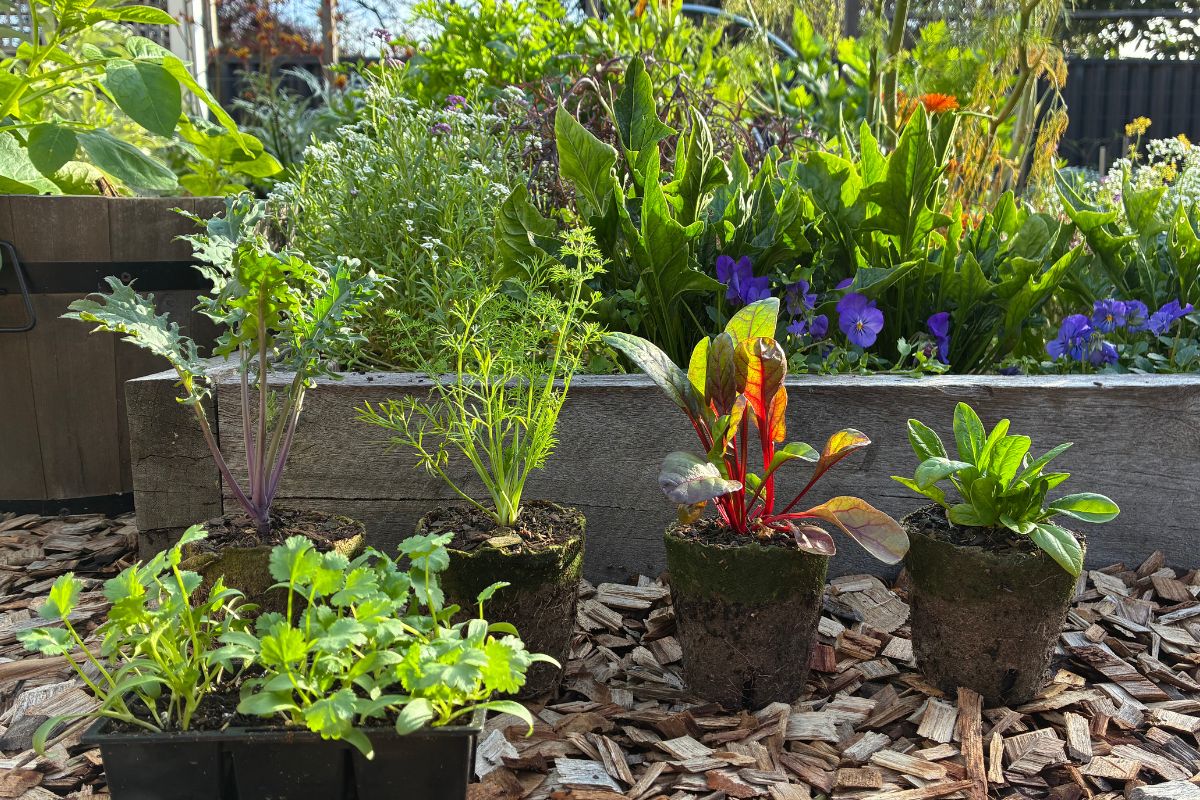
Transplanting is one of my favourite jobs in the garden.
There's something really satisfying about finally taking healthy seedlings out into the garden. After sowing the seed and spending weeks watching them grow, this is the moment you've been waiting for. But it's also a pretty big day for the seedling.
One minute it's happily growing in the nursery, where the conditions are fairly predictable. The next, it's settling into a completely new home. I've come to think those first few days after transplanting are one of the most important stages in a plant's life.
One of the simplest things I do to help seedlings settle into their new home is give them a soak in a homemade root dip before planting. It fits neatly into my transplanting routine, costs very little and has become one of those jobs I rarely skip.
Why I Use A Seedling Dip
This certainly isn't my idea.
It's something I picked up after listening to other gardeners and soil educators talk about what happens beneath the soil surface. One of the ideas that has really stayed with me is that healthy soil is alive. My understanding is that fresh worm castings and healthy homemade compost are teeming with tiny living organisms, many of which help plants access nutrients and keep the soil functioning well. I like the idea of surrounding a seedling's roots with some of that life just as it's settling into its new home.
I also add a seaweed extract. Gardeners commonly use seaweed to help plants through stressful times and transplanting is certainly one of those times. I can't tell you exactly what's happening beneath the soil, but I can tell you what I've noticed. Since making this part of my transplanting routine, I lose fewer seedlings after planting and they seem to establish into sturdier, more resilient plants.
What Goes Into It?
This seedling dip is oh so simple.
I make up as much or as little as I need depending on what I'm planting that day. There’s no exact recipe; about the amount of worm castings and homemade compost you can see in the photos below is my usual go to. Sometimes a little less, sometimes a little more, and that’s just fine.
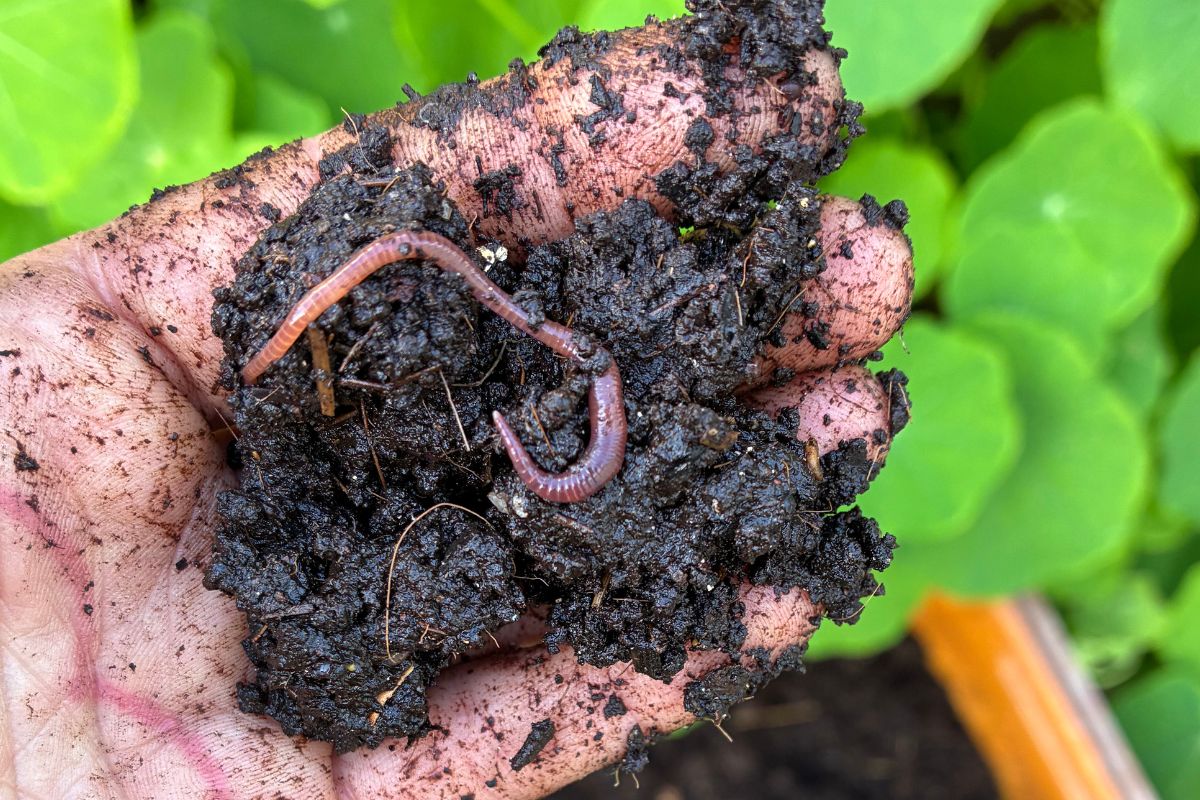
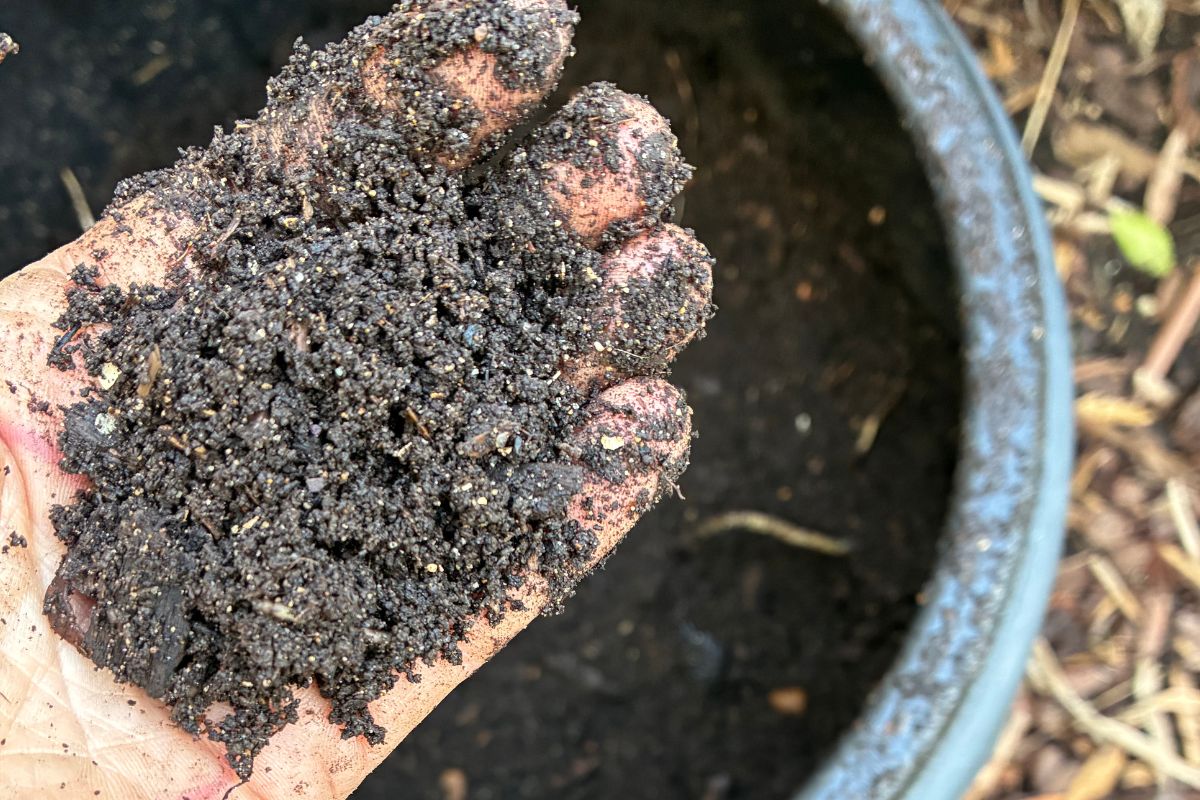
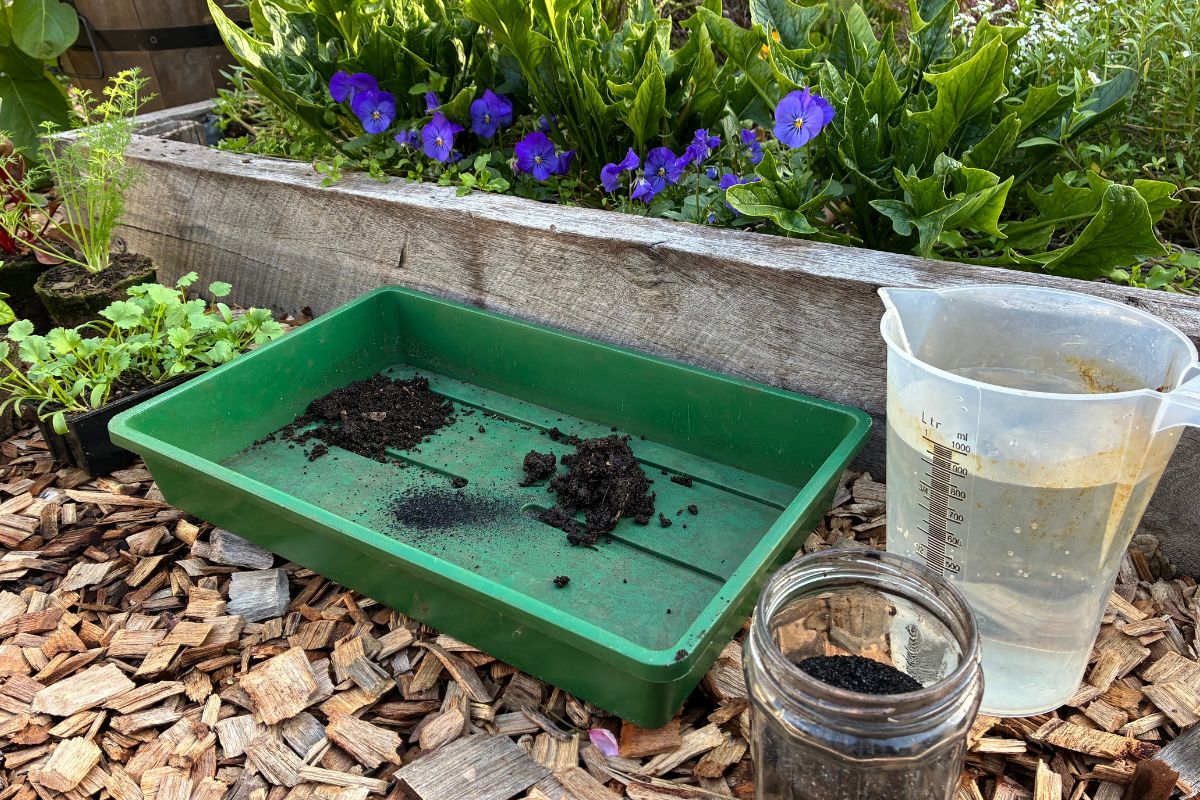
I add a pinch of seaweed powder and enough water for the bottom of the pots or seedling tray to sit in the mixture and soak it up. If you're using liquid seaweed instead, just follow the dilution rate recommended on the product.
Then I simply mix it together with my hand.
That's it.
I’m a big fan of diversity in the garden, and because I have both worm castings and good quality homemade compost, I’ll use a little of each. But don’t feel like you need both. Use what you have access to, either one will work beautifully. The idea is simply to give your seedlings a little extra support before they head out into the garden.
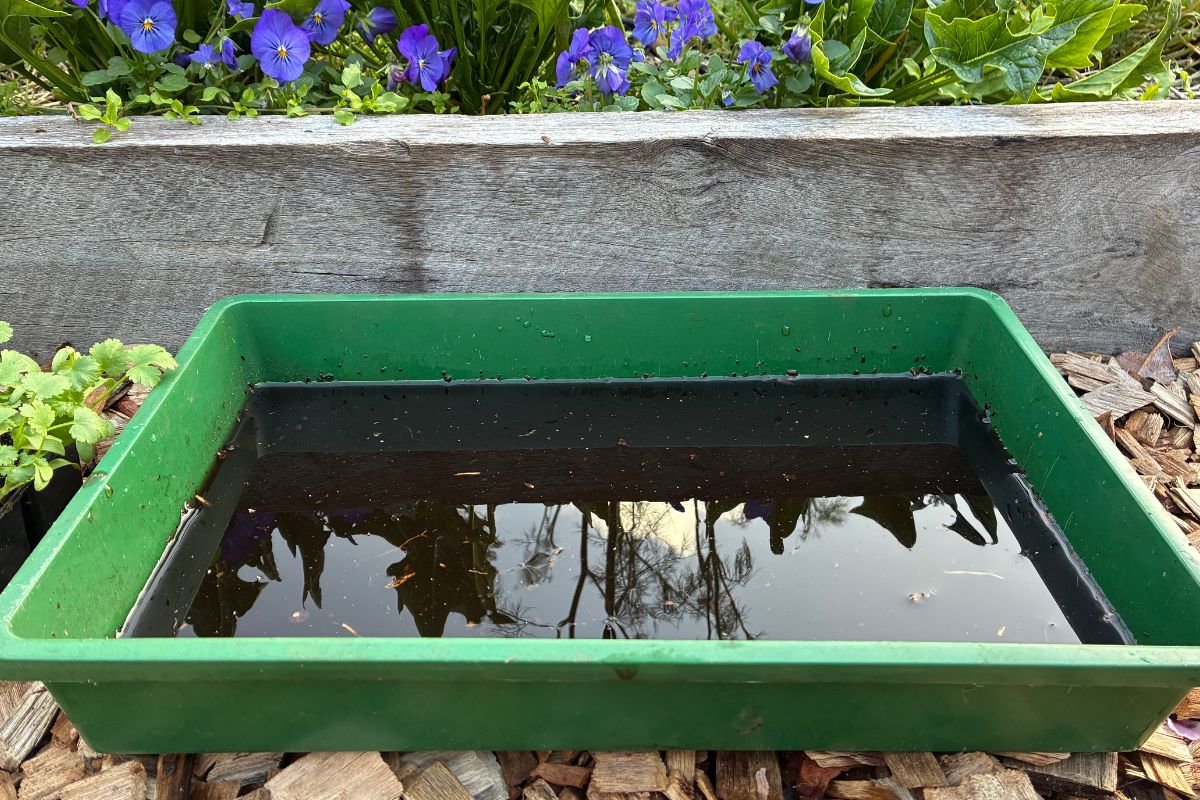
How I Use It
Just before transplanting, I sit my seedlings into the tub so the potting mix can soak the mixture up from below.
I usually leave the seedlings soaking for 5-10 minutes. If I've planned ahead, I'll lift the tray out and let it drain while I get everything else ready. I haven't timed exactly how long they drain for, just until the potting mix is no longer dripping wet.
I've found the seedlings are much easier to remove from seedling trays when the potting mix isn't completely saturated as it holds together around the roots.
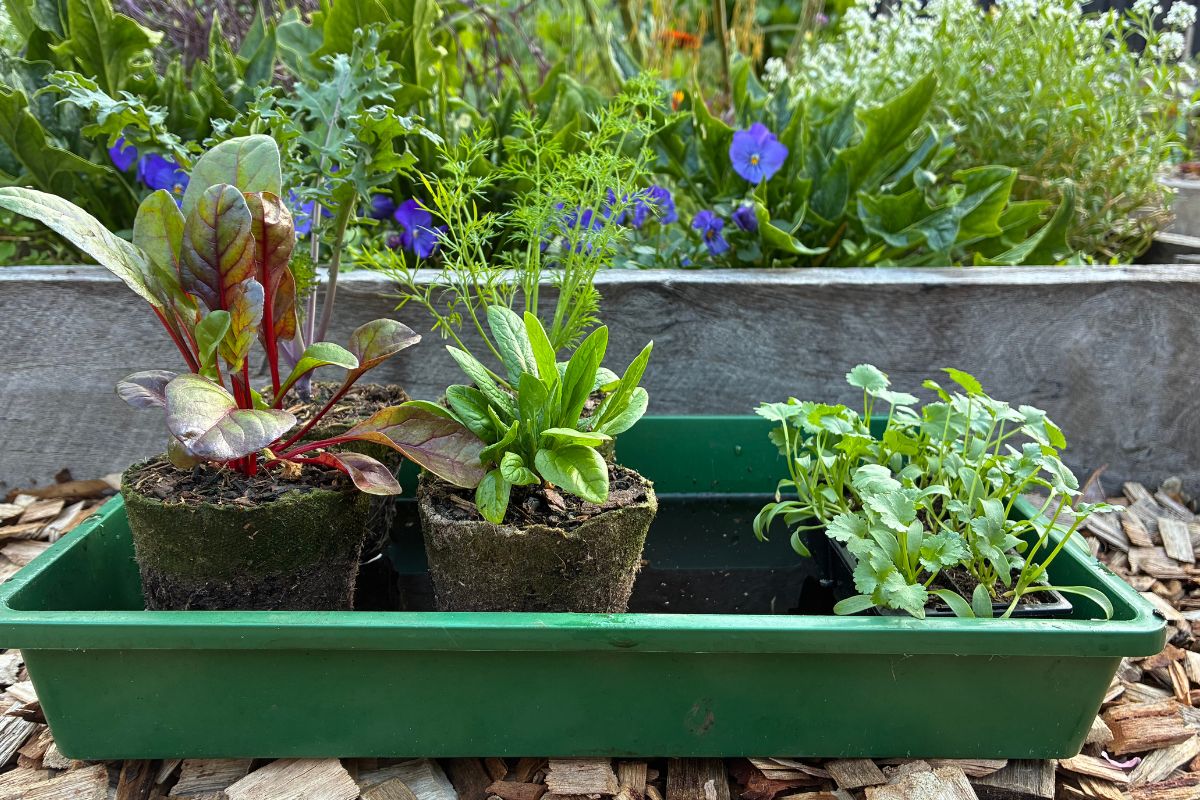
While the seedlings are soaking, I'll usually finish preparing the bed, lay out irrigation if I haven't already or make myself a cup of tea.
If everything's ready, I'll simply wander around the garden. It's amazing what you notice when you're not rushing. A flower that's opened overnight, the hum of bees somewhere nearby, a new bird call, or something quietly ripening that you'd completely forgotten about. Gardening has a lovely way of rewarding those small pauses.
Once the tray has drained, I gently pop the seedlings out and plant them as I normally would.
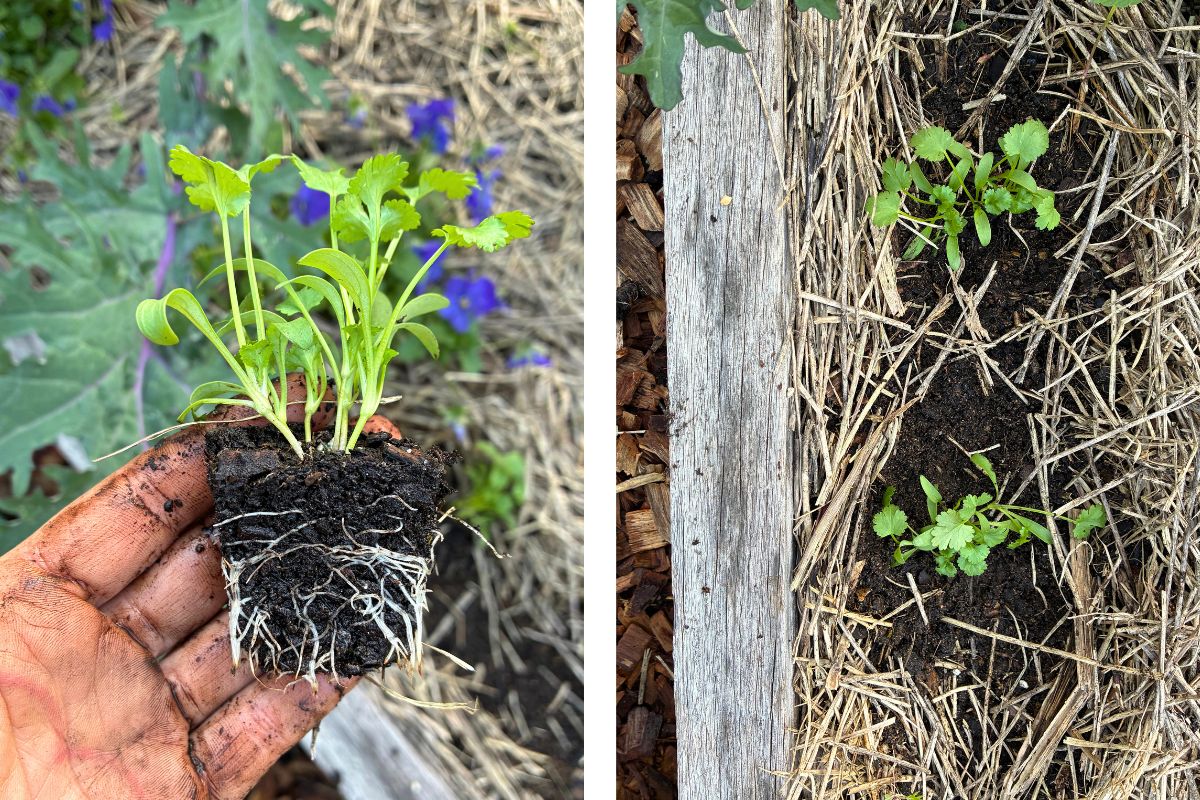 Coriander before and after seedling dip
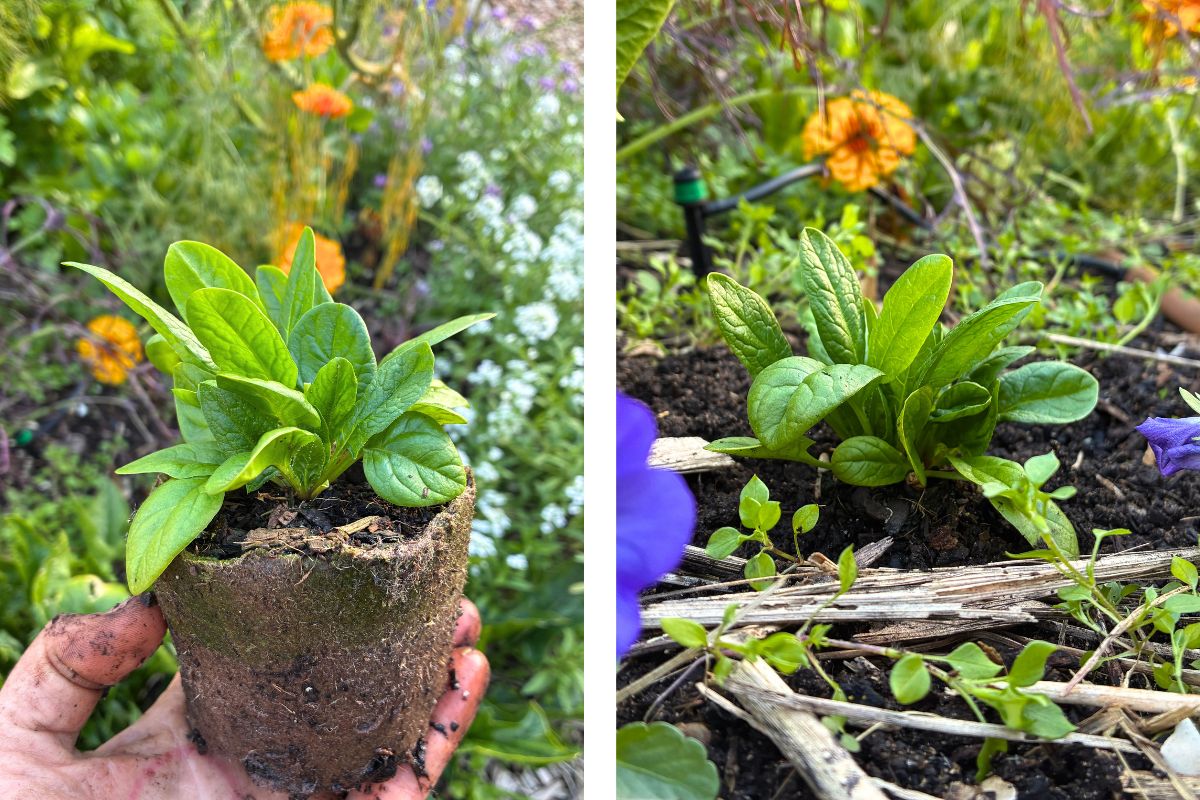 Spinach before and after seedling dip
Even when I'm direct sowing crops like carrots, I still make up the same mixture. I simply strain out the compost or worm castings and use the liquid to water the seed in after sowing. It feels like a nice way to carry the same idea through, even when there aren't any seedlings to dip.
There are plenty of things in gardening that can become complicated if we let them. This isn't one of them.
For me, this seedling dip is simply one small way of helping seedlings through one of the biggest transitions they'll experience. It doesn't have to be perfect, it doesn't need expensive ingredients and it doesn't take a lot of extra effort. Give it a try and enjoy the process.
Article & Photographs by Bec Davie