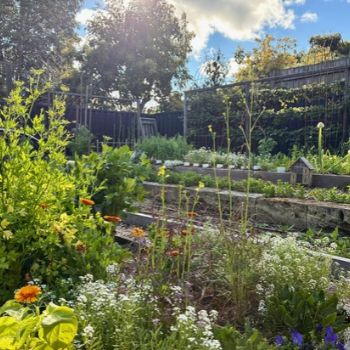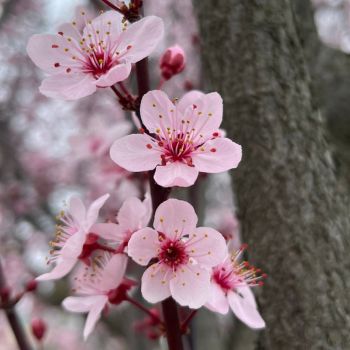

I want my garden to be productive, but I've learnt that a yield doesn't have to be something I can eat. A beautiful place to spend time in, flowers for insects, habitat for birds and a stronger connection with nature are all yields in their own way.
If I had to distil the way I garden into five practices, these are the ones I return to again and again.
1. Right Plant, Right Place
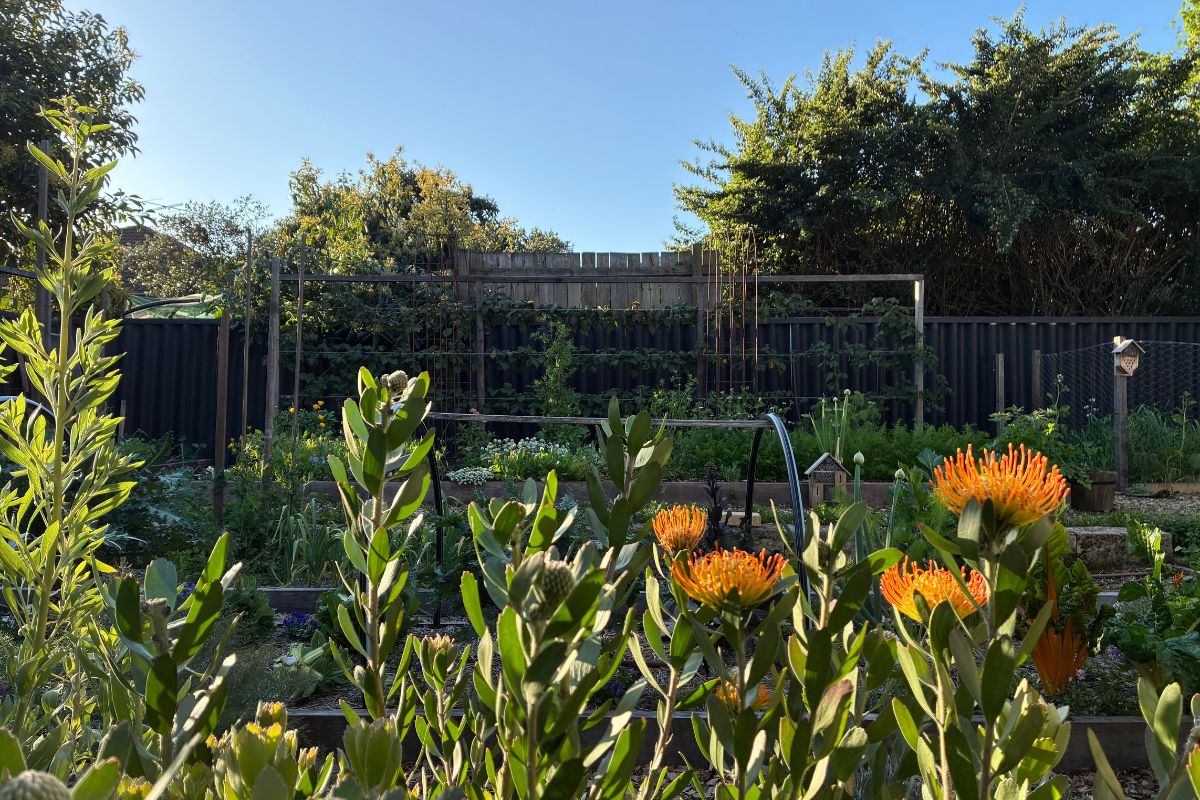
One of the most useful things I've learnt is to work with the conditions I have rather than fight against them.
Even within one backyard, there can be lots of different growing conditions. Noticing where the morning sun falls, which areas bake in the afternoon, where the soil dries out fastest and which spots are protected from wind can all help you work out what might be happiest where.
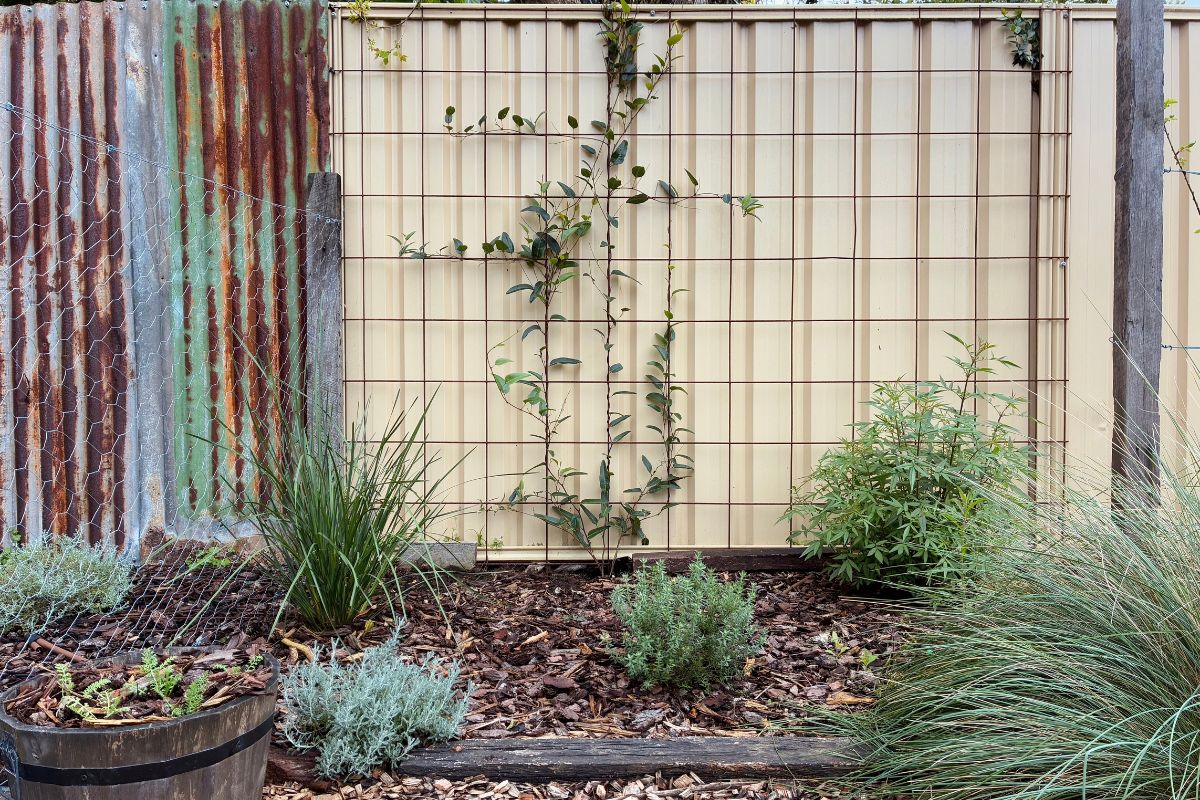
When I moved into my home, I inherited a few blueberry plants in a back corner of the garden. They were looking really sad, and it was pretty obvious why. They missed the gentler morning light, only receiving the harsh afternoon sun through our long, hot summers. The roots from my neighbour's mulberry on the other side of the fence were also competing for water and nutrients in this patch.
I've since planted tougher natives and grasses there, with a Hardenbergia trellised to cover the fence. They are far tougher than blueberries, are a waterwise option, and give flowers, habitat and something much nicer to look at than a Colorbond fence.
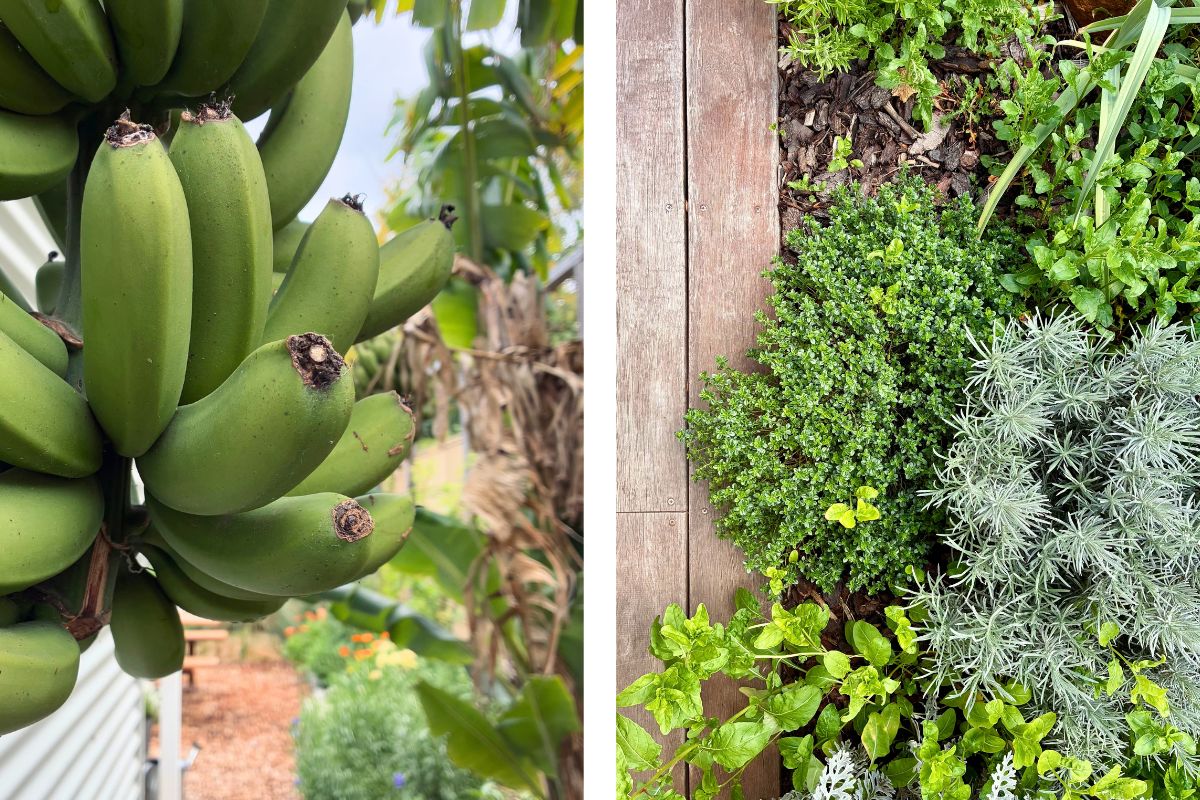
The bananas I inherited are the opposite example. Here in Margaret River, bananas aren't an obvious choice, but their patch gets plenty of sun and warmth, protection from cold winter storms and hot dry summer winds, and the soil in this pocket holds moisture through the warmer months. I've also placed the compost bins beside them for extra fertility. Together, those things create a little microclimate where the bananas are very happy.
Successful gardening isn't about changing the conditions; it's about noticing what you have and choosing plants that work with them.
2. Nurture Your Soil
The more I garden, the less I think about what I can feed my plants and the more I think about nurturing the soil they're growing in.
For me, that means keeping the soil moist, having living roots in the ground wherever I can and disturbing it as little as possible.
I find it fascinating to think about everything happening in the soil that we can't see. Plants photosynthesise and make sugars, and some are released through their roots, helping to feed a whole community of microorganisms. Just because a nutrient is present in the soil doesn't necessarily mean a plant can access it, and some of these microorganisms help make nutrients available in forms plants can use. Plants are feeding soil life, and soil life is helping plants in return.
Mycorrhizal fungi are part of this community too. Their incredibly fine fungal threads spread beyond a plant's roots, extending the area from which it can access water and nutrients. Some disturbance is obviously part of gardening, but I try not to do more than I need to, so I'm not unnecessarily breaking up these networks or the soil structure.
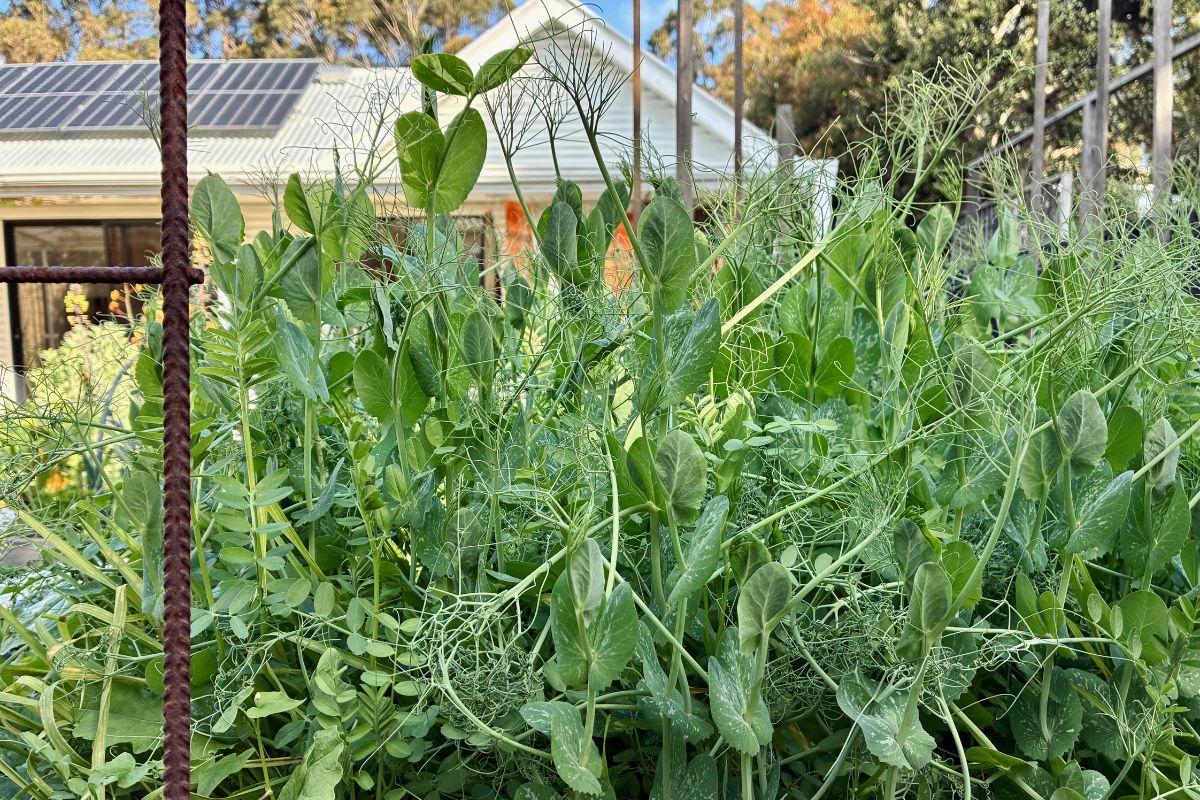
As mentioned above, living roots help feed this underground community, so I try to keep them in the soil as much as I can. Sometimes that means leaving a crop growing longer, and other times I'll sow a cover crop. Even a small patch can cover bare soil and provide living roots between crops. Cover crops have plenty of other benefits for the soil too and are well worth reading more about.
3. Grow With Diversity
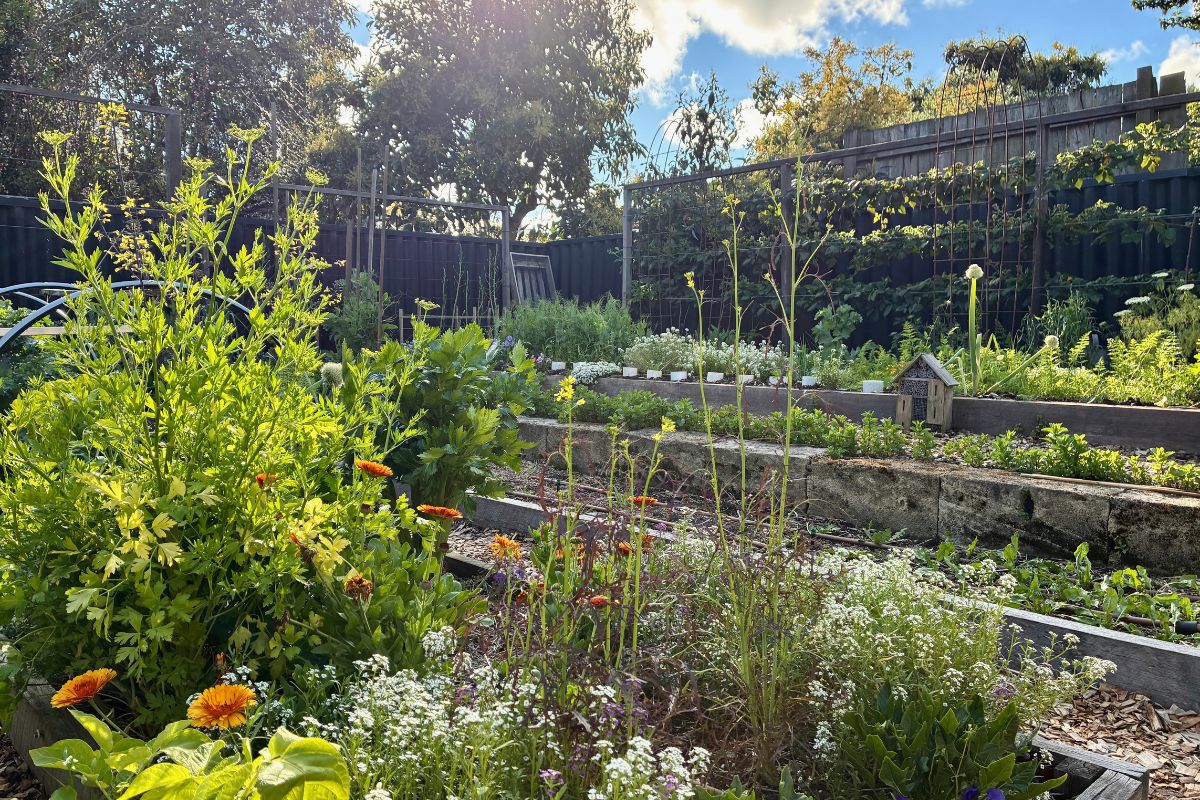
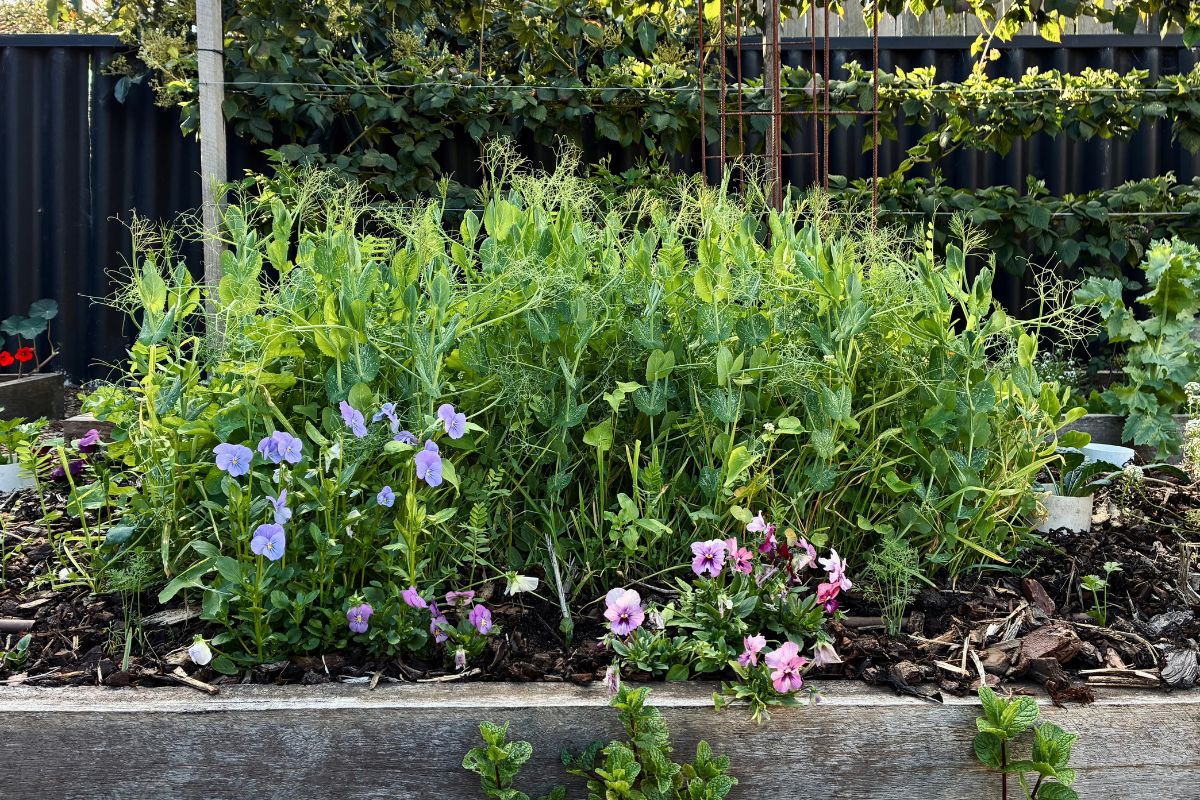
My backyard isn't exclusively edible. I grow vegetables, herbs and fruit amongst flowers and other ornamental plants, so there's a real mixture growing together.
I'm happy to let herbs and vegetables flower rather than pulling them out as soon as they've finished producing food. I also try to have something flowering throughout the year, giving birds and insects a more continuous source of pollen and nectar.
I love plants of different shapes and heights because I think it looks beautiful, but that structural diversity also creates different places for wildlife to shelter, feed, hunt and nest. That's one of the things I love about diversity: it stacks so many benefits together.
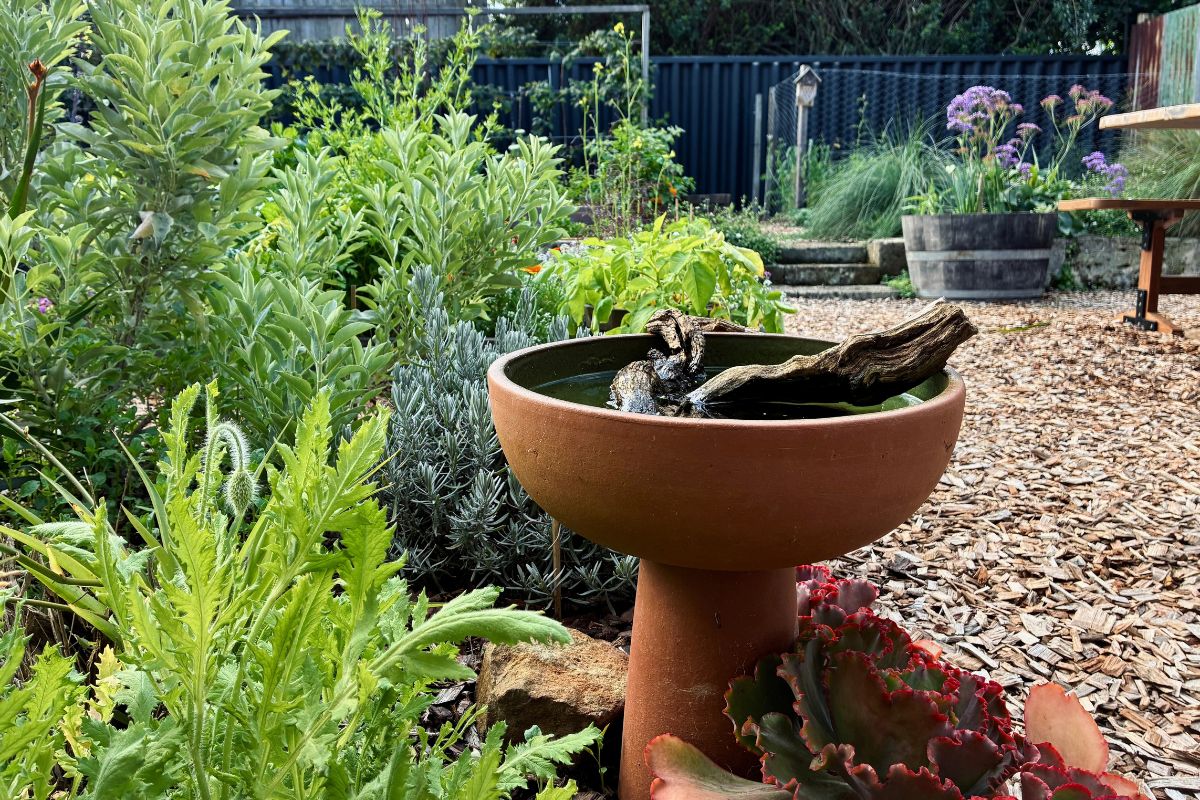
Along with food and shelter, I like to make sure there's water available. A birdbath gives birds and insects somewhere to drink, with a stick in the water so anything that falls in can climb back out.
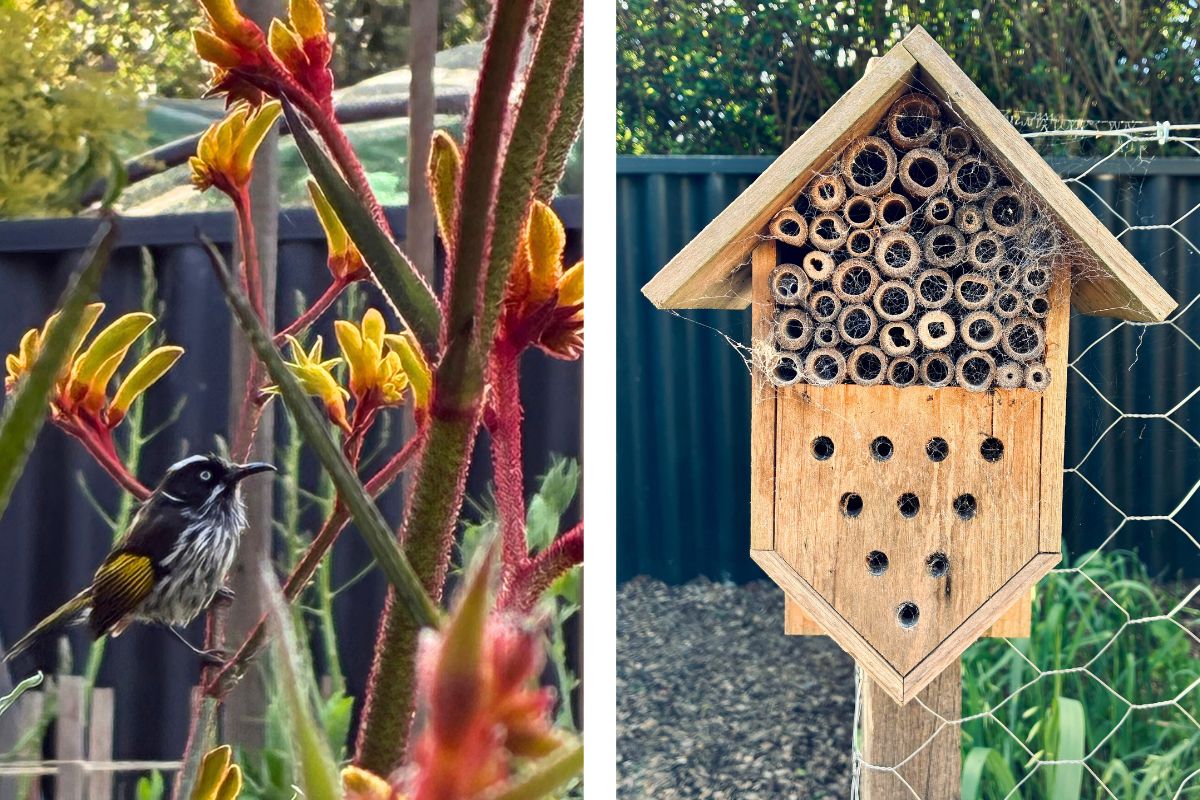
There are a few native bee hotels scattered around too. I'm not sure the bees have moved in, but the spiders certainly have! I'm quite happy with that; spiders are useful little garden predators too.
But what about below-ground diversity? There's plenty of it! Different plants have different root architectures, some shallow and fibrous, others sending taproots deeper into the soil. These roots help hold soil particles together and create pathways for water and air, helping to build good soil structure.
And, as mentioned above, roots don't just take from the soil, they release sugars and other compounds into it too, interacting with the soil and microbial community in different ways. So all the variety above ground means there's plenty going on below ground too.
Not every plant needs an obvious practical purpose either. Beauty is a perfectly good reason to grow something. If a flower makes you stop for a moment when you walk past, that's a definite win.
4. Do A Little, Often
Some crops have a fairly short harvest window, so I've found sowing smaller amounts more often works much better for me. Four lettuces followed by another four a few weeks later are much more useful than twelve all ready at once.
That doesn't mean I succession sow everything. A kale or parsley plant can keep me picking for months. I think about how much I actually eat and how long something will produce before deciding when, or whether, I need to sow more.
I take a similar approach to garden jobs. There's pretty much always something I could weed, prune, plant, tie up or improve. An hour or two more regularly suits me much better than saving everything for a whole day or weekend.
Gardening has to fit around the rest of my life, and I want it to be something I enjoy rather than a list of jobs. Keeping things simple and doing a little, often, helps keep everything ticking along.
5. Observe, Learn And Enjoy
Maybe the practice that ties all the others together is simply paying attention.
It's how I've learnt where plants are happiest, what I need to succession sow and when something isn't working. Over time, you get to know your garden and its little rhythms.
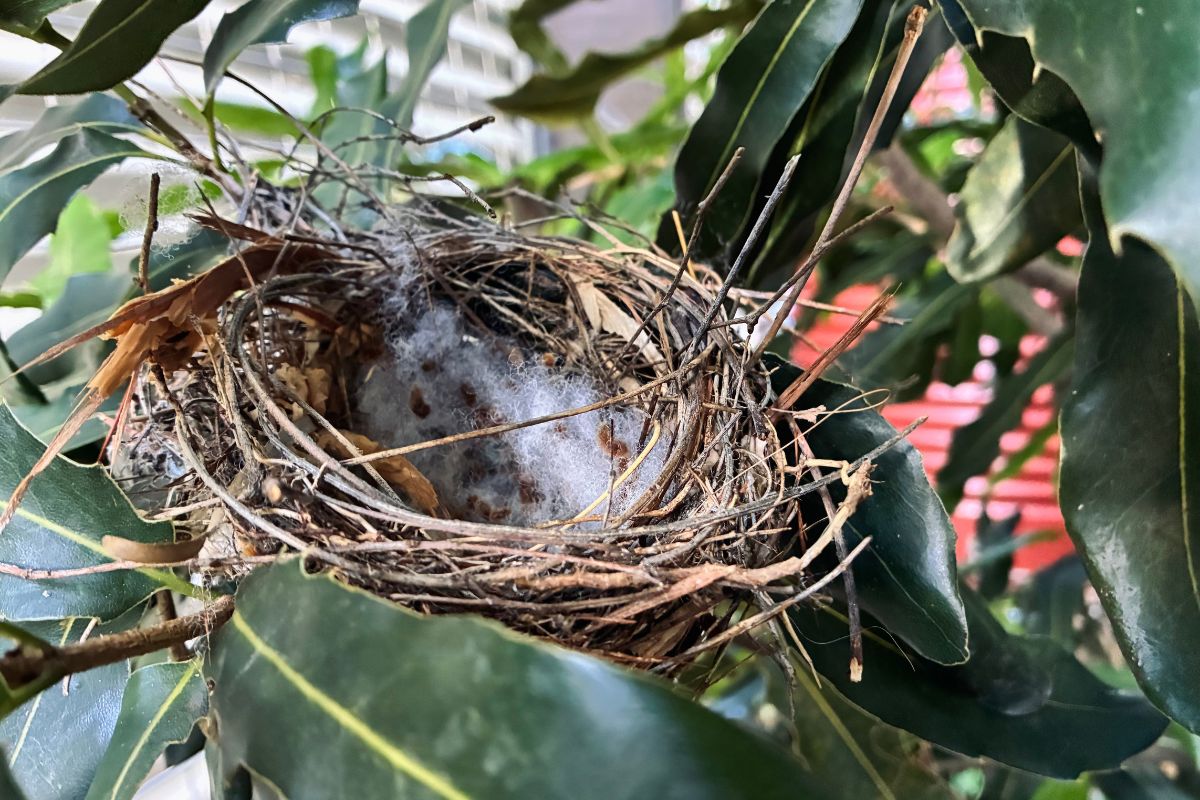
But observing is also about enjoying what's happening around you. Sometimes I just wander through the garden to see what's flowering, watch the insects or see which birds are visiting. Recently, New Holland honeyeaters nested in my macadamia tree, and I've loved watching their young flit about the garden.
Growing food has taught me plenty, but creating a garden I genuinely want to spend time in, and one that gives me a closer connection with nature, might be one of its greatest yields.
There's always more to learn and improve. But I've found gardening becomes simpler when I work with the conditions I have, look after the soil, grow lots of different things, do manageable amounts often, and remember to stop and enjoy what I've helped create.
Article & Photography by Bec Jane