
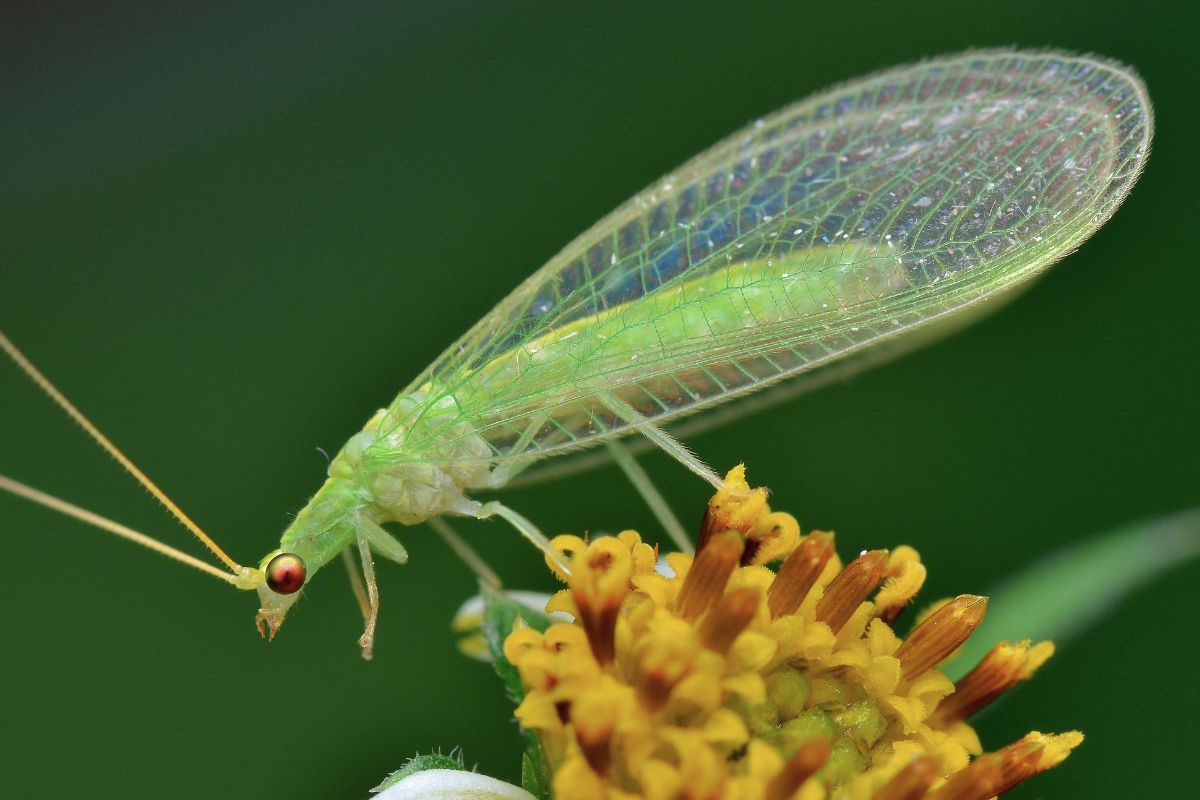
Lacewings are small, lime-green to greenish-brown creatures with delicate, lace-like wings. Because they blend so perfectly into your greenery, it would be easy to think you didn't have any!
But you'd be mistaken, because lacewings can be found all throughout Australia. In fact, over 550 species have been described here, out of roughly 5,000 worldwide.
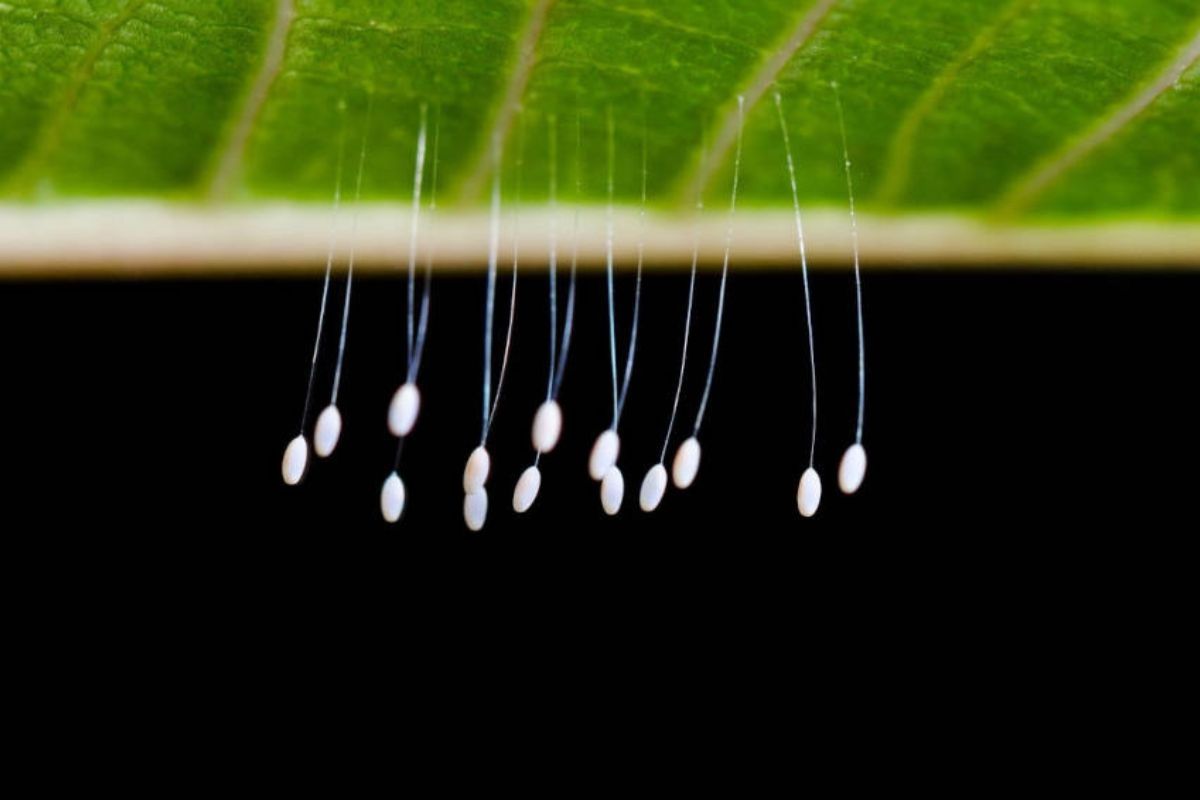
Lacewing eggs are often easier to spot than the adults. You'll generally find them near a plant infested by aphids, each one sitting at the end of a slender, silk-like stalk.
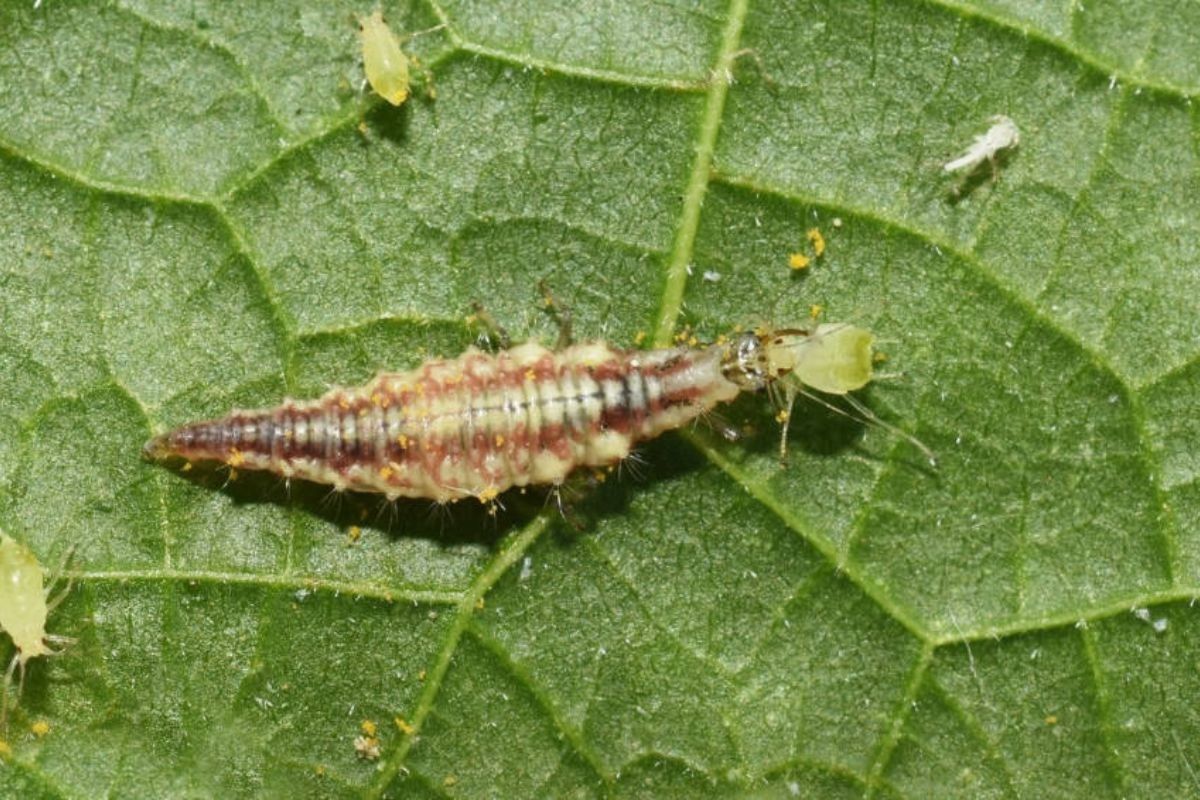
The larvae look nothing like the parents. You might recognise these ‘trash carriers’ or ‘junk bugs’ by their clever disguises - they carry the remains of their prey on their backs, which camouflages them from predators.
One way of protecting your lacewings is by setting up a lacewing hotel, for the adults' use during the colder seasons. But before we do that, let's look at why we should protect them in the first place.
Why Are They Great in Our Gardens?
Why bother protecting lacewings when they're so small? Surely their effect is minimal.
Don't be fooled! Their impact in the garden belies their small size - though what they eat depends on which lacewing you're looking at.
Adult green lacewings aren't predators at all. They feed on nectar, pollen and honeydew, and live for around three to four weeks. What they do in that time is lay eggs - up to 600 of them over a female's lifetime - and every one of those eggs hatches into a voracious little hunter.
The green lacewing larvae are the ones doing the work. In good conditions they can eat up to 200 aphids a week, and they don't stop at aphids: whitefly, thrips, spider mites, mealybugs, small caterpillars, scale and insect eggs are all on the menu.
Brown lacewings are a different story, both the adults and the larvae hunt - each capable of eating around 25 aphids a day, along with mealybugs, scale, thrips, psyllids, whitefly and mites.
So whichever species is sheltering in your garden, looking after the adults through winter means more predators - and a lot more eggs - when the aphids arrive in spring. That's the real reason a lacewing hotel is worth building.
Lifecycle
Before building a hotel, we need to understand their lifecycle. Let's look at the green lacewing (Mallada signatus) - one of the most common and widely distributed native lacewings in Australia. These insects belong to the order Neuroptera (net-winged insects) and the family Chrysopidae, and grow to around 15 mm long.
They have large orange eyes, green bodies and translucent lace-like wings. Adults live for around three to four weeks, and the full lifecycle runs through four stages: egg, larva, pupa and adult.
The lacewing journey starts as a tiny, pale green, oval egg at the end of a long stalk. A female will lay up to 600 eggs across her life, and after a few days they hatch.
The larva emerges at around 2 mm long, armed with two pairs of hollow, sickle-shaped jaws. It doesn't chew its prey – it grasps an aphid, mite or small caterpillar and sucks out the body fluids. Over the next few weeks it moults three times, reaching around 8 mm before it's ready to pupate.
The larva then spins itself a silken cocoon and pupates. The adult emerges and starts the cycle of breeding and laying eggs again.
During the cold winter months, adults may enter a resting state called diapause - and this is where your lacewing hotel comes in. They'll look for a dry place, protected from the elements and predators.
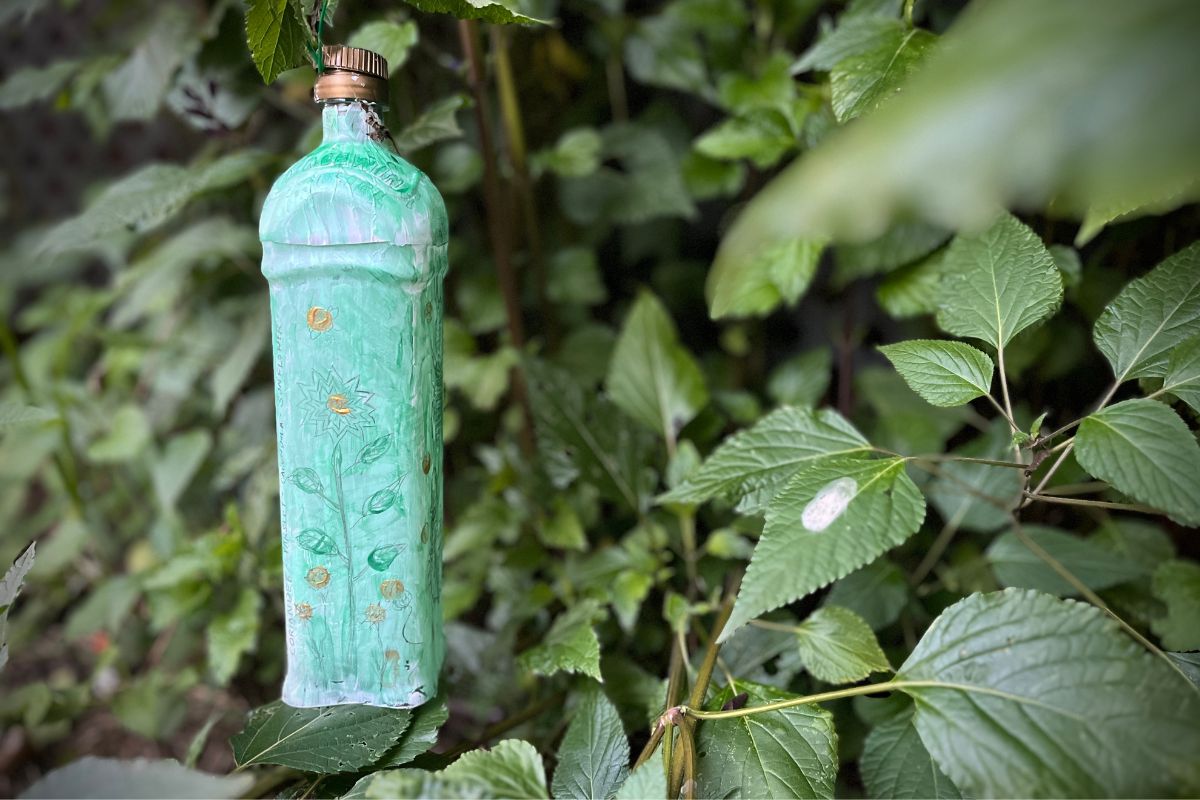
Lacewing hotels, made from a tough plastic bottle and tightly rolled-up cardboard, make for the perfect habitat.
How to Make a Lacewing Hotel
Items you'll need:
- Cutting board
- Scissors
- Stanley knife
- Marker or pencil
- Strong 1.5-litre plastic bottle, lid on
- Brown cardboard (not glossy), about 30 cm x 30 cm
- Ribbon, 20 cm
- Stick (about 5 cm)
- Gesso, non-toxic paints and paintbrushes (if you want to decorate)
Steps
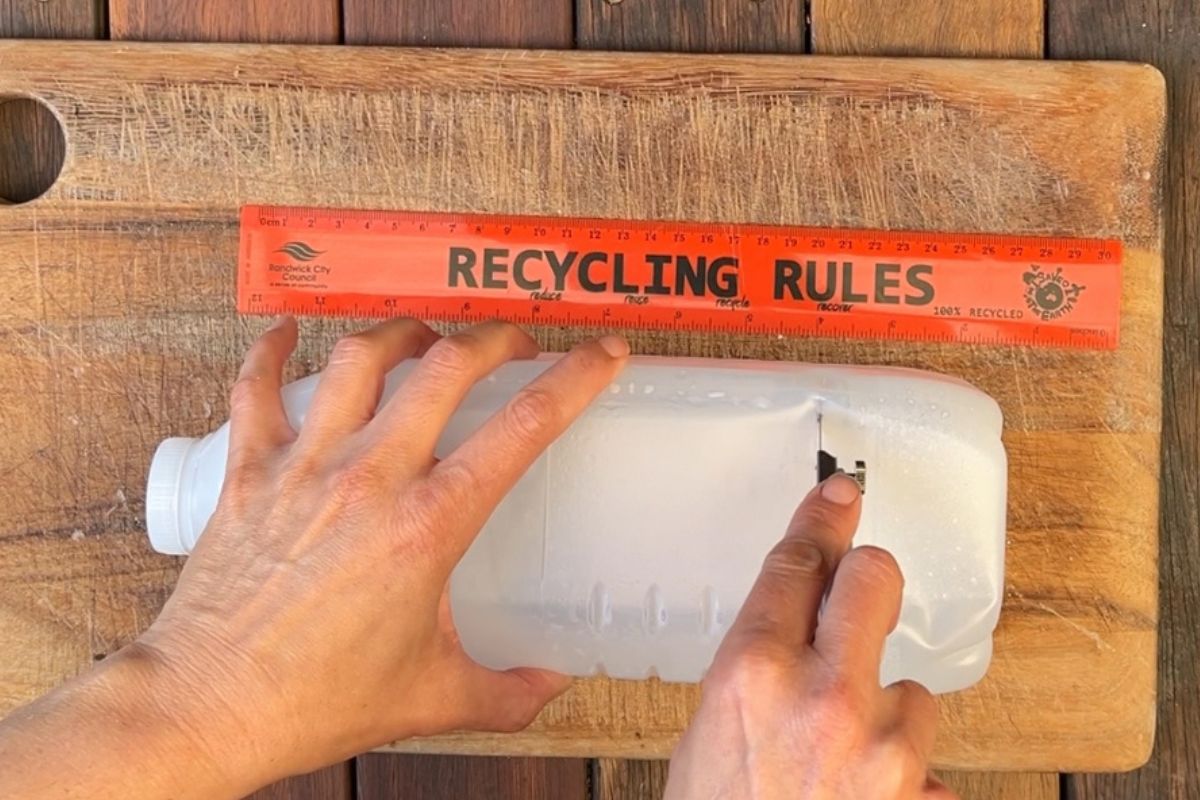
- Place your plastic bottle on your cutting board and measure three-quarters of the way down from the top.
- Mark the position on the bottle with a marker or pencil.
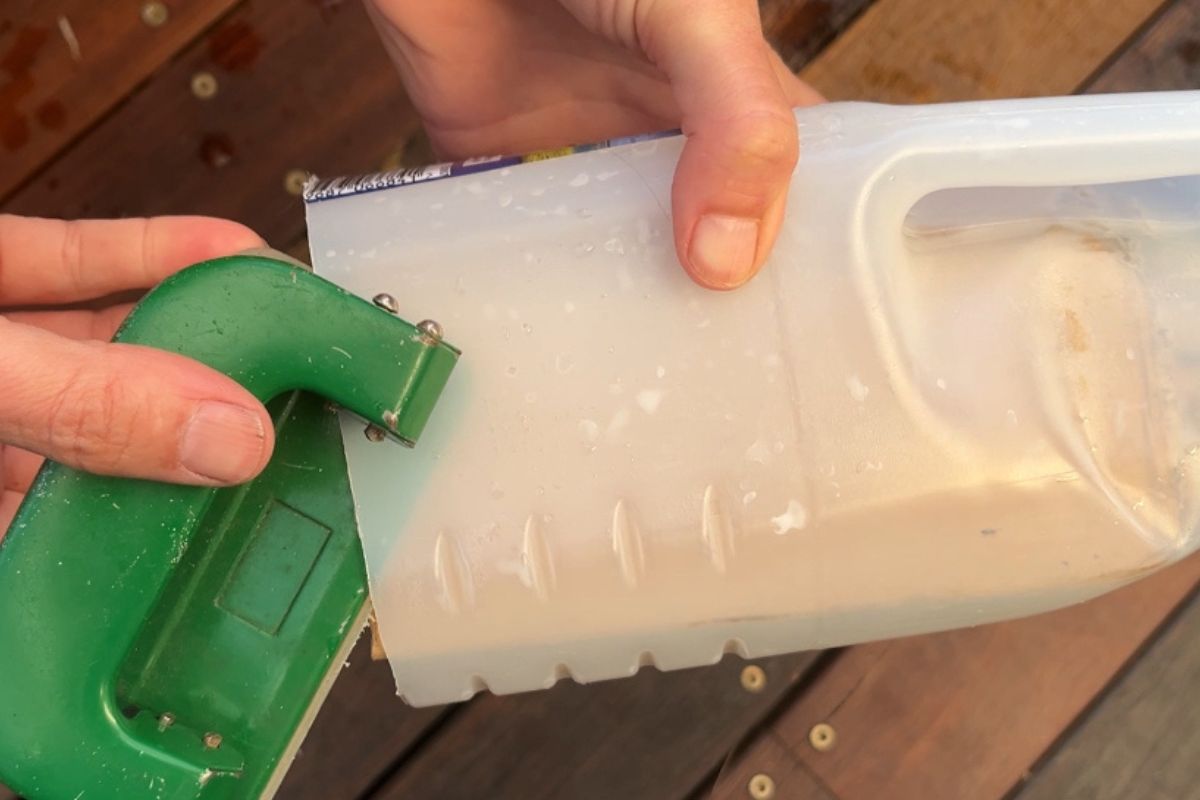
- Taking care to keep your fingers out of the way, make the first cut into the bottle at the pencil mark with your Stanley knife.
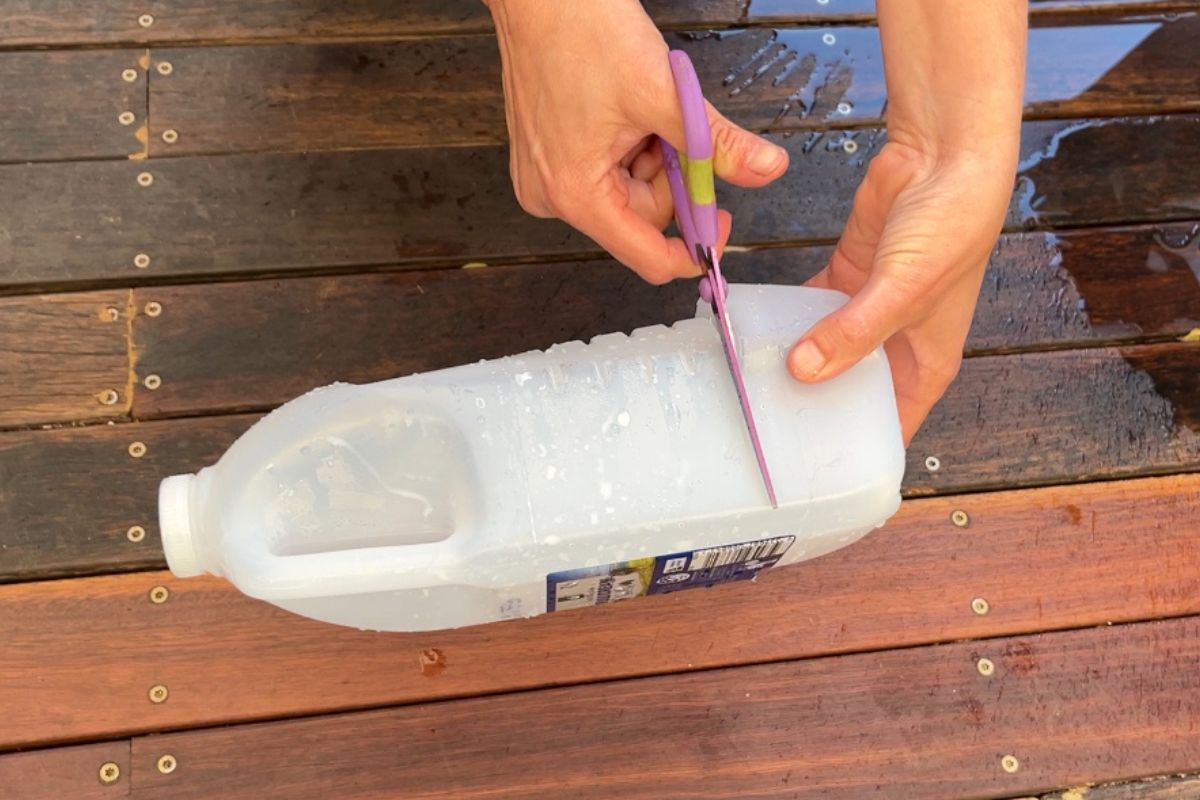
- Now, with scissors, cut through the first incision and then all the way around the plastic bottle until the bottom quarter is separate from the top section. (Don't use a Stanley knife for this part, as it can easily slip and cut you.) Set the bottom piece aside for the recycling – you'll only be using the top section from here.
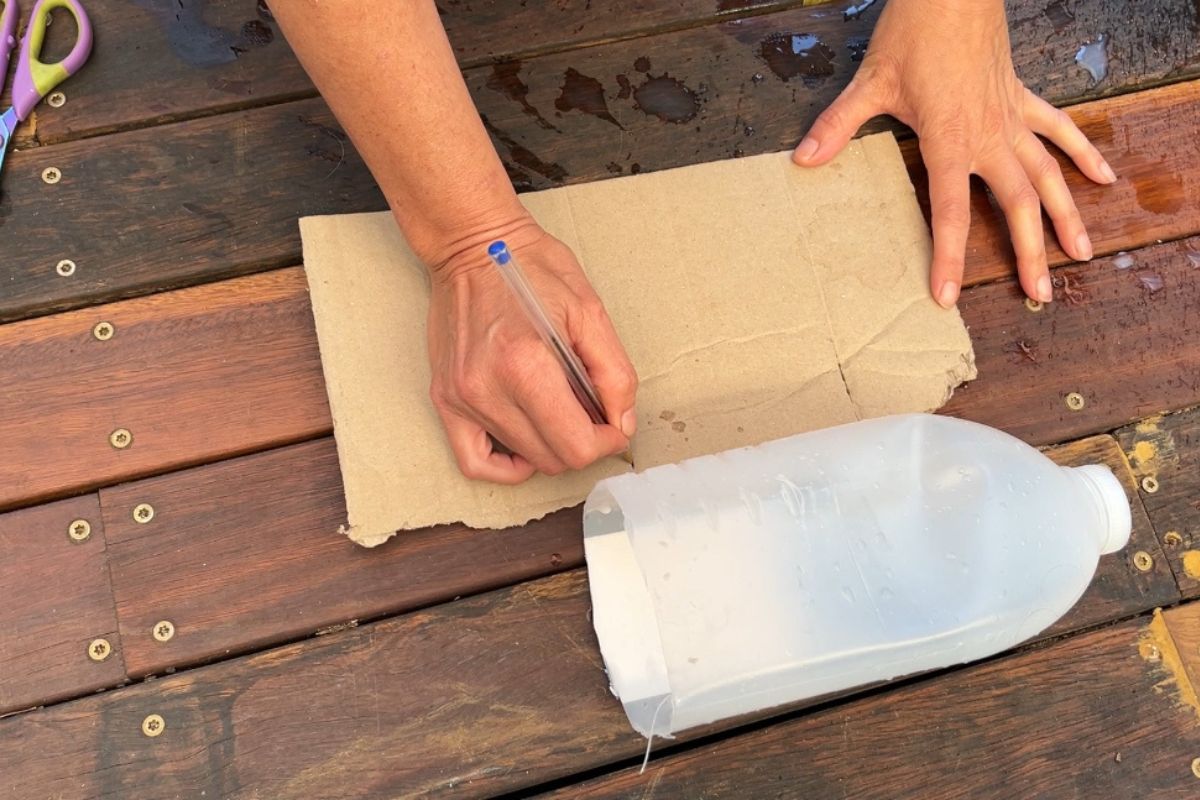
- Lay your cardboard next to the top section of the bottle and cut it 2 cm shorter than that section.
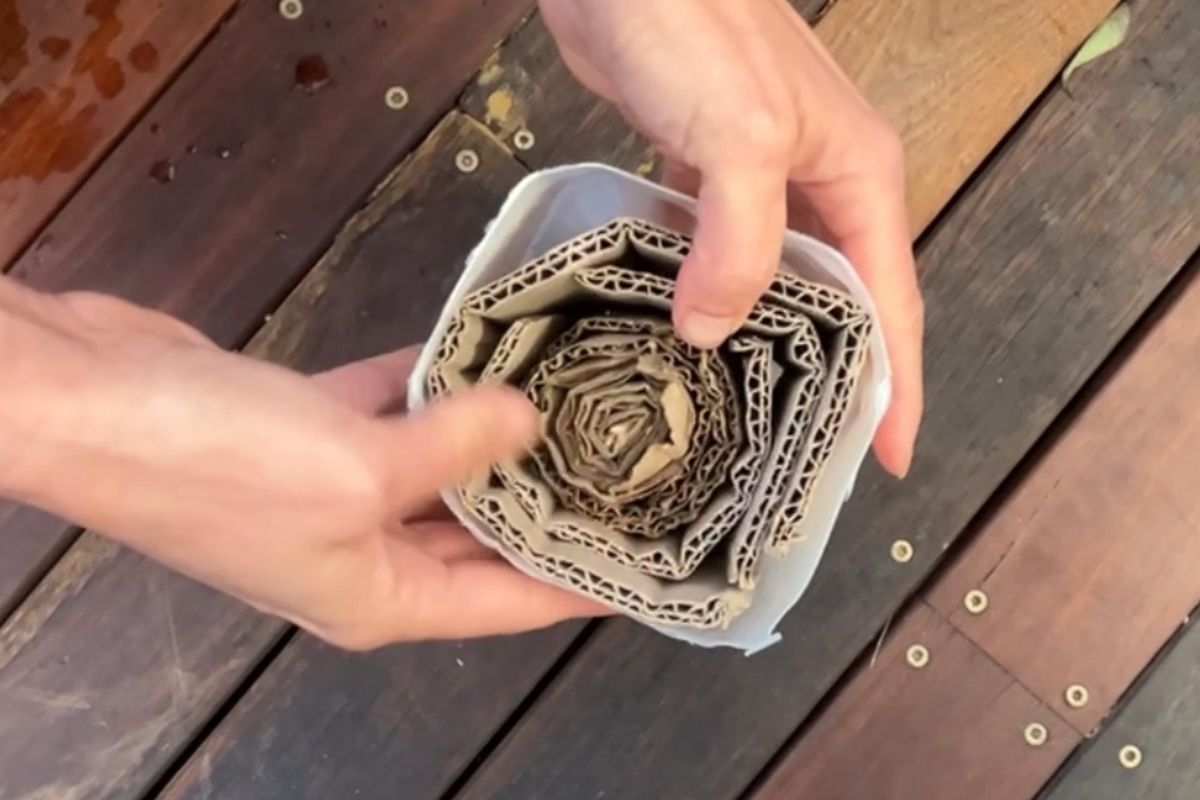
- Roll the cardboard tightly until you can squeeze it snugly into the bottle. If it doesn't sit tightly, add more rolled cardboard until it fits.
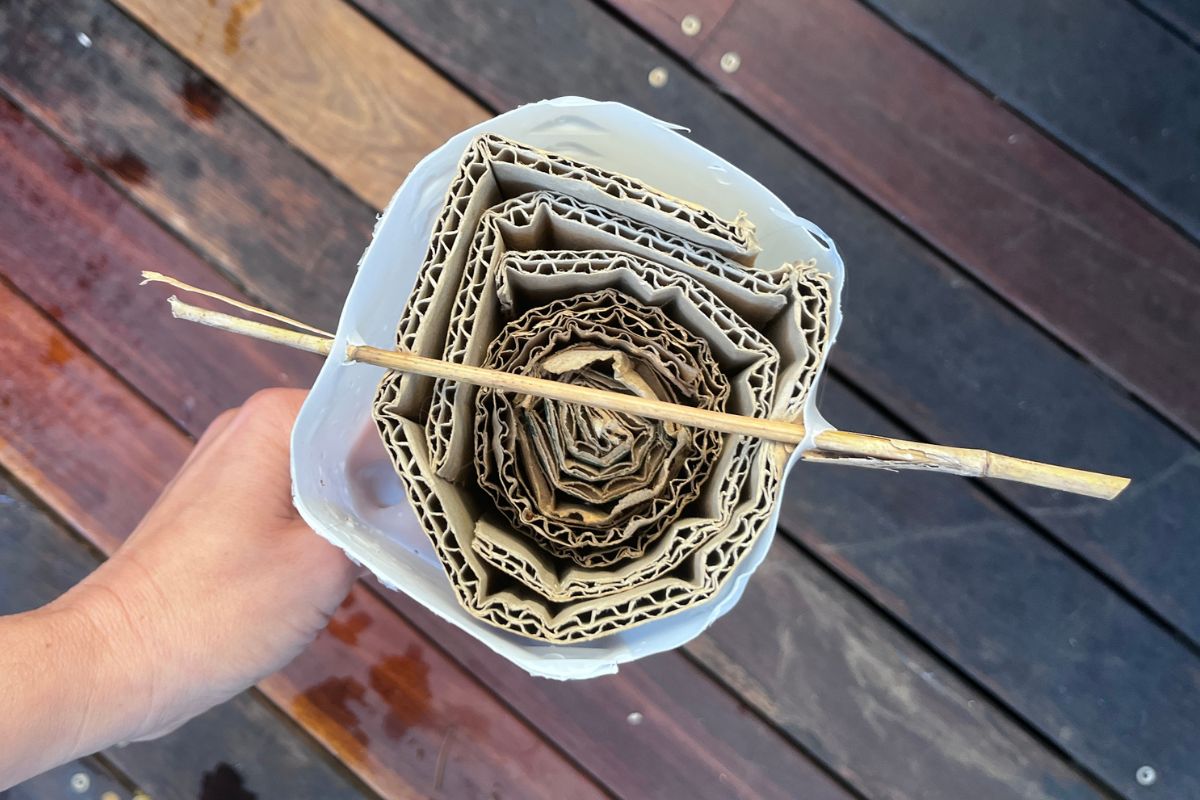
- Make 2 mm holes about 1 cm up from the cut edge of the bottle, on opposite sides, and insert a stick through them. This stops the cardboard from falling out.
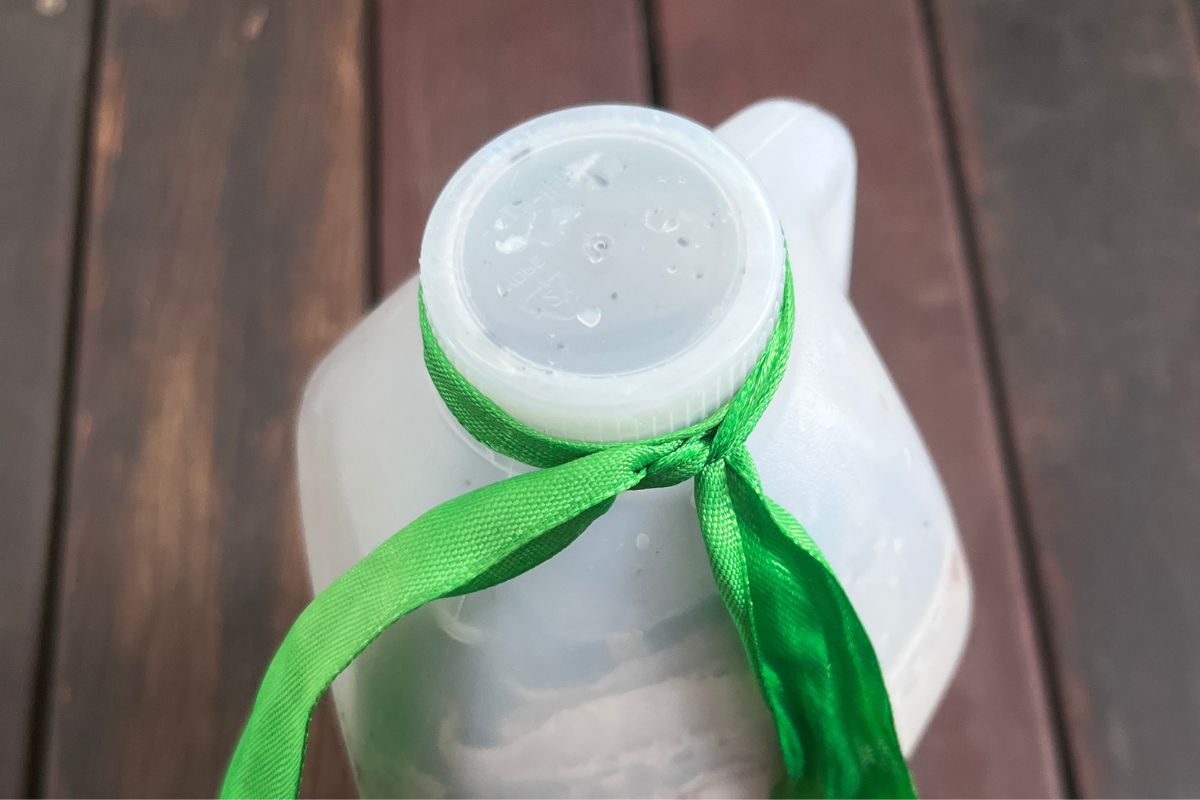
- Tie a ribbon firmly to the top of the bottle cap.
- If you like, you can now decorate the lacewing hotel. Apply a basecoat of gesso to help the paint stick, then when it's dry, paint as needed with non-toxic acrylic paint.
- Now tie it up in a sheltered position, usually under a tree or in a woody bush near your garden beds. Hang it at a slight angle with the open end tilted downwards, so any rain runs out rather than soaking into the cardboard.
.jpg)
.jpg)
Other Ways to Attract Lacewings
Avoid Spraying
Many sprays kill beneficial insects along with the pests, and plenty of organic products are no exception. Avoid them where you can.
Plant Lots of Nectar- and Pollen-Producing Plants
Especially natives. Lacewings also love plants that flower in umbels (think of ‘umbrellas’) - so dill, carrots, parsley, coriander and the like.
Keep Some ‘Sacrificial’ Crops for Pests to Feed On
These are crops you're happy to lose to aphids, so that predator numbers can build up before the pests reach your main beds. Think of it like a lacewing buffet. Nasturtiums are great for attracting aphids, as are mustards, cabbage, broad beans and cauliflower - these will all draw aphids in as the weather warms. Leave some infested plants for the larvae, too.
Try to Leave ‘Wild’ Areas of Your Garden
Don't clean up too well, as you may be removing habitat and overwintering predators like lacewings and ladybirds. Messy spaces include grasses, shrubs, leaf litter and mulch - these are the places where larvae pupate and adults shelter.
Making a lacewing hotel is just one of the many things you can do to bring beneficial insects into your garden. This fun and free activity for children and adults is a great way to recycle plastic bottles and cardboard - and keep the predators warm and happy in the winter months.
Article & Photographs by Jessica Perini