
When it comes to insects, gardeners are often too quick to divide them into neat categories of friend or foe. But if you spend some time watching and observing, you’ll quickly learn that nature doesn’t always follow rules.
Not every insect that eats your plants is a pest, and not every insect that looks helpful is entirely beneficial. In the garden, insects are playing a whole range of roles, and sometimes the same insect can be both friend and foe to the gardener. Some insects are beneficial during one stage of their lives and problematic during others.
Most insects are incredibly useful to the wider ecosystem, even if they are causing some damage to the vegetables you are growing.
Start with Observation
Before you reach for the spray, ask yourself: What is this insect actually doing in my garden?
Spend 60 seconds observing it. Some helpful things to assess are:
- Where it is on the plant?
- What it is doing?
- Is it actively eating a leaf?
- Is it sucking sap from a stem?
- Is it hunting another insect?
- How many are there?
- Is it only one, or are there 50 or more?
- Can you afford to lose a leaf or two?
Most established plants can cope with some insect damage, whereas tiny seedlings are much more fragile. Determining which plant the insect is on can also help with identification. If you’re unsure whether the insect is causing damage, wait a day and assess whether the damage is getting any worse. If they are having an impact, see if you can relocate them before you kill them.
Balance & Thresholds
One of the most useful ways to start thinking about insects differently as a gardener is in terms of balance and thresholds.
- How much damage can the plant tolerate?
- How valuable is the crop?
- Is nature already dealing with the problem?
Recognising that a healthy garden is an ecosystem, rather than a sterile space, is the first step. Sometimes a little insect damage is simply part of the bigger picture. A few holes in a leaf or two are unlikely to have a major impact on your harvest. It’s really the amount of damage, the health of the plant and whether the population is increasing that matter most.
Sap-Suckers: The Quiet Garden Thieves
Not all insect damage comes from something chewing holes in your leaves. Some of the most common garden pests are sap-suckers, which use specialised piercing and sucking mouthparts to access the fluids inside plants.
A few are often manageable, but large populations can weaken plants, reduce growth and affect overall vigour. This is another situation where watching the population and the plant is more useful than automatically reaching for the spray.
If you have a large population, one of the simplest first steps is to hose them off with a strong jet of water. This can knock many insects from the plant and reduce the population without immediately reaching for chemicals. You may need to repeat this over several days.
Aphids
Aphids are tiny, soft-bodied, pear-shaped insects that often gather in colonies around new growth, flower buds and young stems. They suck sap from the plant and can cause distorted or stunted new growth when populations become large.
Aphids also have an interesting relationship with ants. Ants will often ‘farm’ aphids, protecting them from predators in exchange for the sweet, sticky honeydew that aphids produce. If you see ants constantly travelling up and down a plant covered with aphids, they may be tending the colony rather than hunting it.
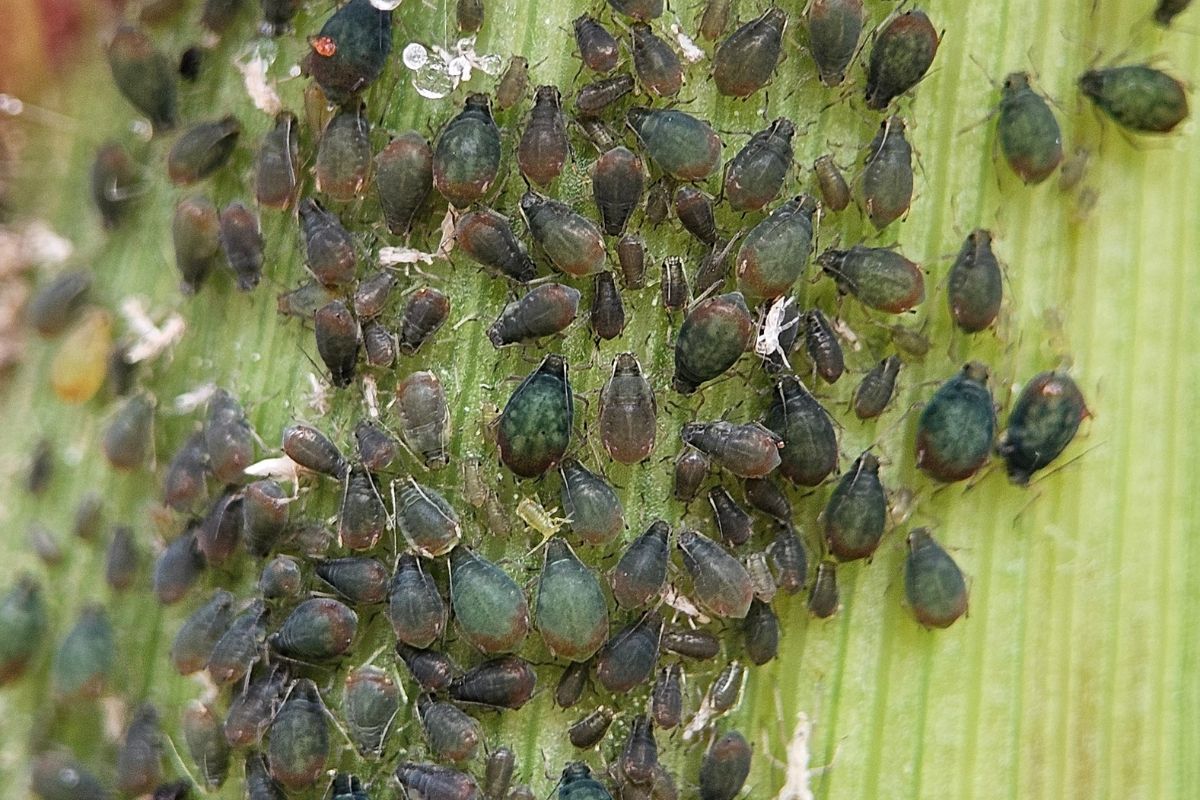 Aphid infestation on a leaf
Scale
Scale insects can be easy to miss because many look more like small bumps or flat domes attached to stems, leaves or branches than insects.
They are sap-suckers and, once established, can build up into large populations. Look closely at stems, leaf veins and the undersides of leaves, particularly on plants that are showing reduced vigour. Scale insects are often protected by a waxy or hardened covering, which makes them more difficult to control once they become established.
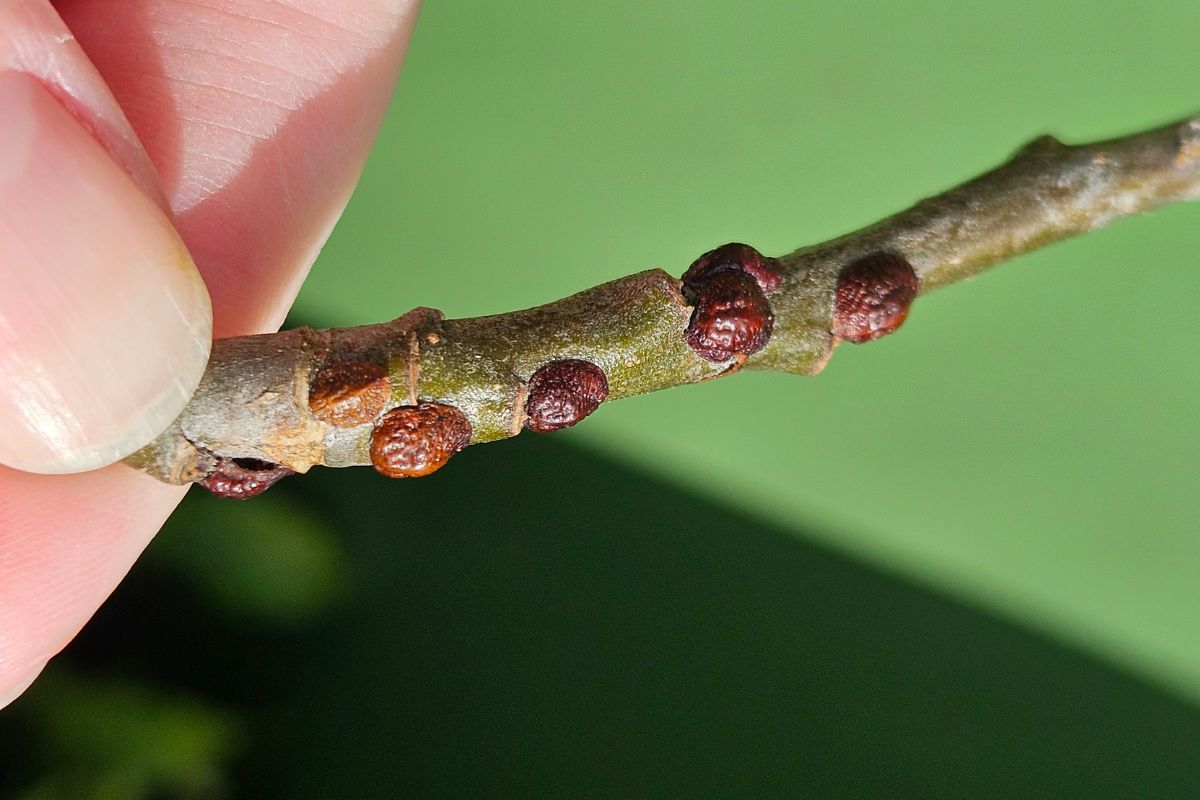 Scale attached to a branch
Whiteflies
Whiteflies are tiny, white, moth-like insects that are commonly found congregating on the undersides of leaves.
If you disturb an infested plant, the adults will often flutter up in a small cloud before settling again.
Both adults and immature stages feed on plant sap, and heavy populations can reduce plant vigour. They can also produce honeydew, which may lead to the development of sooty mould on leaves.
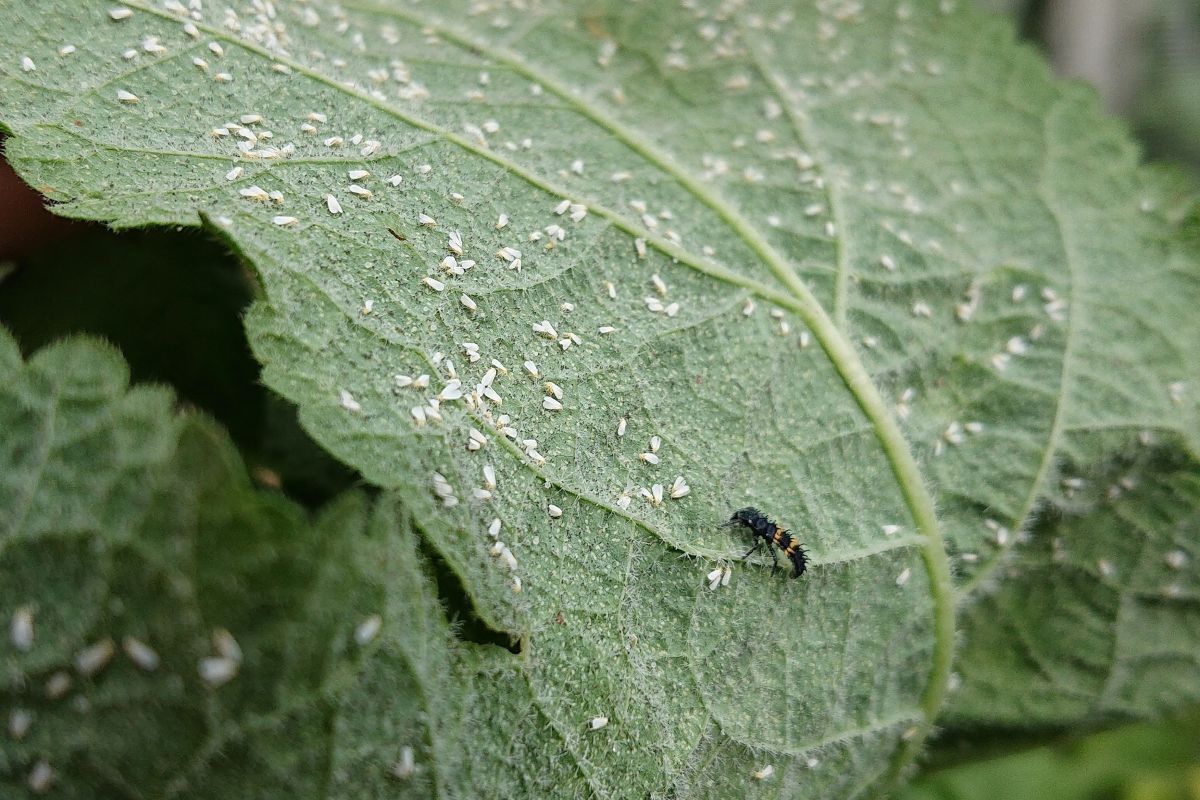 Whitefly infestation on the underside of a leaf
Hoppers
Hoppers are small, quick-moving sap-suckers that are often noticed because they jump or fly away when you disturb the plant.
They have piercing and sucking mouthparts and feed primarily on plant sap. Many species are harmless or cause little noticeable damage, but large populations can weaken plants.
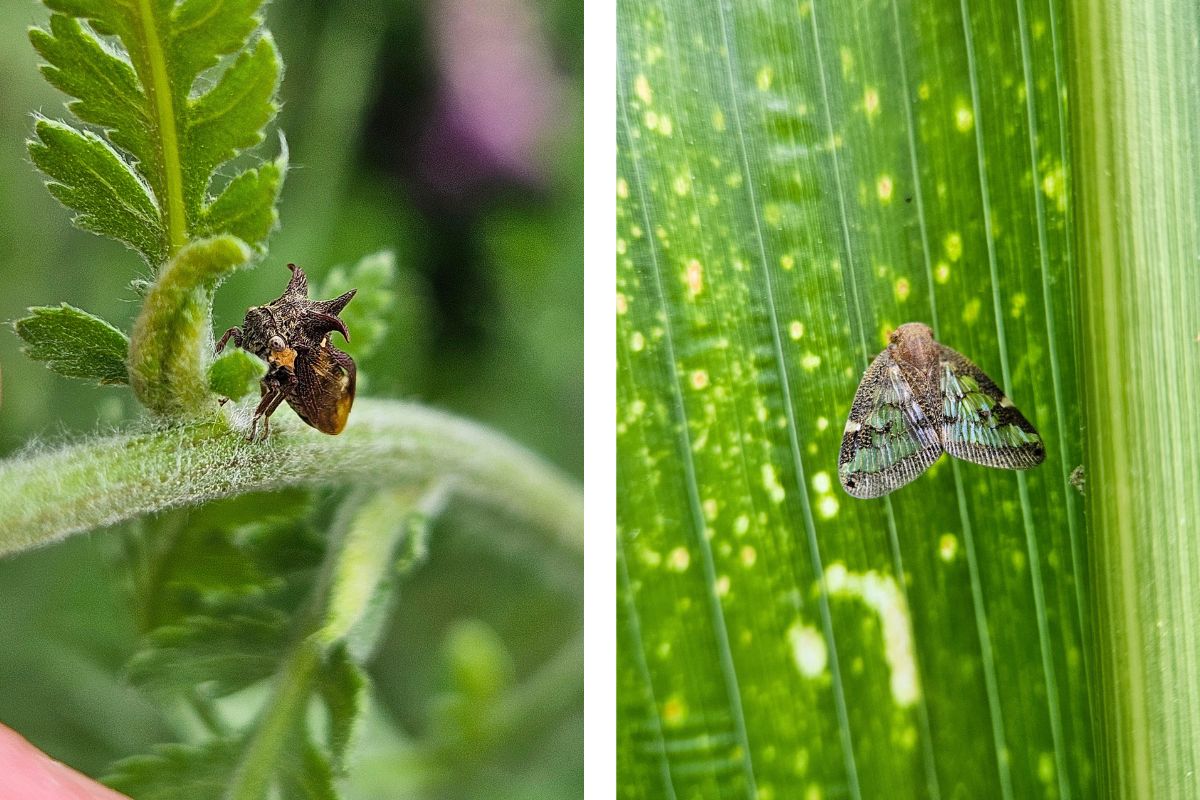 From left to right: Tri-horned Treehopper (Acanthuchus trispinifer) and Passionvine Hopper (Scolypopa australis)
Stink Bugs & Shield Bugs
Stink bugs and shield bugs are larger sap-sucking insects with the distinctive shield-shaped bodies that make them relatively easy to recognise.
The Bronze Orange Bug is particularly common on citrus, where adults and nymphs feed on plant sap and can cause damage to young shoots and fruit.
In the vegetable garden, Green Vegetable Bugs can be found feeding on a wide range of plants and fruits. They are particularly noticeable around fruiting crops such as tomatoes, apricots, broad beans and berries.
These larger bugs are generally much easier to spot than aphids or scale, so regularly checking your plants makes a big difference. If you only have a few, removing them by hand can be an easy way to reduce the population. Otherwise, removing leaves with eggs is a good way to reduce the population. Most shield bugs lay eggs in hexagonal or honeycomb-like clusters.
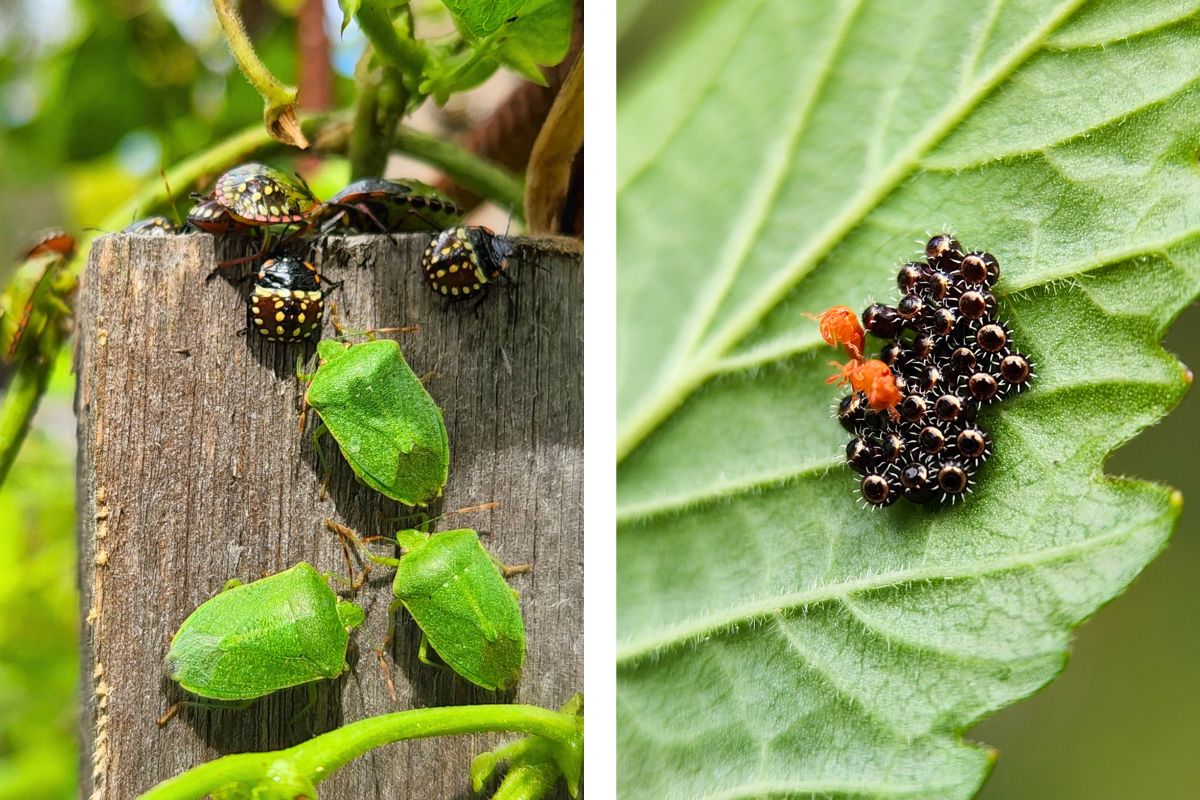 From left to right: Green Vegetable Bug adults & juveniles (Nezara viridula) and Predatory Schellenberg's Soldier Bug eggs (Oechalia schellenbergii)
There Are No Butterflies Without Caterpillars
Caterpillars are a popular nemesis for gardeners because they are voracious eaters, but every butterfly and moth starts life as a caterpillar.
While some caterpillars are serious crop pests, the answer isn’t always spraying. Protecting your crops with exclusion mesh or netting can prevent the damage while still maintaining a healthy ecosystem surrounding the plants.
Caterpillars must eat something to become butterflies or moths.
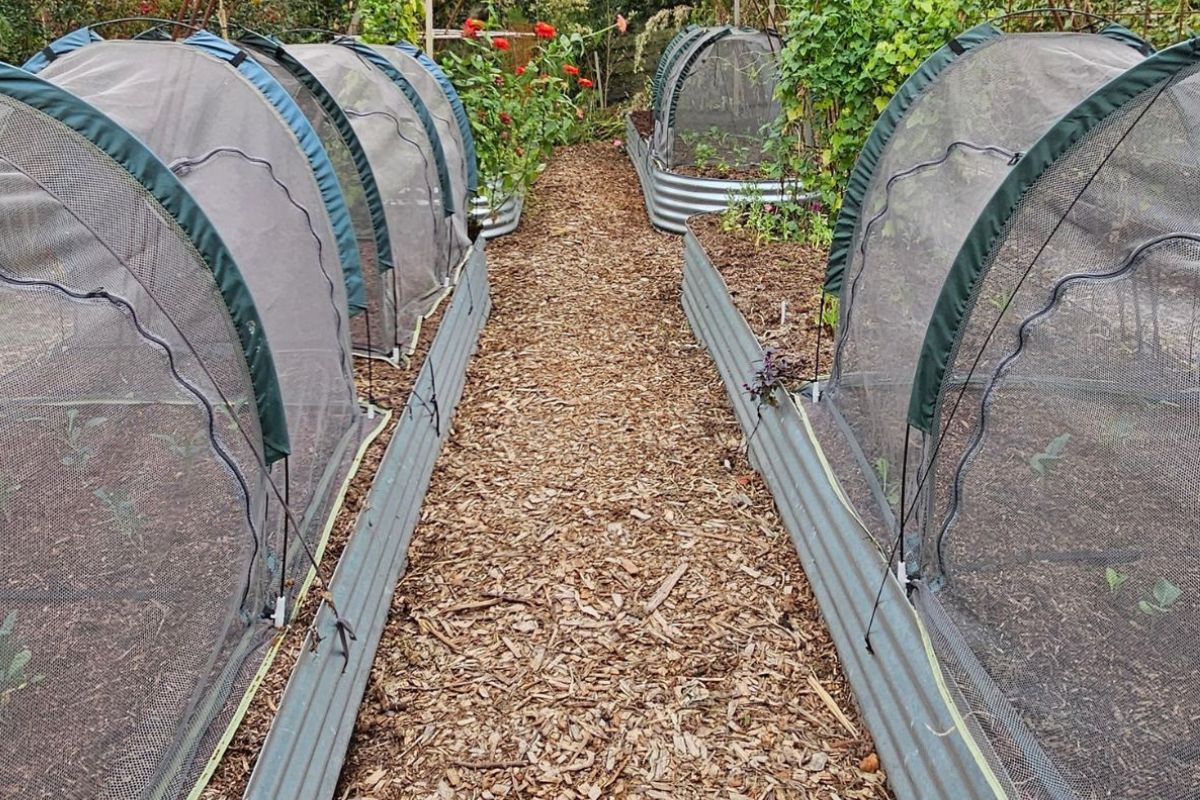 Exclusion Netting Set Up
Caterpillars: The Steps to Identification
Looking at what plant the caterpillar is on is the first step to identification.
On Brassicas
One of the most common pests for the veggie gardener is the Cabbage White Butterfly (Pieris rapae). These butterflies are particularly active during the warmer months, when they lay eggs on brassica crops. Once those eggs hatch, the small green caterpillars can create a major infestation relatively quickly.
So, if you see these butterflies hovering around your brassicas, they are likely looking for somewhere to lay their eggs. Your brassicas provide a food source for their young. They can have a significant impact on plants in the brassica family, including cauliflower, cabbage, broccoli, Brussels sprouts, kale, rocket and radishes.
Netting your brassicas is one of the most effective ways to prevent cabbage whites from laying eggs on your plants. There are also bacteria-based biological control products available for caterpillar control if you need to intervene.
Nasturtiums are also a host plant for cabbage whites and can provide an alternative food source. While the caterpillars can decimate a broccoli plant, nasturtiums are generally much more tolerant of the damage. And those caterpillars are still a valuable source of food for birds, wasps and other predators.
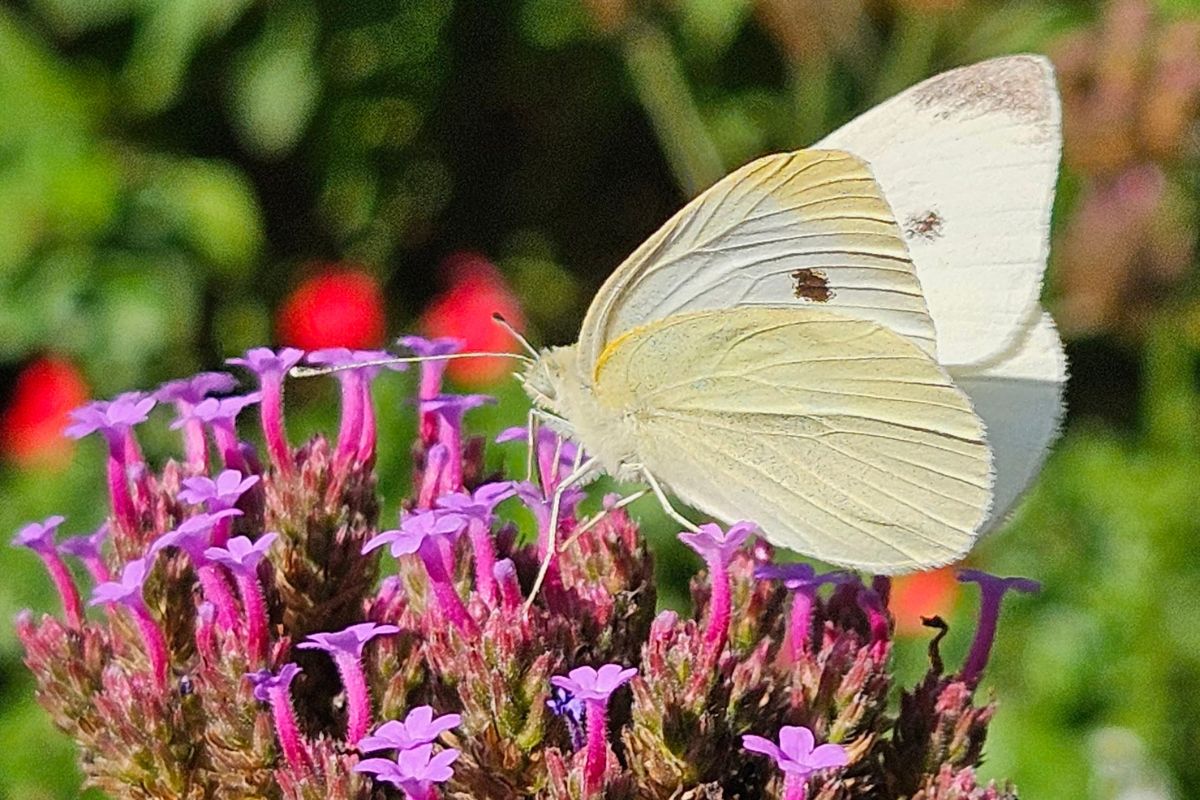 Cabbage White Butterfly (Pieris rapae)
On Citrus
Australia’s orchard swallowtail butterfly (Papilio aegeus) and Dainty Swallowtail (Papilio anactus) produce colourful, bumpy caterpillars that feed mainly on new growth.
The Orchard Swallowtail caterpillar is green and white, while the Dainty Swallowtail caterpillar is black, orange and blue. Both butterflies are large and brightly coloured, with the Dainty Swallowtail butterfly being smaller than the Orchard Swallowtail butterfly. While it might look like a lot of damage, these caterpillars feed mainly on new shoots and leaves. On established citrus, there are rarely enough to decimate or kill an entire plant – even in large populations.
These colourful caterpillars eventually become two of Australia’s beautiful native swallowtail butterflies, and the adults also contribute to pollination. If you do have a small, immature tree that you are worried about, it can usually tolerate some caterpillar feeding. If there are large numbers, consider moving some to a more established tree.
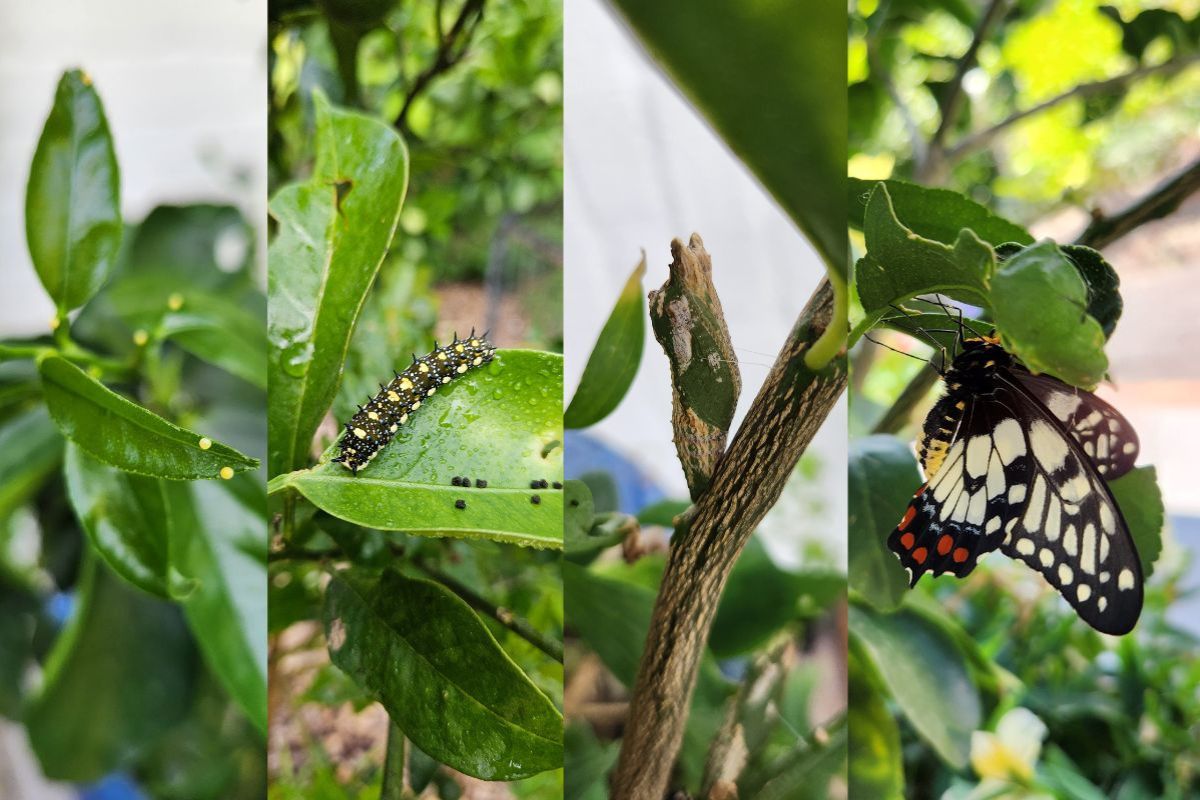 Dainty Swallowtail lifecycle (Papilio anactus)
On Natives
Sawfly larvae on native plants, particularly callistemons, can cause a fair amount of damage to young plants. Relocating or removing some of the population on small or vulnerable plants can be beneficial, while larger, established plants can often tolerate some feeding.
On Grapevines
The Grapevine Moth (Phalaenoides glycinae) is another commonly spotted caterpillar for gardeners, particularly those with productive or ornamental grapevines. This Australian moth is often seen flying during the day and can be surprisingly colourful for a moth.
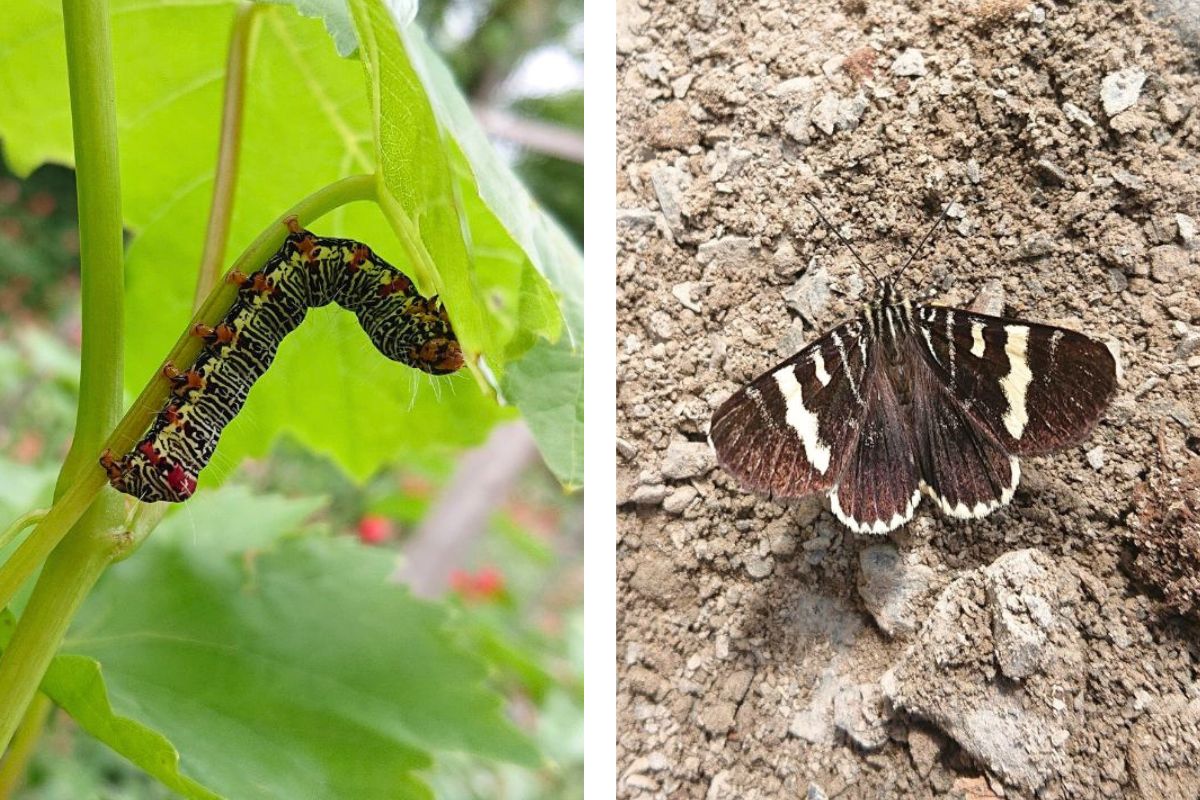 Australian Grapevine caterpillar & moth (Phalaenoides glycinae)
On Peas or Everlastings
The Australian Painted Lady (Vanessa kershawi) lays eggs on a range of plants, including native everlastings and some other host plants.
The caterpillars are spiny and brown, with pale stripes along the sides. They are often more active at night and may spend the day curled up somewhere close to their food plant. Not every caterpillar you find in the garden is a pest that needs to be removed.
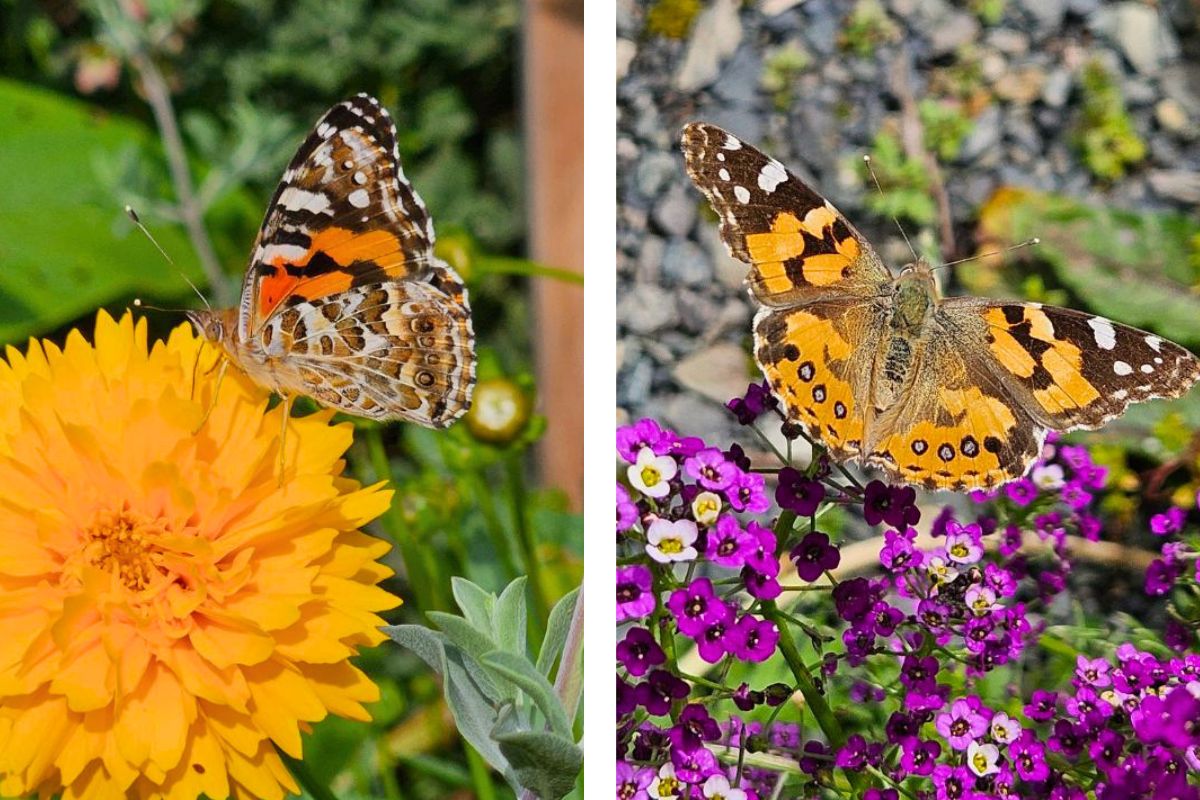 Australian Painted Lady Butterfly (Vanessa kershawi)
Moths: The Night-Shift Pollinators
Butterflies are more popular than moths because we get to see them more often, but moths are equally important pollinators and provide a major food source for microbats, tawny frogmouths and other nocturnal creatures. Many species of moth caterpillars feed on fallen and decaying leaf matter, acting as mini-composters and turning those leaves into rich organic material to feed your plants. Many also feed on living leaves, while some species feed on seeds, fungi, flowers or decaying plant material.
Butterflies might get all the attention for their beautiful colours, but moths can be just as spectacular. Some species have incredible patterns and vibrant colours, from pinks and yellows to green, orange, black and silver. Once you start looking, you realise moths are anything but dull.
This diversity is another reminder that insects are rarely as simple as good or bad.
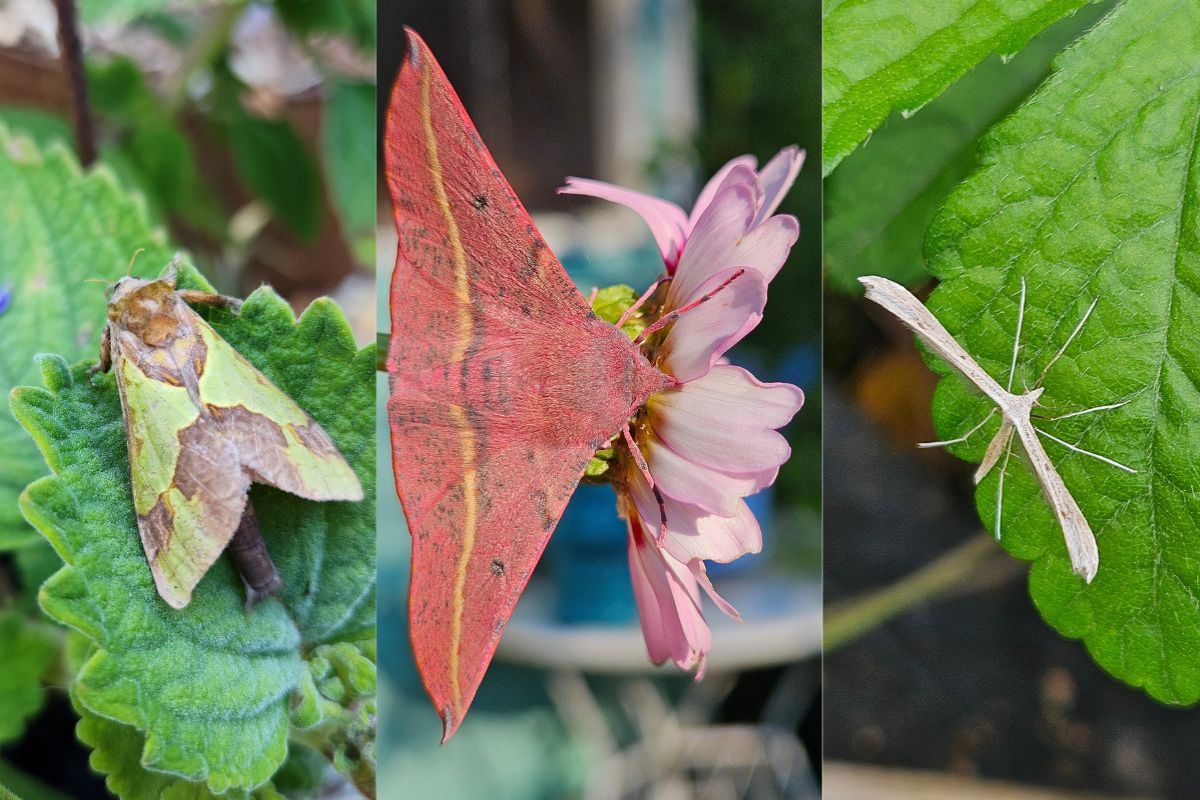 From left to right: Common Splendid Ghost Moth (Aenetus ligniveren), Pink-bellied Moth (Oenochroma vinaria), Dowdy Plume Moth (Stenoptilia zophodactylus)
Ladybird Beetles – A Universal Favourite
Ladybirds are the poster child for beneficial insects, and many species are predators of aphids, mites and scale insects.
But not every ladybird is a predator.
The 28-spotted ladybird (Epilachna vigintioctopunctata) feeds on the leaves of plants including potatoes, pumpkins, cucumbers and eggplants. They can also be found feeding on nightshade weeds.
Paying attention to the plant they are on and what they are doing is an important clue.
If you see a ladybird amongst a group of aphids, it is probably one of the predatory species. If you see one actively chewing holes in your leaves, it could be a plant-eating species such as the 28-spotted ladybird.
The 28-spotted ladybird is generally matte rather than shiny, with an orange-brown body and numerous dark spots.
Ladybirds are also a good reminder of how much an insect's appearance can change throughout its lifecycle. Their nymphs can look like tiny crocodiles, with long spiky bodies and brightly coloured patches, and are often mistaken for pests.
These larvae are predators too and can consume large numbers of aphids.
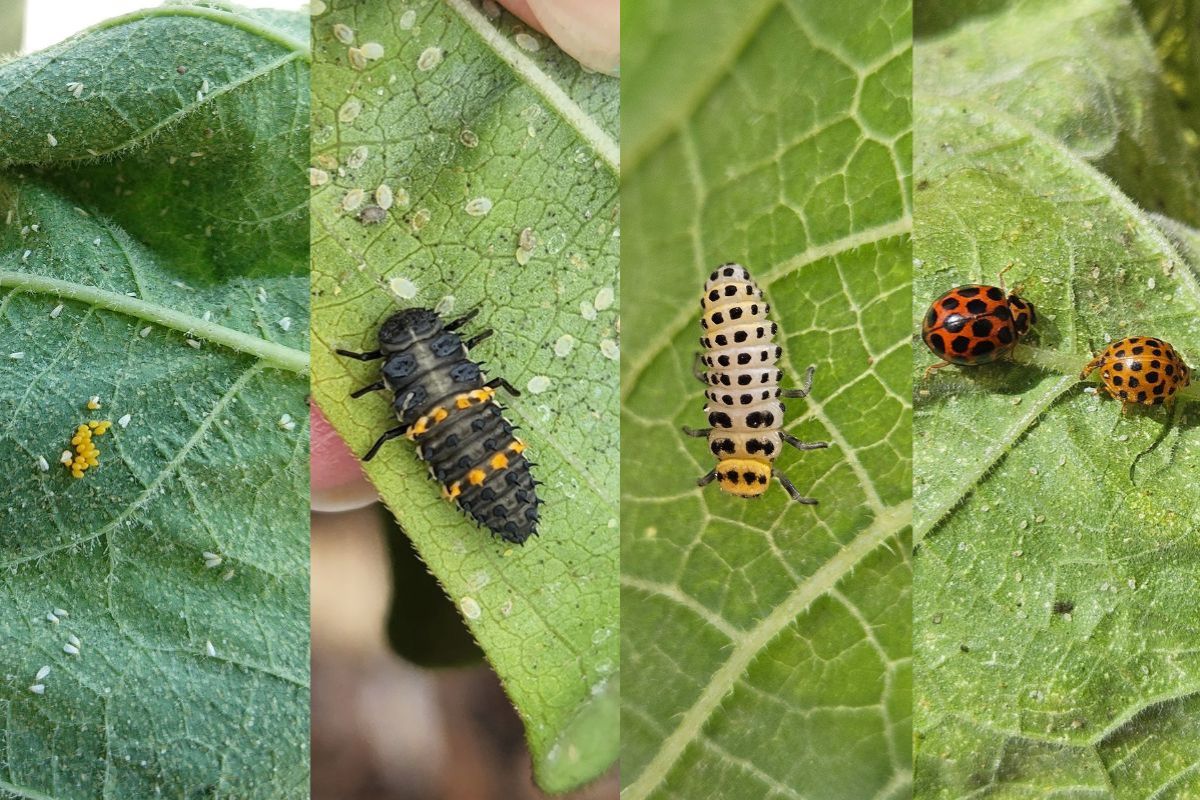 From left to right: Ladybird eggs, Large Spotted Ladybird larvae (Harmonia conformis), Fungus Eating Ladybird larvae (Illeis galbula), Common Spotted (Harmonia conformis) vs 28 Spotted leaf-eating (Epilachna vigintioctopunctata)
Predators: Natural Pest Control
Assassin bugs are stealthy predators that will stalk and ambush other insects using their spear-like mouthparts. They will often be crawling over your plants looking for a caterpillar, beetle or bug to devour. These are hugely beneficial creatures to have around, but also watch out for them when gardening, as they can deliver a painful bite.
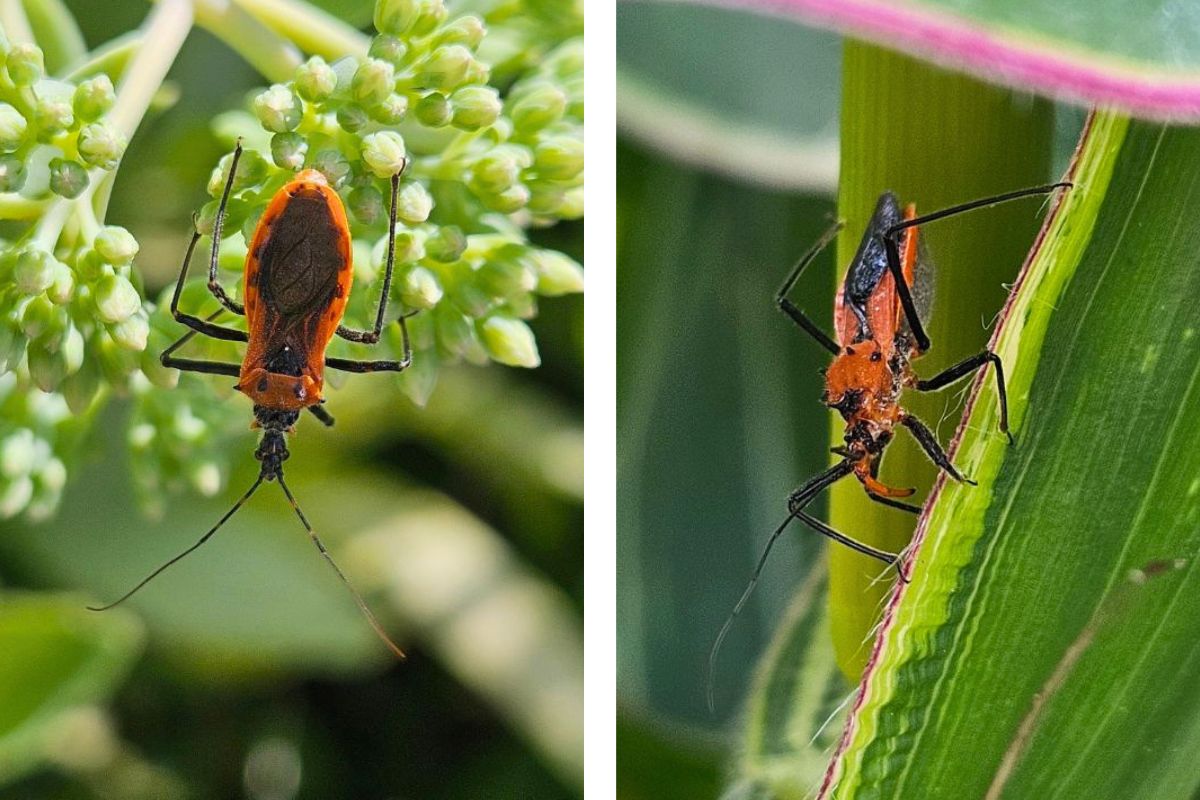 Orange Assassin Bug (Gminatus australis)
Robber flies sometimes look a bit like a cross between a dragonfly and a cricket. They are fast-flying predators that catch insects in mid-air. They will eat grasshoppers, crickets, moths, beetles and other flying insects.
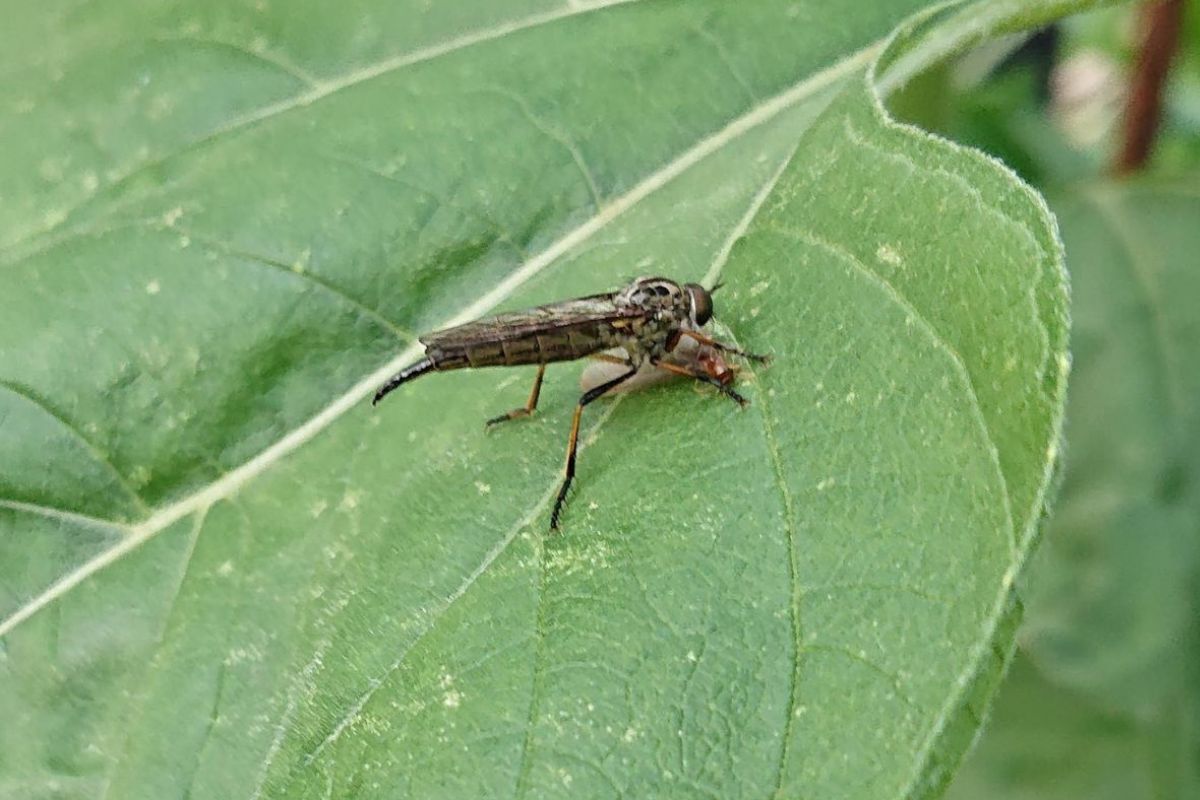 Robberfly (Cerdistus rusticanoides)
Dragonflies and damselflies will hunt mosquitoes, whiteflies, moths, and other small insects. Their nymphs will eat mosquito larvae. They are more common in gardens with a pond or permanent water source.
While dragonflies and damselflies can look similar, the easiest way to tell them apart is their eyes. Dragonflies' eyes meet at the top of their heads, whereas the more delicate damselfly has clearly separated eyes.
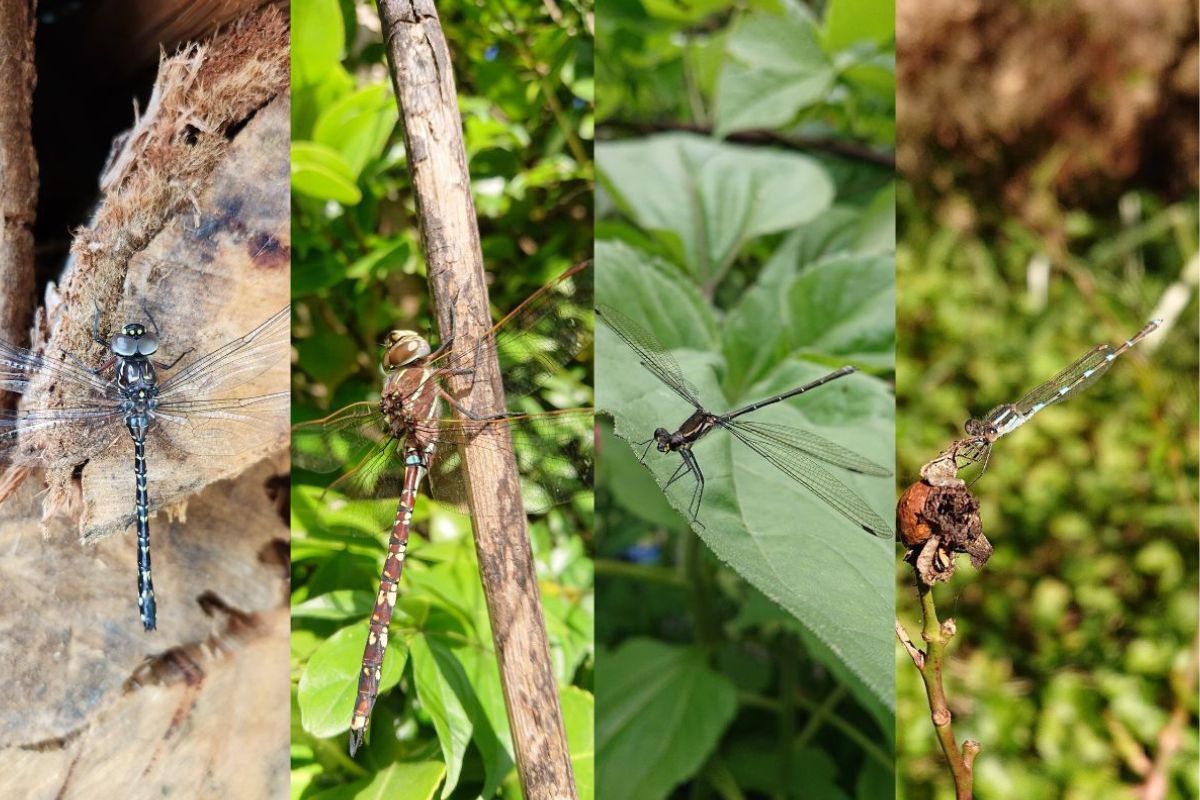 Multi-spotted Darner (Austroaeschna multipunctata), Dragonfly (unknown), Common Flatwing (Austroargiolestes icteromelas), Slender ringtail Damselfly (Austrolestes analis)
Lacewing larvae eat aphids, scale insects, and mites. Adult lacewings are easily identifiable by their delicate wings and bright eyes. Their eggs are laid in clusters on the ends of long stalks.
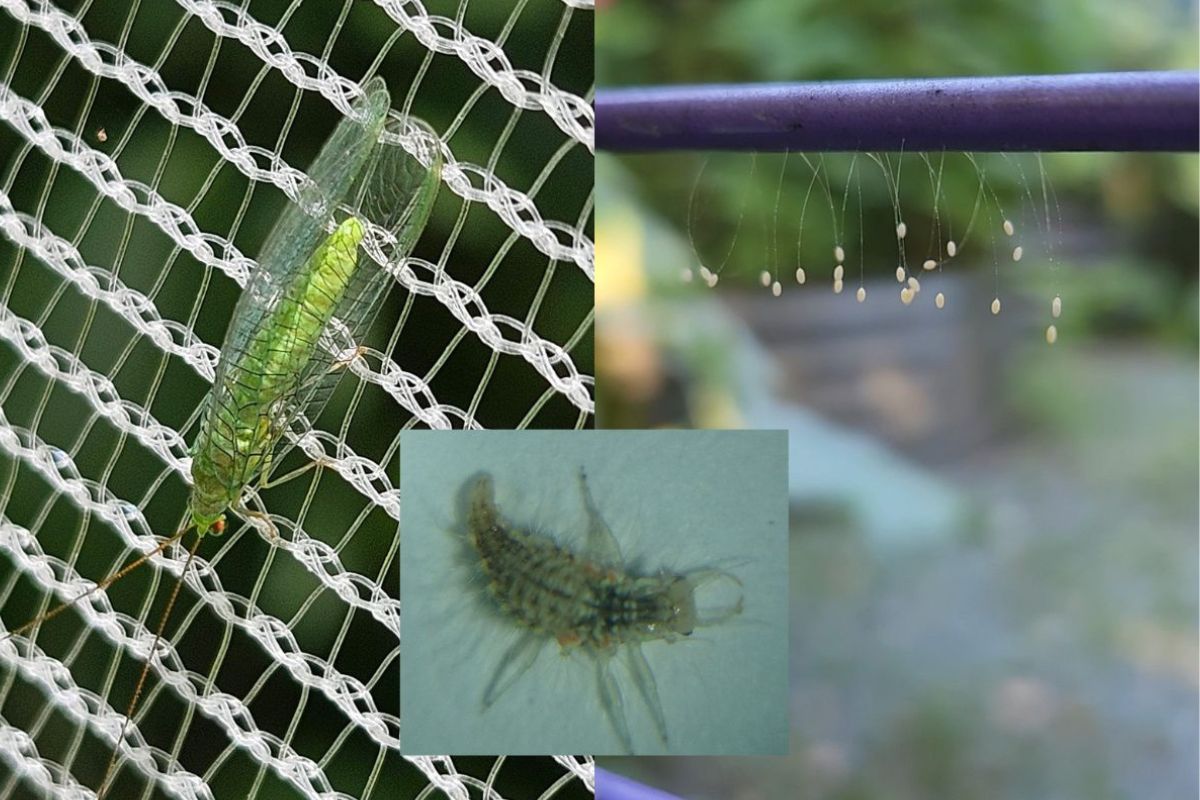 Lacewing, eggs & larvae (Mallada signatus)
Praying Mantids are one of the most recognisable garden insects; they are ambush predators that use their powerful, spined forelegs to catch a wide range of prey including moths, flies, caterpillars and grasshoppers. They are not fussy about what they catch, so you might even see them eating a bee or butterfly.
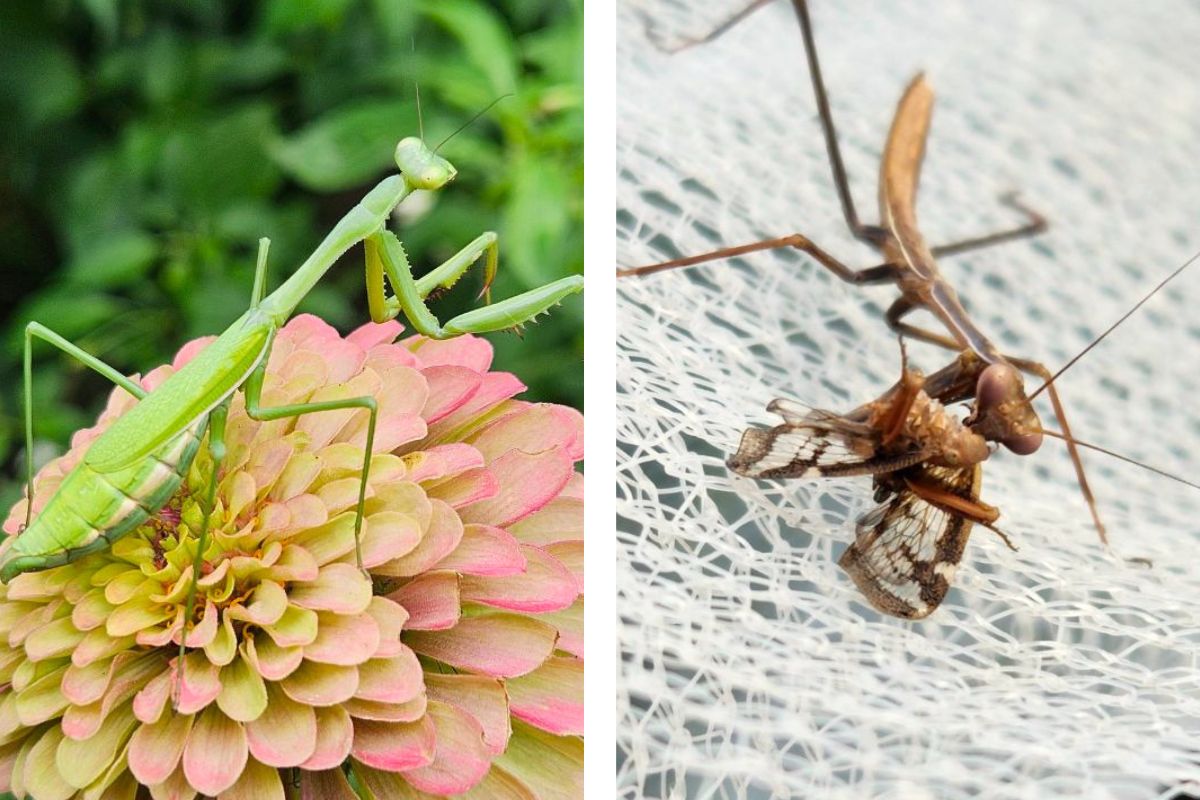 Green Mantis & Brown Mantis
Spiders, although not insects, can't be left out of this article. While no one likes walking through a spiderweb, they do catch many insects in their webs and are essential predators in the garden.
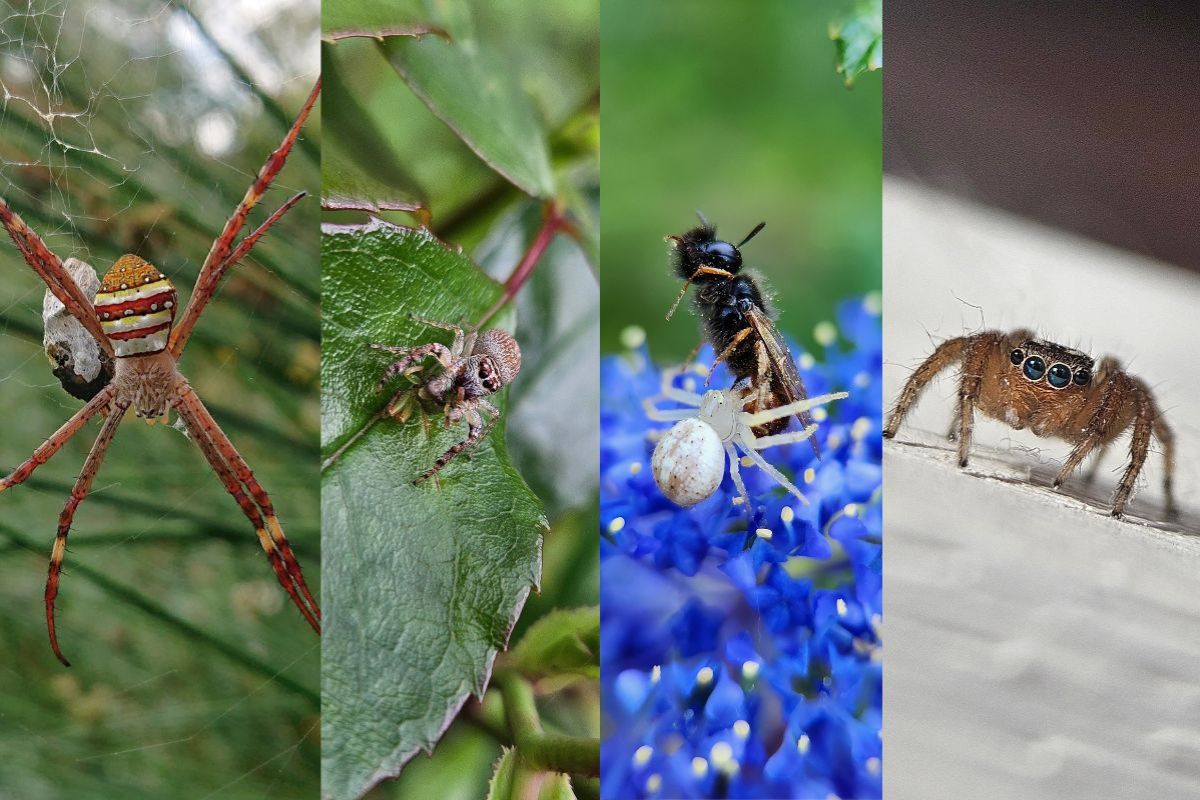 Saint Andrew's Cross spider (Argiope keyserlingi), Princess Jumping Spider (Opisthoncus nigrofemoratus), White Flower Spider (Thomisidae), Jumping Spider (Salticidae)
Chewers and Composters
Some insects get blamed for damage simply because they're the ones you find when you go looking. Chewed leaves and nibbled seedlings are often pinned on whatever happens to be sitting nearby.
Check what the insect is actually doing and how many there are before you act. Several of the most commonly accused garden residents are doing very little harm, and some are actively helping.
Katydids mostly eat leaves, seeds and flowers, although there are some species that also eat small insects. Katydids generally need to be present in huge numbers to cause serious damage to plants, but they are a great food source for birds, which usually help keep the population manageable.
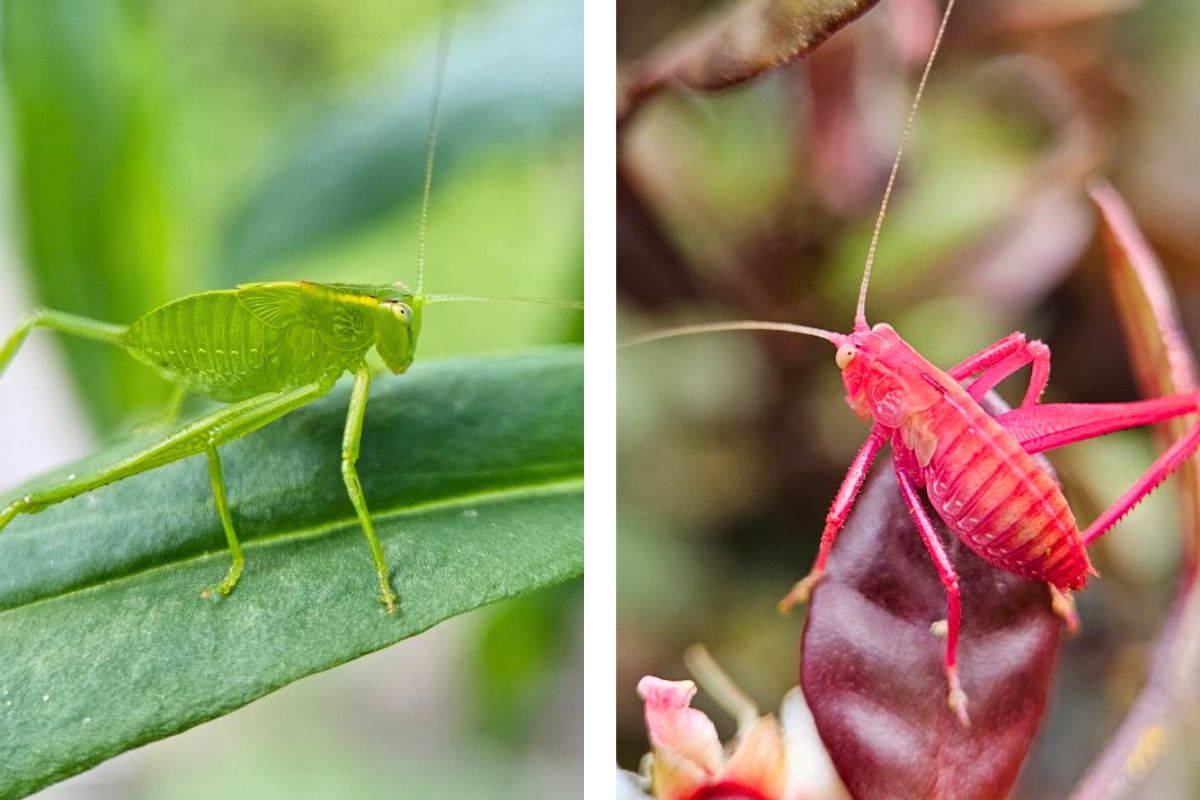 Australian Common Garden Katydid (Caedicia simplex)
Slaters or Roly-Polys are technically crustaceans rather than insects, but they are awesome little composters, commonly found around compost and decomposing material. They can also be annoying when they damage small fragile seedlings.
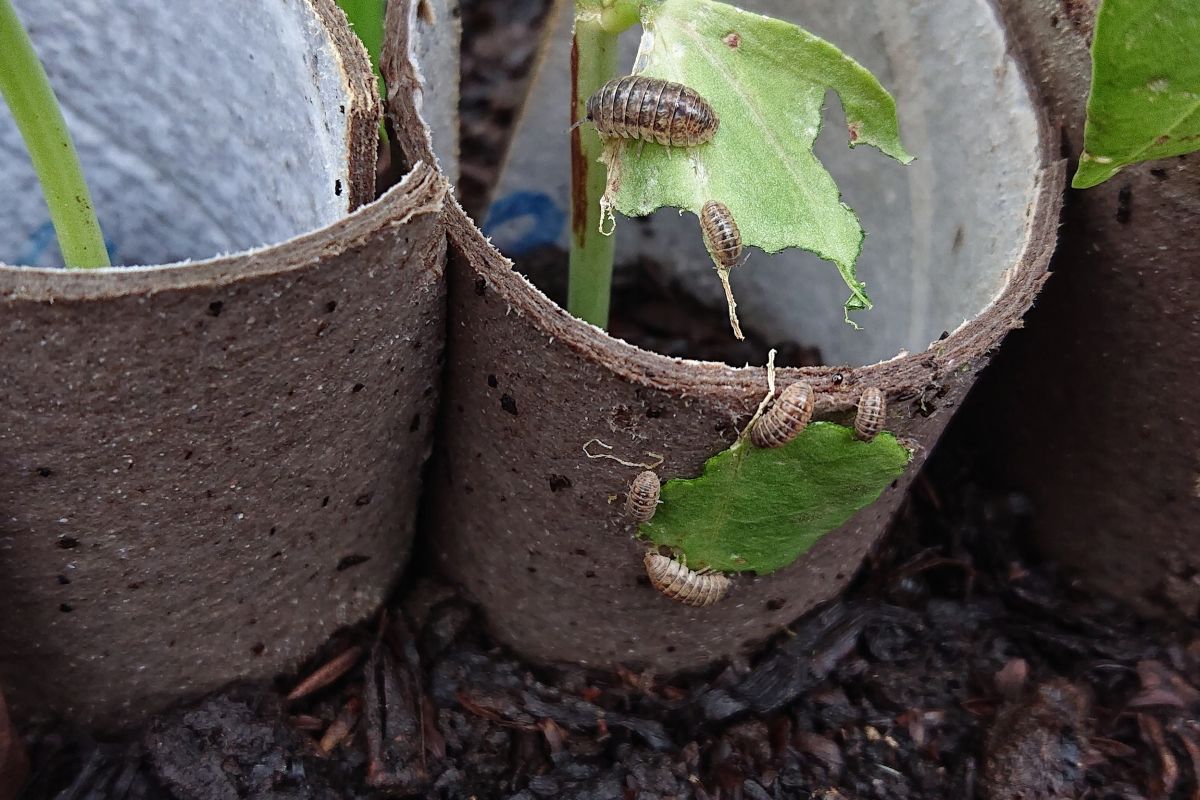 Pill-Bug/Roly-Poly (Armadillidium vulgare)
Weevils are beetles recognised by their distinctive long snouts, and while some, such as pea weevils, can be garden pests, others, like the impressive Elephant Weevil, are harmless native species.
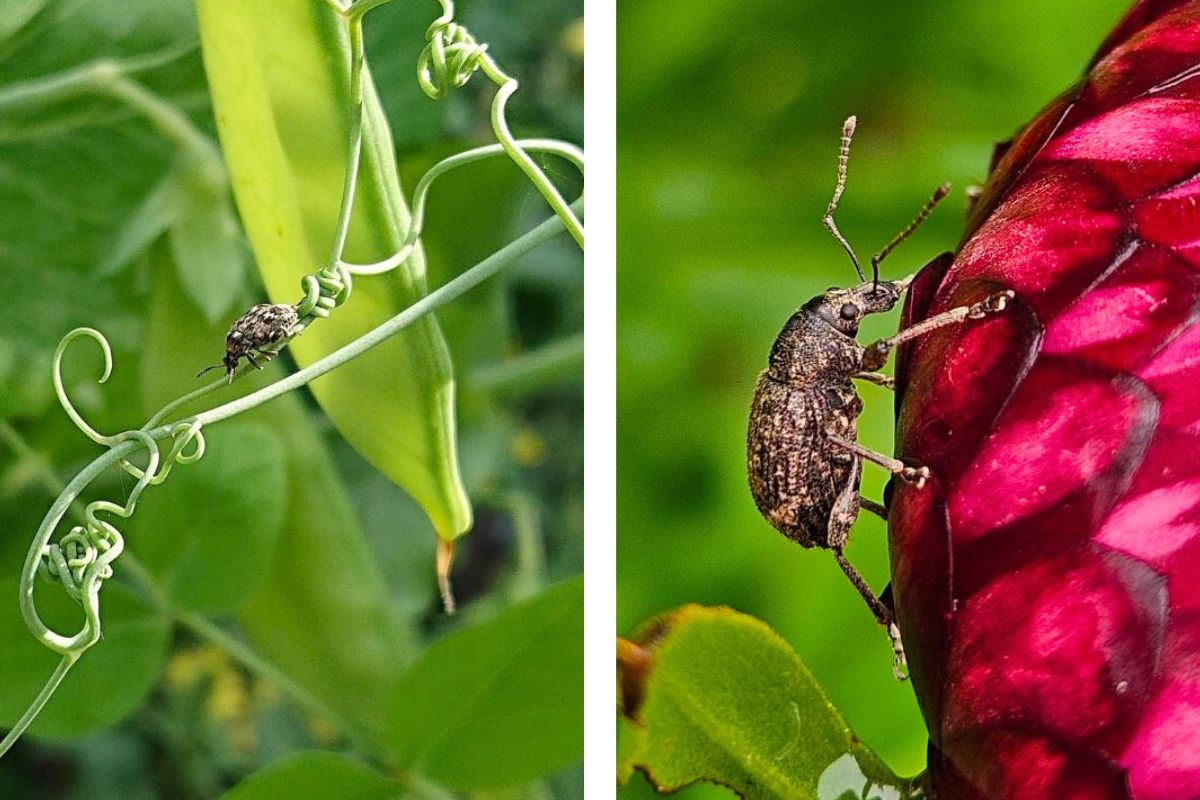 From left to right: Pea Weevil (Bruchus pisorum), Elephant weevil (Orthorhinus cylindrirostris)
Bees: More Than Just Honeybees
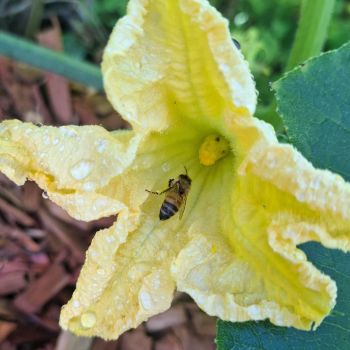
When we think of bees, most people immediately think of the European honeybee (Apis mellifera), as this is the species that has been farmed in Australia for honey. Honeybees are an introduced species, and wild or feral colonies are now widespread across Australia. But Australia has hundreds of species of native bees. Many live solitary lives rather than in large colonies and hives, and some nest in the ground.
Native Bees: Australia’s Hidden Pollinators
Native bees are a hugely important part of our ecosystem and excellent pollinators, making them particularly useful in the vegetable garden.
Blue-banded bees (Amegilla) are particularly interesting because they are excellent buzz pollinators. They vibrate their bodies against the flower in a way that releases pollen from flowers that require this type of pollination. Native bees come in a huge range of shapes and sizes. Some are easily mistaken for flies, while others look nothing like the traditional image of a bee.
Remember, the best way to support bees is to plant a range of flowering plants, from natives to annuals and perennials.
Flowers of different shapes, sizes and colours provide food for a wider range of insects. Importantly, try to ensure there is something flowering throughout as much of the year as possible so there is a stable and reliable food source.
Many native bees also nest in spent flower stems, timber and other small spaces, so leaving some dead flower stems in the garden can provide valuable habitat.
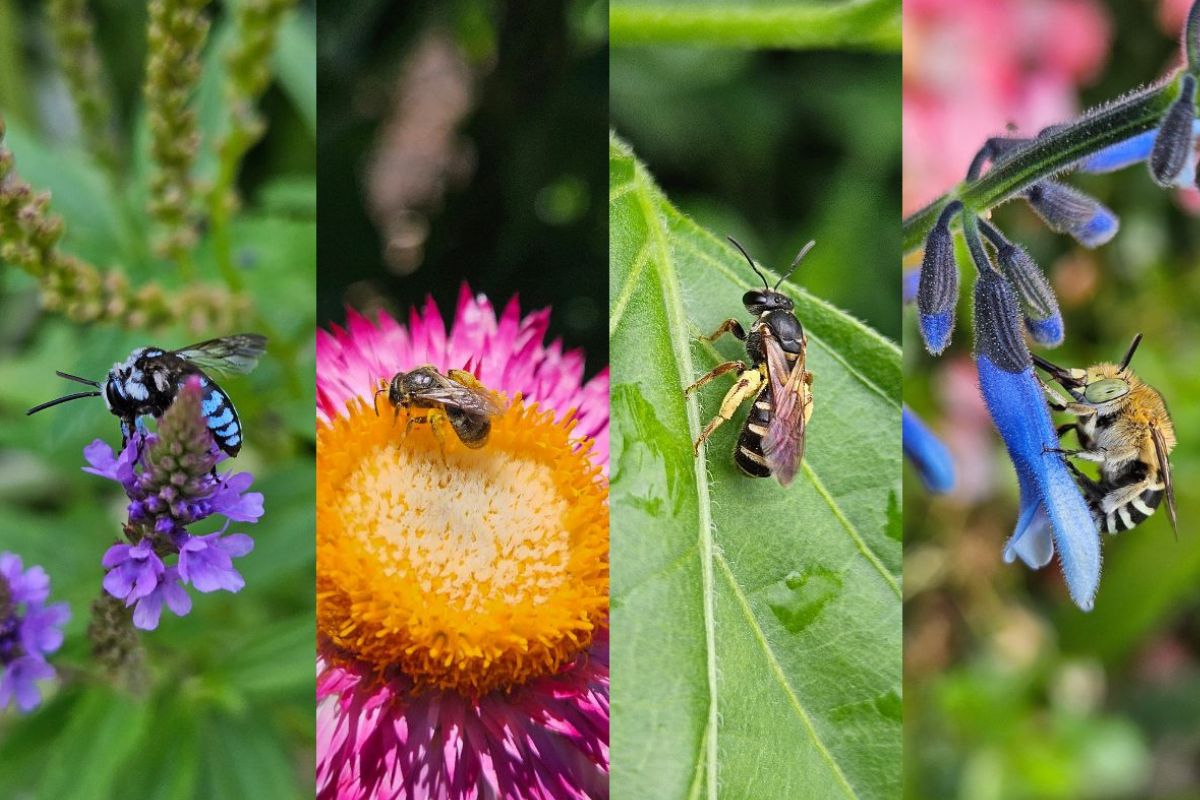 From left to right: Chequered Cuckoo Bee (Thyreus caeruleopunctatus), Sweat Bee (Lasioglossum), Halictid Bee (Lasioglossum bicingulatum), Blue Banded Bee (Amegilla)
Wasps: Misunderstood Allies
Similar to moths, wasps are often misunderstood.
While introduced European wasps (Vespula germanica) can certainly be a problem, Australia also has an enormous diversity of native wasps. Many are solitary and pose little threat to people unless their nests are disturbed.
There are also thousands of species of native wasps that are predators or parasitoids, helping to keep other insect populations in balance.
Tiny parasitoid wasps often lay their eggs in or on other insects. As the larvae develop, they use their host as a food source, ultimately killing it. If you see a green caterpillar covered in tiny white cocoons, leave it alone. They may look horrible, but those cocoons may belong to the next generation of beneficial parasitoid wasps. Some adult wasps also visit flowers for nectar and can contribute to pollination.
Again, this doesn’t mean that every wasp nest should be left alone. A nest in a high-traffic area can pose a problem, but a solitary wasp hunting caterpillars is not the same thing as a colony of wasps.
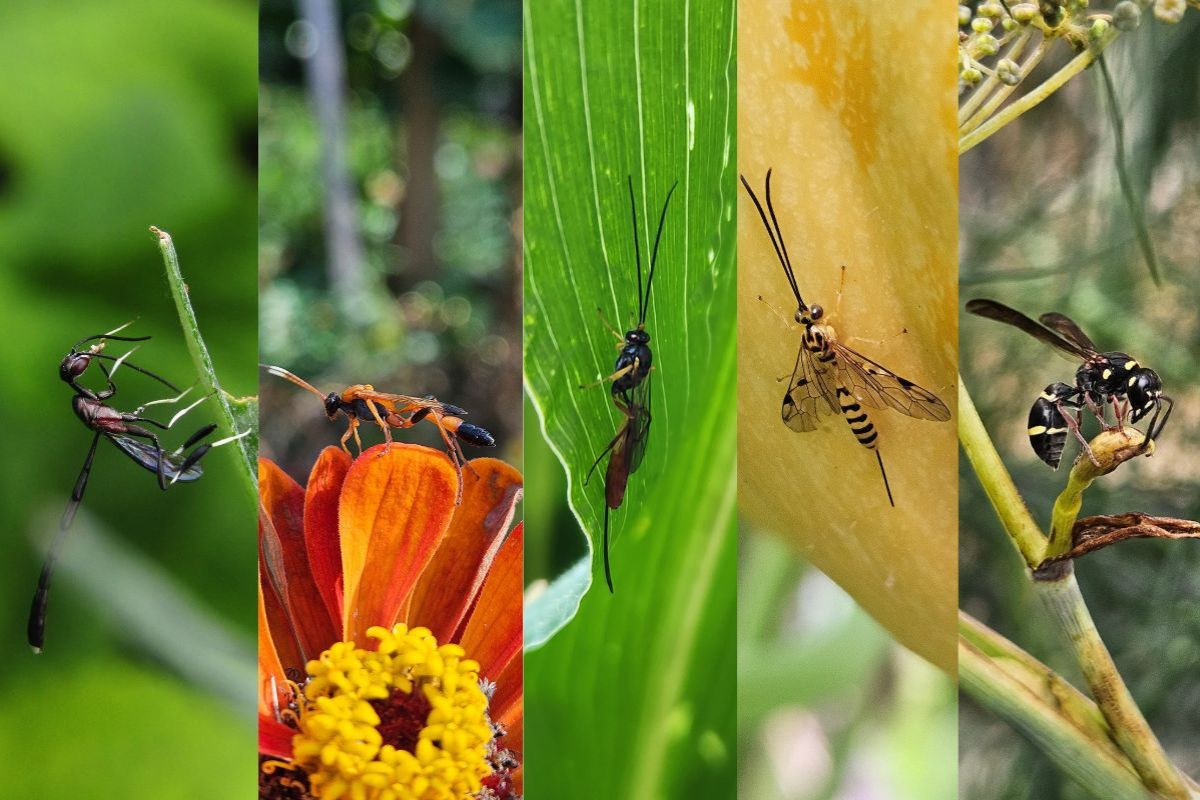 Gasteruptiid Wasp (Gasteruption), Black-tipped Orange Ichneumon Wasp (Ctenochares bicolorus), Parasitoid Wasp (Campopleginae), Yellow Ichneumon Wasp (Xanthopimpla), Australian Potter Wasp (Paralastor)
Hoverflies: Bee Mimics
Hoverflies are often mistaken for bees or wasps when, in fact, they are neither – they are flies.
The black and yellow stripes of some species mimic bees and wasps, but the easiest way to tell them apart is that hoverflies have a single pair of wings, like all flies, rather than two pairs like bees and wasps. Hoverflies also tend to have large, prominent eyes and short antennae. Their flight pattern is another giveaway: as their name suggests, they can hover in one place before suddenly darting away.
Adult hoverflies feed on nectar and are a valuable part of the garden ecosystem. Many species also help control aphids because their larvae feed on them. Like all flies, hoverfly larvae are maggots. The green-coloured maggots of hoverflies are often found near aphids as the maggot will consume the aphids before turning into an adult hoverfly.
Drone flies are like a larger version of hoverflies. Their larvae are rat-tailed maggots that live in stagnant, waterlogged soil (like the bottom of a worm farm). They have a long tail-like snorkel that allows them to breathe. They help with decomposing material.
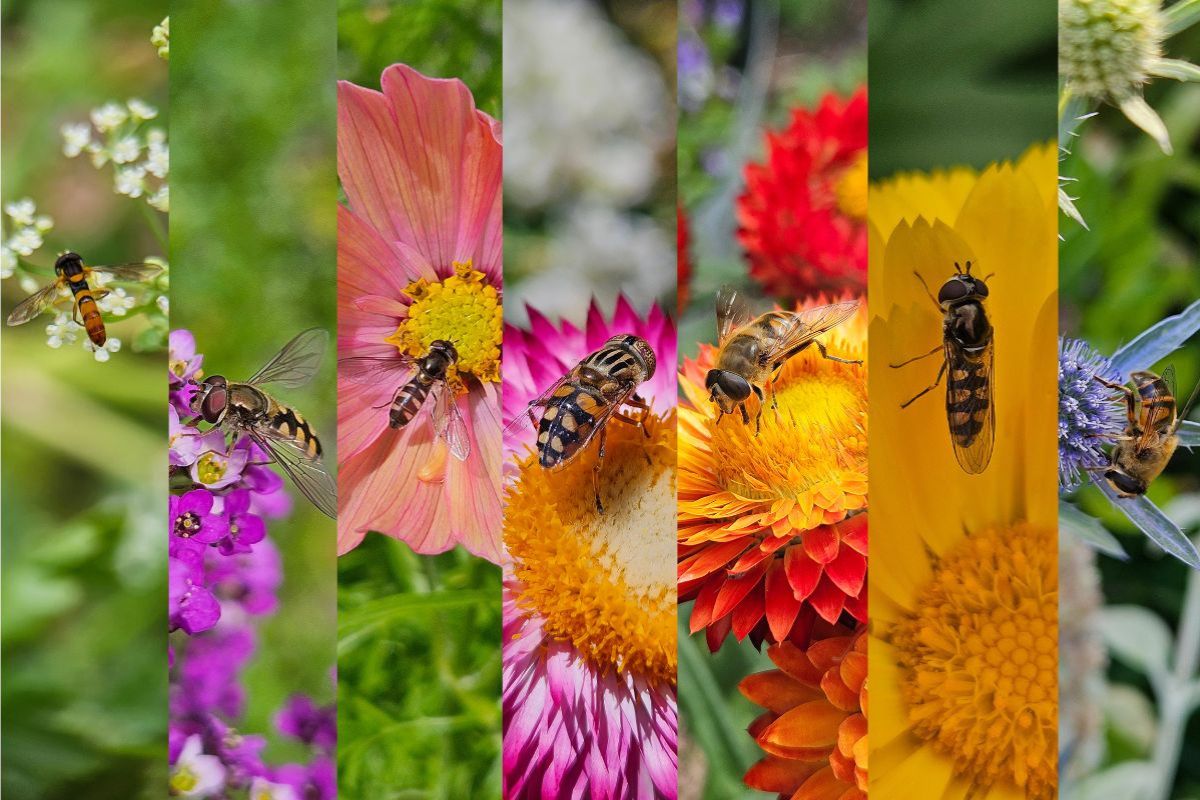 Orange-banded Slender Hoverfly (Sphaerophoria macrogaster), Common Halfband (Melangyna viridiceps), Common Hoverfly (Syrphidae), Golden Native Drone Fly (Eristalinus punctulatus), Drone Fly (Eristalis tenax), Hoverfly (Syrphidae), Drone Fly (Eristalis tenax)
Beetles: Declining, Misunderstood and Essential
Finding a grub in your soil doesn't automatically mean you've found a pest.
Beetle larvae are often white or cream coloured and are found below the soil surface. When dug up, many will curl into a C-shape. These larvae have many different diets. Some eat plant roots, while others feed on fungi, other insects or decaying organic material.
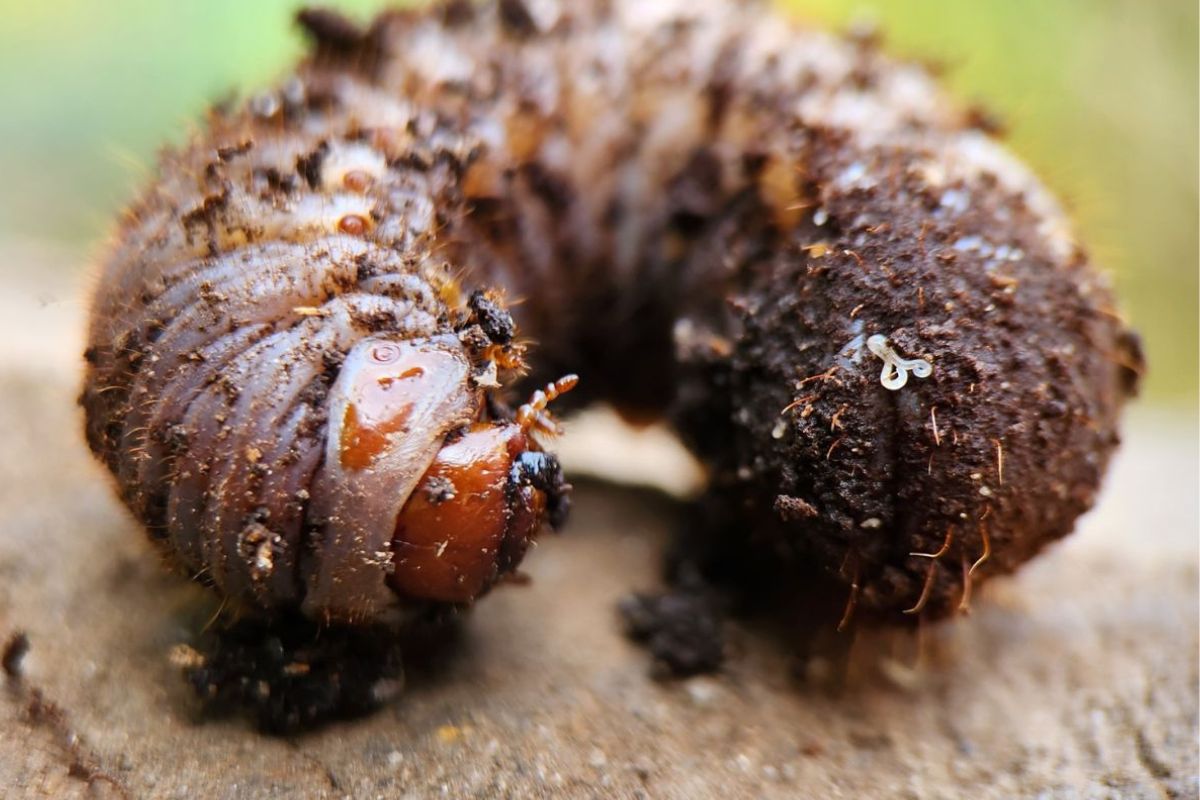 Scarab Beetle larvae
Christmas beetles are a particularly good example of why we need to look more closely before deciding that a grub is a problem. Their larvae live in soil and feed on roots, while the adults feed on eucalypt leaves.
There is evidence that Christmas beetle numbers have declined in some parts of Australia, particularly around urban areas, where habitat has been lost.
Beetles are a wonderfully diverse group, playing many different roles in the ecosystem. Adult beetles have a range of diets. Some are insect predators, some eat fungi, some eat plants and some feed on decaying material. Some beetles are excellent composters, helping break down organic matter.
We need beetles to help pollinate. Flower Beetles and Cowboy Beetles are powerhouses for pollination, transferring pollen between flowers as they feed. They are also a valuable food source for birds, frogs and lizards.
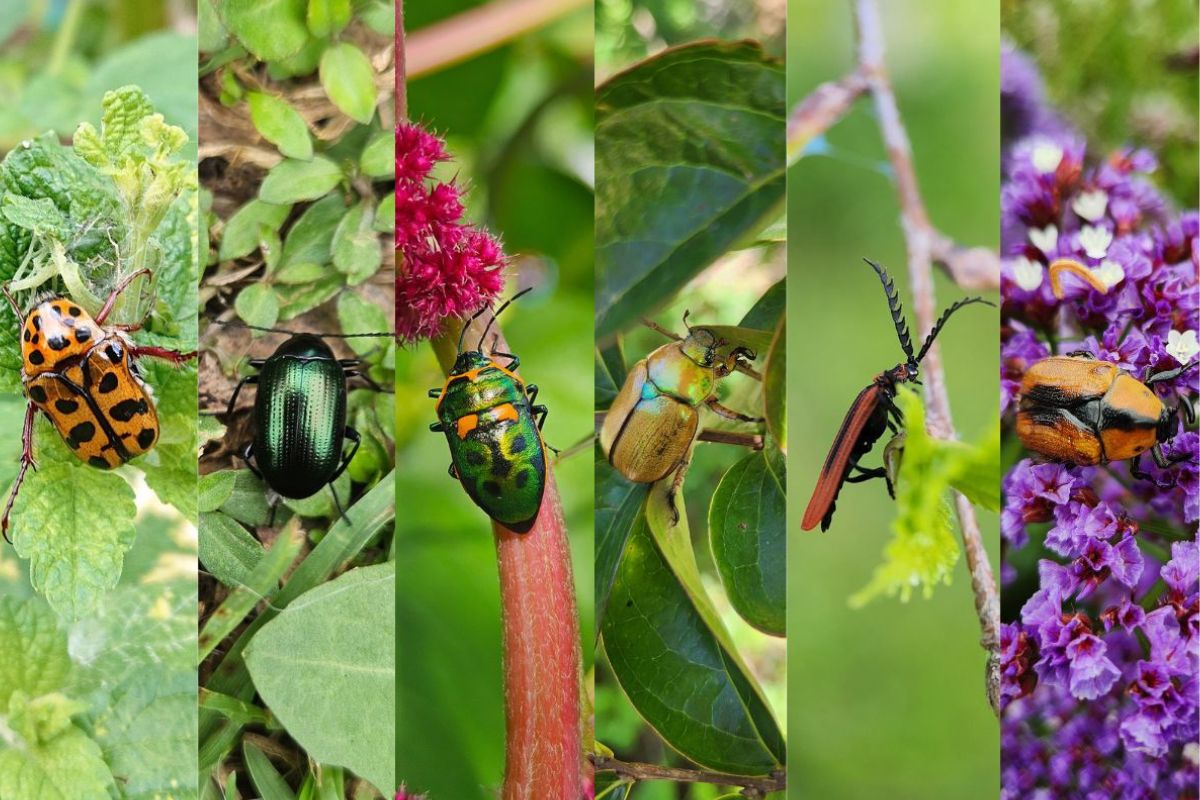 From left to right: Punctate Flower Chafer (Neorrhina punctata), Chalcopterus Beetle (Amarygmus), Metallic Shield Bug (Scutiphora pedicellata) Christmas Beetle (Anoplognathus suturalis), Net-winged Beetle (Lycidae), Cowboy Beetle (Chondropyga dorsalis)
A Garden Full of Life Is a Garden in Balance
The goal is never to have a garden completely devoid of insects.
Insects are useful pollinators, predators and decomposers, and they provide an important food source for wildlife. All these insects are part of a larger ecosystem.
Aphids attract ladybirds, hoverflies and parasitoid wasps, which can then help keep the population under control. Even cabbage butterflies can become food for birds and other predators.
Remember, an insect doesn't have to directly help you grow or pollinate fruit and vegetables to be valuable to the garden ecosystem. An insect that eats plants can still be an important food source for birds.
A caterpillar you find on your citrus can become a beautiful butterfly and contribute to pollination as an adult.
A beetle grub under the ground isn’t necessarily eating your plant roots; it may instead be helping by breaking down decaying material and recycling nutrients back into your soil.
Predatory insects need prey to survive, so a garden with no aphids will have fewer ladybirds.
A healthy ecosystem is just that, it requires a little bit of give and take and sometimes that can be inconvenient. You don’t have to accept every pest without intervention, but you can make thoughtful choices about how and when to intervene.
One of the best things about gardening is discovering something new. The more insects you learn to recognise, the more you watch, the less likely you are to react automatically and the better the diversity will become in your patch. Rather than trying to achieve a garden filled with only ‘good bugs’, the goal should be to have a resilient garden filled with life. In a well-balanced garden, bugs are not simply good or bad.
Article & Photography by Nat Buttenshaw