
For many vegetable growers the pinnacle of gardening is the harvest. That bite of the first ripe tomato in summer or that long-awaited photo opportunity: the full harvest basket in autumn. Unfortunately, sometimes that opportunity doesn’t come. There might be fruit that is bitter, grainy, or too hard to eat. Perhaps the plant was attacked by pests or ruined by disease. Maybe it just didn’t produce at all.
It can be easy to assume these problems were caused by something the grower did or didn’t do correctly: nutrient input, watering, pest management or timing. But the reality may be, simply, that the grower has chosen the wrong variety for their unique environment. Variety trials can be an interesting and fun way to test this theory.
Why Variety Trials Can Be Useful In Your Garden
Variety trials are frequently used to help farmers choose the best variety of seed for their commercial crops. In these trials a large number of varieties are grown side-by-side, to test for various factors depending on the farmer’s goal. They might be interested in increased yields, better flavour, disease resistance, better overall quality, or a more interesting variety to sell at market. These trials are performed in controlled conditions where a large number of plants, within each variety, are grown in the same environment, with the same care. The trials are repeated in various locations, on the farm, to ensure that the data collected is as accurate as possible. For many home gardeners variety trials of this magnitude would be unachievable, but it is possible to set up your own mini trials at home.
Identifying Your Gardening Goals
The first step in setting up your trial is to identify your own goals. Usually this will look like a simple question based on a previous gardening experience. For example:
- Is there a variety of cucumber that will be less likely to succumb to powdery mildew than the one I grew last year?
- Is there a tomato variety that tastes better than the one I grew last summer?
- Could there be more interesting chilli varieties than the one I usually grow?
Choosing the Right Varieties
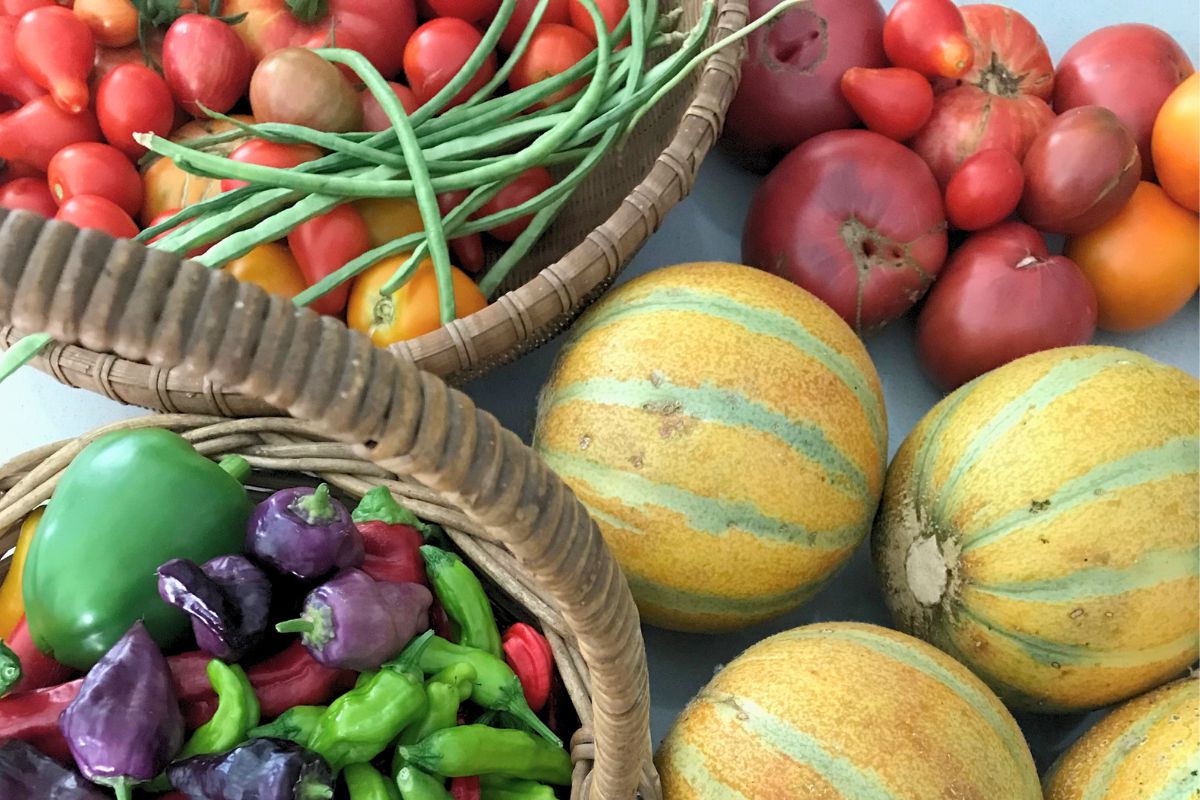
The next step is to research varieties within your chosen vegetable group(s). If your question is focused on finding a more attractive or flavourful variety, you might like to scroll through seed varieties online and consider any that look nice. If your question is more specific, for example disease resistance, you will need to research a little more deeply.
Designing Your Trial Space
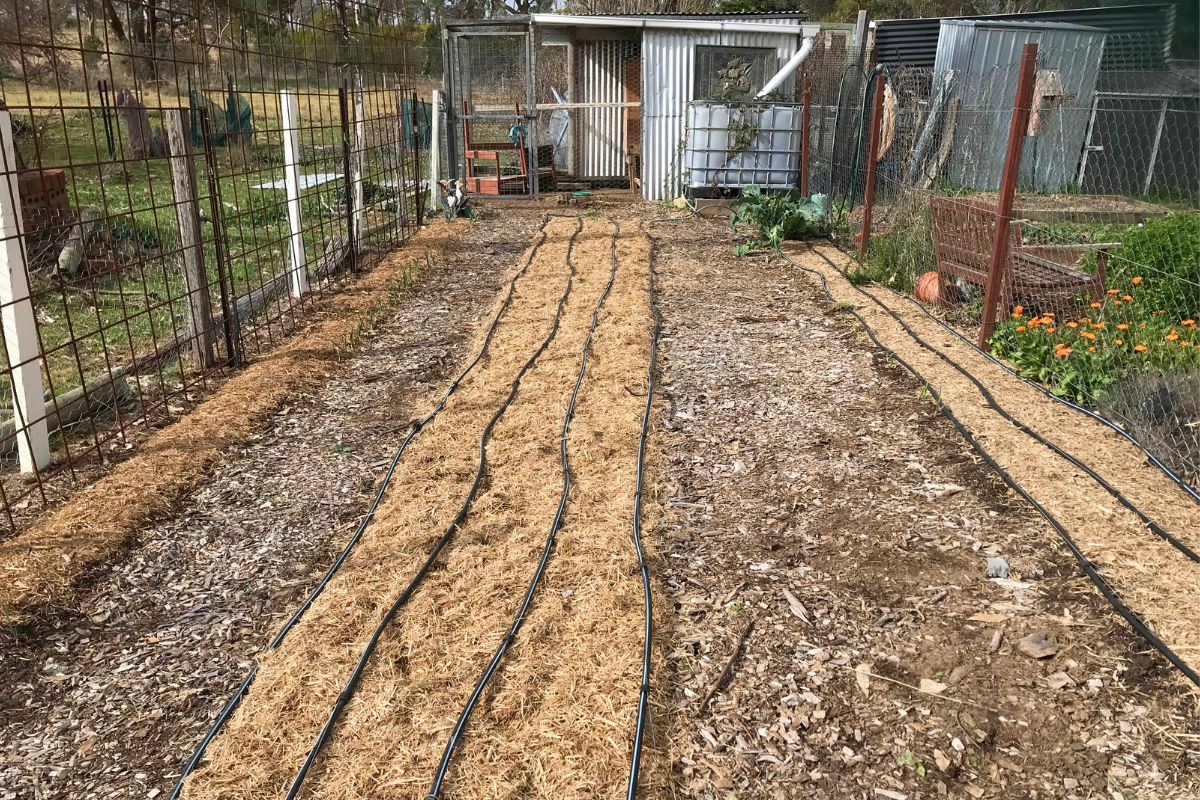
Next, it’s time to design your trial. Your research question will determine a lot about your trial, including the season it should take place and how much growing space you might need. A trial comparing 3 pumpkin varieties, for example, will take up much more room than a trial comparing 3 tomato varieties. Other things you might like to consider in your trial are: whether you might like to grow a control variety for comparison (e.g. the tomato variety from last year beside the new ones) and how much you want to control other variables: Will your trial run on irrigation to ensure all plants get the same water? Will they all be in the same bed with the same soil? Your plan will be specific to your goals and the things that are important to you.
Evaluating Your Success
Once you have planned your trial, it’s time to consider how you will evaluate it. This could be as simple as observing your trial throughout the season and deciding which varieties you like, based on gut-feeling. Or your evaluation might be very specific and use measurements like harvest weight, plant height, harvest timing etc. You may decide to take daily, weekly or monthly notes, throughout the growing season, depending on your desired outcome.
A Small Trial With A Big Impact
By the end of your trial, you will have learned a lot about how different varieties perform in your veggie patch, however, as is often the case with gardeners you are likely to come up with more questions along the way. The answer to those may have to wait for another year!
A True Example of a Variety Trial at Home
Problem:
The home gardener had always struggled with getting pumpkins to ripen before the first frost in her region.
Question:
“Is there a variety of pumpkin I could grow that will produce lots of ripe pumpkins in a short season?”
Variety Research:
Five varieties were chosen, based on general interest, with the rule that the days until maturity would be 115 or less.
- Pumpkin - Small Sugar
- Pumpkin - Baby Blue
- Pumpkin - Red Kuri
- Winter Squash - Musquee de Maroc
- Winter Squash - Spaghetti
Design:
An 11m x 1.2m in ground vegetable patch was selected. Compost was spread along the length of the bed before it was mulched and irrigated. A variable that could not be controlled was shade from nearby trees that would fall upon the different varieties of pumpkin at different times of the day. Space limitations meant that only one of each variety could be planted; so the interpretation of results would be limited.
The Outcome:
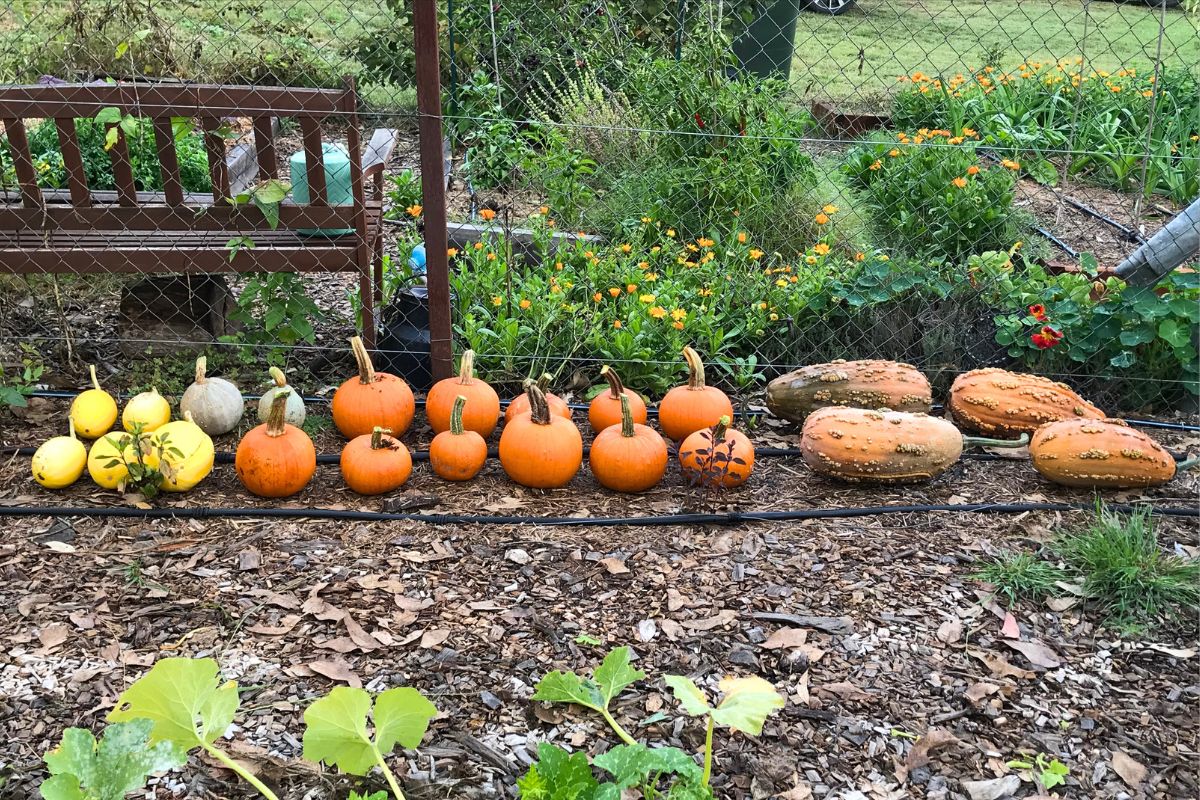
During the season, the Red Kuri plant and developing fruit were attacked by the 28-spotted ladybird. For reasons unknown they kept attacking the single plant and no fruits matured. All other varieties were harvested before the first frost. The total number of mature fruit from each variety were:
Small Sugar: 11
Baby Blue: 2
Musquee de Maroc: 4
Spaghetti: 5
Therefore, the Small Sugar variety produced the most mature fruit within the growing season.
Future Questions to Explore:
- Given the size difference between the Musquee de Maroc and Small Sugar pumpkins should the harvest be weighed, rather than counted, in the future?
- Are there other pumpkin varieties that will produce as many pumpkins as ‘small sugar’ in my environment?
- As more trials reveal other pumpkins that produce well in my climate, should I investigate how long they store in my own pantry?
Article & Photographs by Stephanie Hall-Richards