
Protecting your homegrown veggies from hungry birds, caterpillars, and other pests is a crucial step for successful harvests. While you can buy pre-made covers, building a custom frame allows you to perfectly tailor the protection to your specific raised beds.
Using the Build-a-Frame Steel Corner Brackets is simple, and requires only a few basic tools!
Here is our step-by-step guide to getting your garden covered.
What You Will Need
Gather the following supplies before you begin:
- Build-a-Frame Kit: This includes 4 x heavy-duty steel corner brackets and self-tapping screws.
- Wooden Stakes: 25mm x 25mm square hardwood stakes (cut to your desired height and width).
- A hammer.
- A Phillips head screwdriver.
- Plant protection netting or insect mesh.
Set Your Vertical Posts
First, determine the four corners of your garden bed where the frame will sit. Using a hammer, firmly drive a 25mm x 25mm square wooden stake vertically into the soil at each corner. Try to keep the stakes as straight and level as possible to ensure a square frame.
Place the Corner Brackets
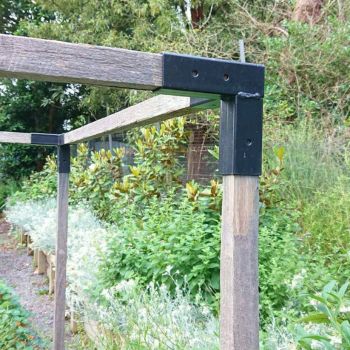
Once your four vertical stakes are securely in the ground, take the steel corner brackets and slide one bracket down onto the top of each vertical stake.
Construct the Top Frame
Next, it is time to build the roof of the frame. Insert your horizontal 25mm x 25mm stakes into the open, sideways-facing slots of the corner brackets to bridge the gap between the posts. Continue this process around the perimeter until all four sides are connected, creating a complete square or rectangular top frame.
Secure the Frame
To ensure your structure can withstand the wind, you need to lock the timber in place. Take the self-tapping screws provided in the kit. Using a hand screwdriver, drive the screws through the pre-drilled holes in the steel brackets directly into the wooden stakes.
Drape Your Netting
Now that your new, solid frame is complete - carefully drape your chosen insect mesh or bird netting over the top of the structure. Adjust the netting so that it drapes down evenly on all sides, reaching the base of your garden bed to fully enclose and protect your growing plants. You can secure the net with clamps or metal pegs.