
When I first learned about trap crops, I wasn't entirely convinced. As a home gardener working with a relatively small suburban backyard, the idea of sacrificing precious growing space to plants I expected insects to destroy felt counterintuitive. Surely every square metre of the garden should be reserved for productive crops or beautiful ornamental plants, right?
If you're new to the term, a trap crop is a sacrificial plant grown to attract pests away from your main crop. Instead of cabbage butterflies laying eggs on your carefully tended brassicas, the idea is that they’ll choose the decoy instead. Simple in theory - but does it actually work?
My Accidental Trap Crop Experiment
Earlier this year, I sowed my winter brassicas: broccoli, rabe, cauliflower, and a few other seasonal staples. Using classic gardener logic, I planted far more seeds than I technically needed, assuming a decent ratio would germinate nicely. Instead, nearly every seed came up beautifully, leaving me with dozens of healthy seedlings and nowhere near enough room in the small kitchen garden zone to plant them all.
After filling each of my five raised beds to the brim with various winter crops, as expected, I had plenty left over. Rather than compost perfectly strong, healthy seedlings, I decided to turn the extras into my first real trap crop experiment.
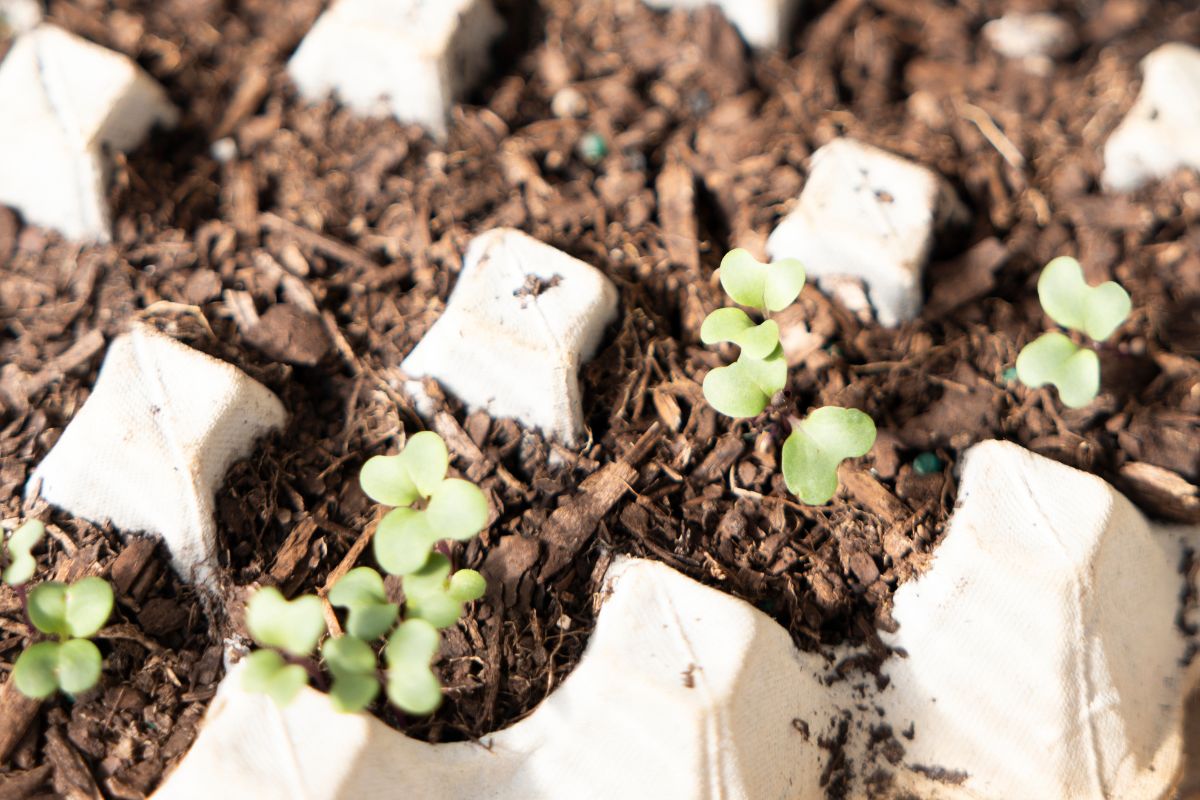 A full tray of Raab (Rapini), Purple-Sprouting and Waltham Broccoli seedlings.
The Plan
From previous seasons, I'd learned that young brassicas are at their most vulnerable early on, so I kept the raised bed crops protected under insect netting while they were still establishing.
The leftover seedlings were then planted throughout the rest of my garden, wherever I could find available space, leaving them completely exposed to whatever the local cabbage butterflies had in mind.
To further the experiment, I decided that once the protected plants were strong enough, I would remove the netting from one of my more productive beds - in this case, the bed featuring Italian Raab (Rapini), silverbeet and sugar-snap peas. I then planted out a fresh batch of young sacrificial brassicas nearby to see whether the butterflies would prefer the younger, more tender plants to the established harvest-ready bed.
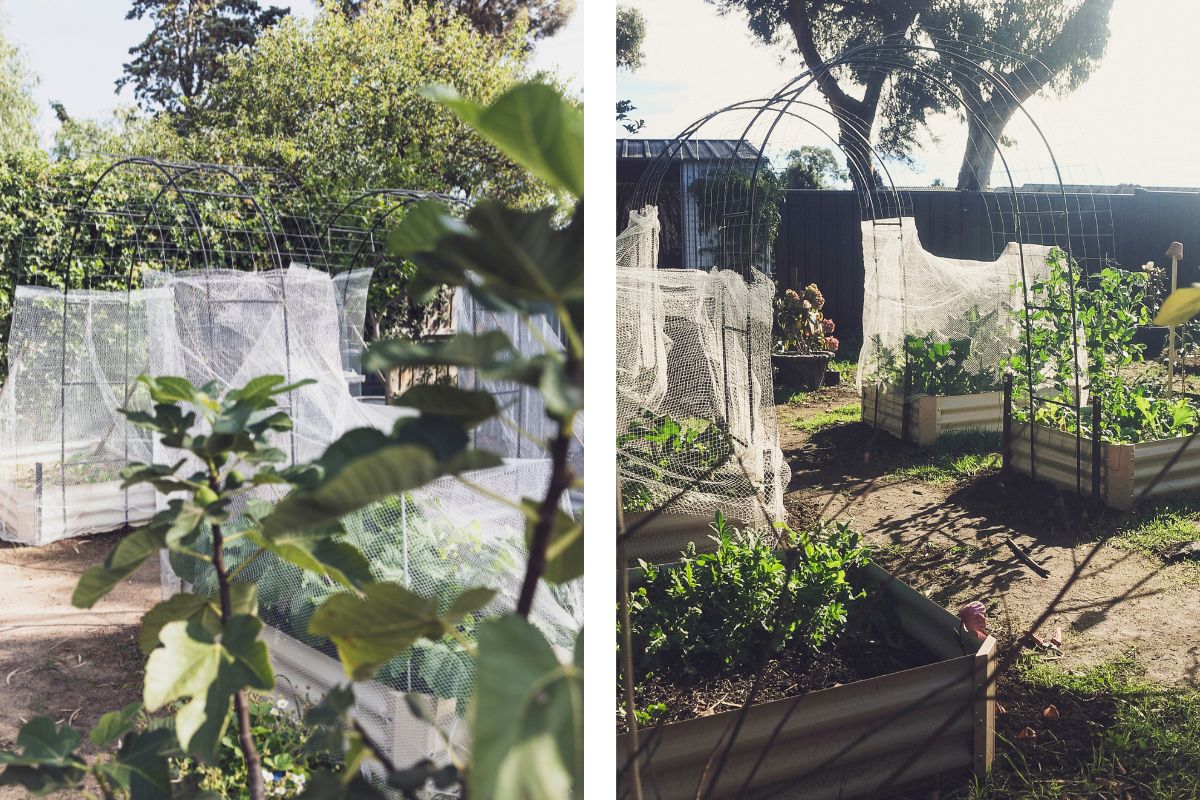 Left: Autumn planting, four net-protected winter-crop beds
Right: Winter progress, one well-establish brassica bed has its netting removed for the sake of the experiment
So, Did It Work?
Yes - and no.
The first round of young brassica seedlings absolutely became sacrificial plants. Almost all were heavily attacked by caterpillars, and most of them never recovered. In that sense, the trap crops worked exactly as intended.
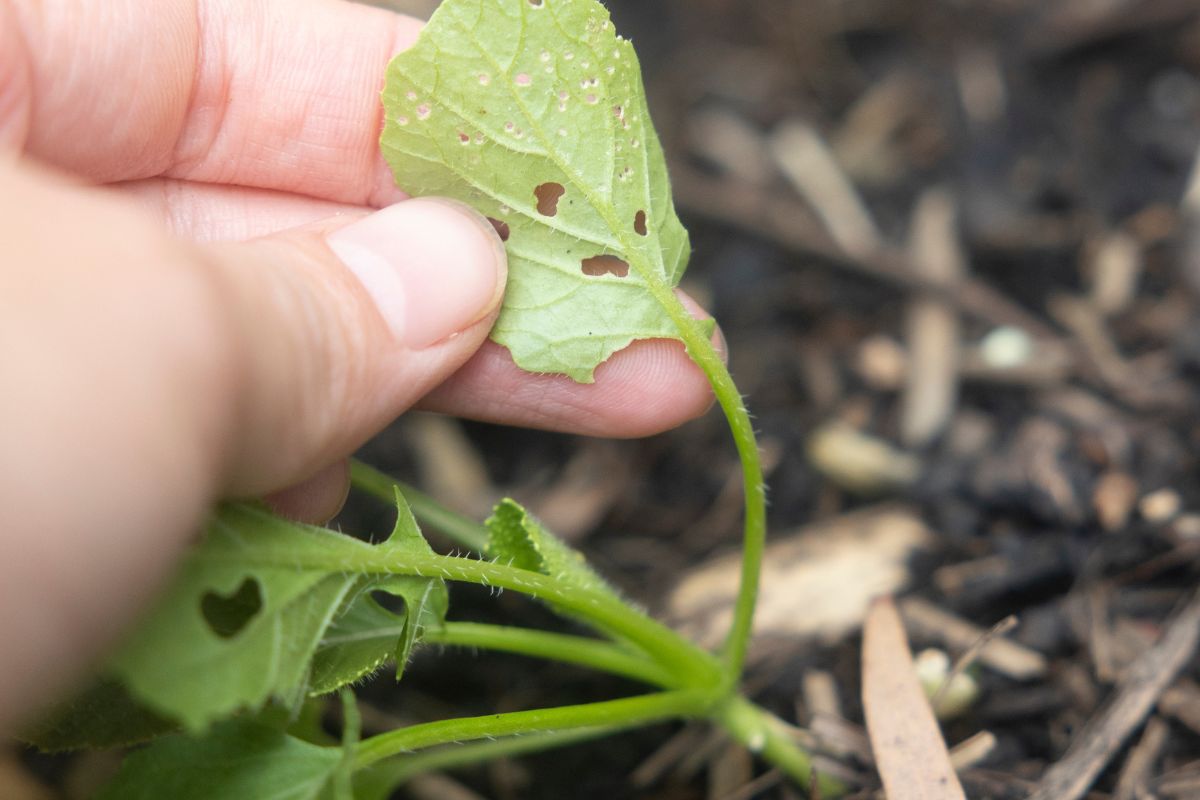 One of the current planted trap crops working as intended.
But there is an important caveat to remember - you can’t neatly control or confine pests to just one area, and they often prefer one particular plant over another.
While the first round of trap crops did attract a majority of pest attention away from some of my more established plants across the garden, they didn't completely protect everything else available. Most of the (unprotected) young sweet peas, herbs, everlasting daisies, and a few other juvenile plants received their fair share of detrimental pest damage, along with a few particular established ornamental plants, one of which was a clear favourite on the garden menu:
 Left: Before, Summer establish Tractor Seat plants
Right: Winter progress, several full leaves completely eaten away and obvious damage left on remaining ones.
What I Learnt
I wasn’t really surprised about the trap crop results to be honest, but it did reinforce my knowledge on just how much more resilient established plants will be to natural pests when compared with young seedlings.
Because my main harvest brassicas had spent their most vulnerable time safely protected under netting, they were already vigorous and well established enough to face a little pest pressure once I unveiled the netting.
Healthy, established plants can withstand far more damage and quite a bit of chewing, but notably you’ll be harvesting some fairly tarnished looking leaves in comparison.
That, for me, was the real takeaway lesson in the whole experiment.
.jpg) Left: Before, my first harvest of Raab (Rapini) leaves, while they were still protected under netting.
Left: Before, my first harvest of Raab (Rapini) leaves, while they were still protected under netting.
Right: A recent harvest of Raab (Rapini) leaves, without netting and with the latest round of trap crops planted
Are Trap Crops Worth Trying?
I think they are - with realistic expectations.
If you've accidentally raised too many seedlings, trap crops can be a simple and easy way to put those unplanned extras to use. But they are unlikely to eliminate general pest pressure altogether.
Instead, I think it’s better to think of trap crops as one unit of an integrated pest management system - a helpful tool when available, but definitely not a guaranteed or independent solution.
Best Tips For Using Crop Traps Successfully
- Protect your main crops early with insect netting or cloches while seedlings are young and vulnerable.
- Plant trap crops nearby so pests encounter them before or alongside your main harvest.
- Check plants regularly for eggs, caterpillars, and chewing damage and remove those by hand to reduce ongoing pressure.
- Expect the losses and treat sacrificial seedlings as part of the strategy.
Final Thoughts
Before trying this myself, I assumed the most effective version of trap crops would probably be better suited to large-scale gardens, rather than smaller suburban spaces like my own, but moving forward, I will be maintaining this method in the garden.
Not because they'll solve any real pest problems, but because the general ideology supports a much healthier, natural garden balance, where not everything is supposed to thrive or survive for the harvest. A few sacrificial seedlings may be enough to reduce the overall pressure on your main crops while contributing to a far more resilient garden ecosystem.
And if those extra seedlings were headed for the compost anyway, then allowing them to serve a greater, final purpose, feels like a pretty decent pay-off, in my opinion.
Article & Images By Elvina Farkas