
A simple way to make naturally carbonated sodas at home.
There is something rather lovely about making your own fizzy drinks. With some fresh ginger, water, honey or sugar, and a little time - you can create a living ginger bug that can then be used to naturally carbonate homemade drinks. It's a simple, old-fashioned process, and once your ginger bug is active you can keep it going and use it to make all sorts of homemade sodas. From fruit juice to herbal teas, you can really get creative with flavours.
What Is A Ginger Bug?
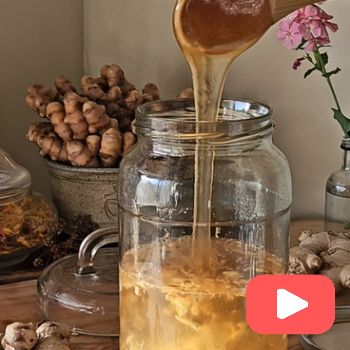
A ginger bug is a fermented starter culture made from fresh ginger, a source of sugar, and water. The natural microorganisms found on the ginger begin to ferment the sugars, creating a culture of yeasts and bacteria. As fermentation develops, they produce carbon dioxide, organic acids and other fermentation compounds.
That carbon dioxide is what gives your homemade drinks their natural fizz. And the beautiful thing is that you don't need any special equipment to get started. Just ginger, honey or sugar, water, and a clean jar.
Things You Will Need
- Fresh ginger
- Raw honey or sugar
- Filtered water
- A clean, wide-mouthed glass jar
- A loose-fitting lid or piece of clean cloth
- Fermentation safe bottles
How To Make Your Ginger Bug
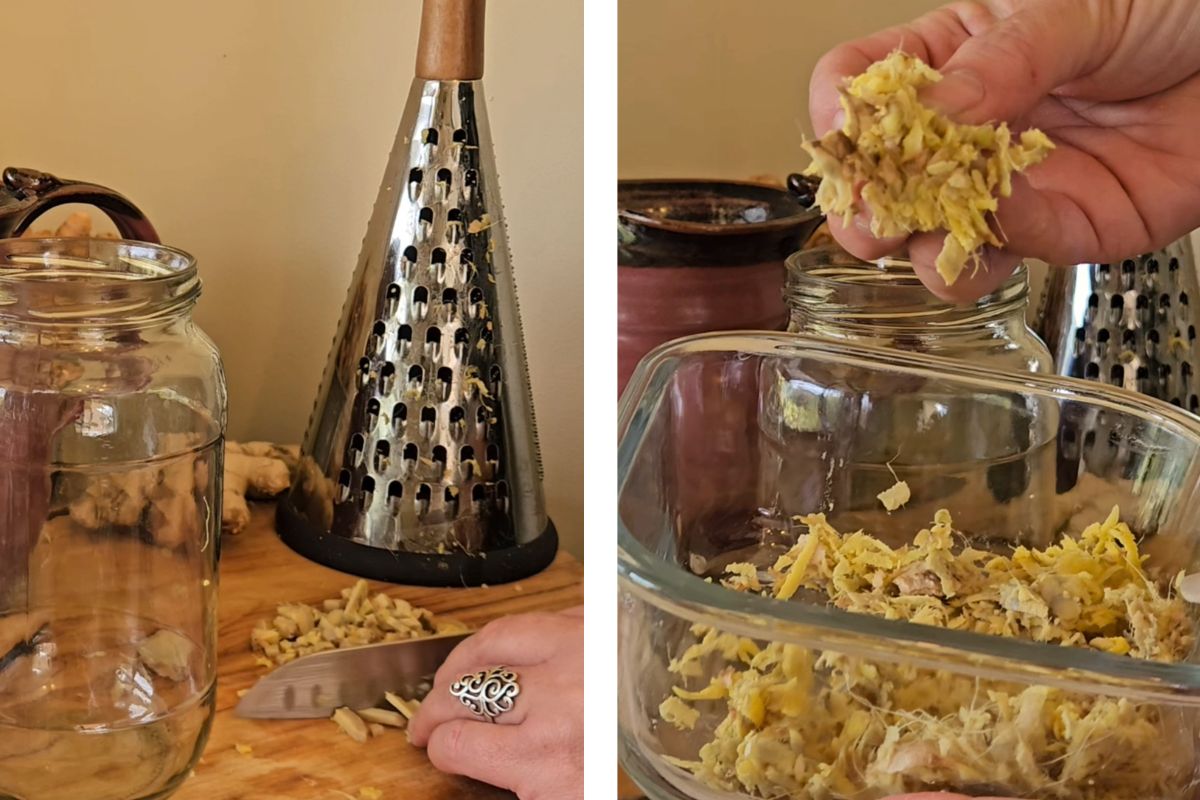
- Leave the skin on your ginger, and give it a good clean.
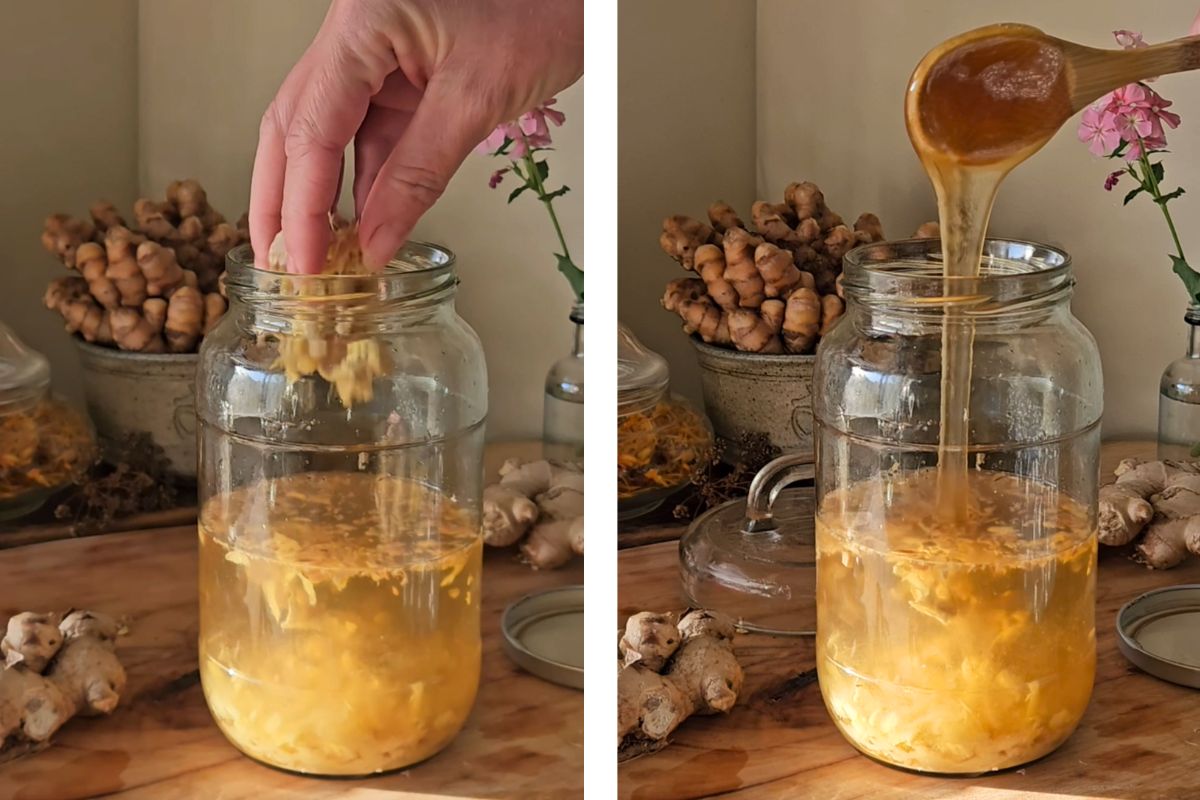
- Finely grate or chop your ginger.
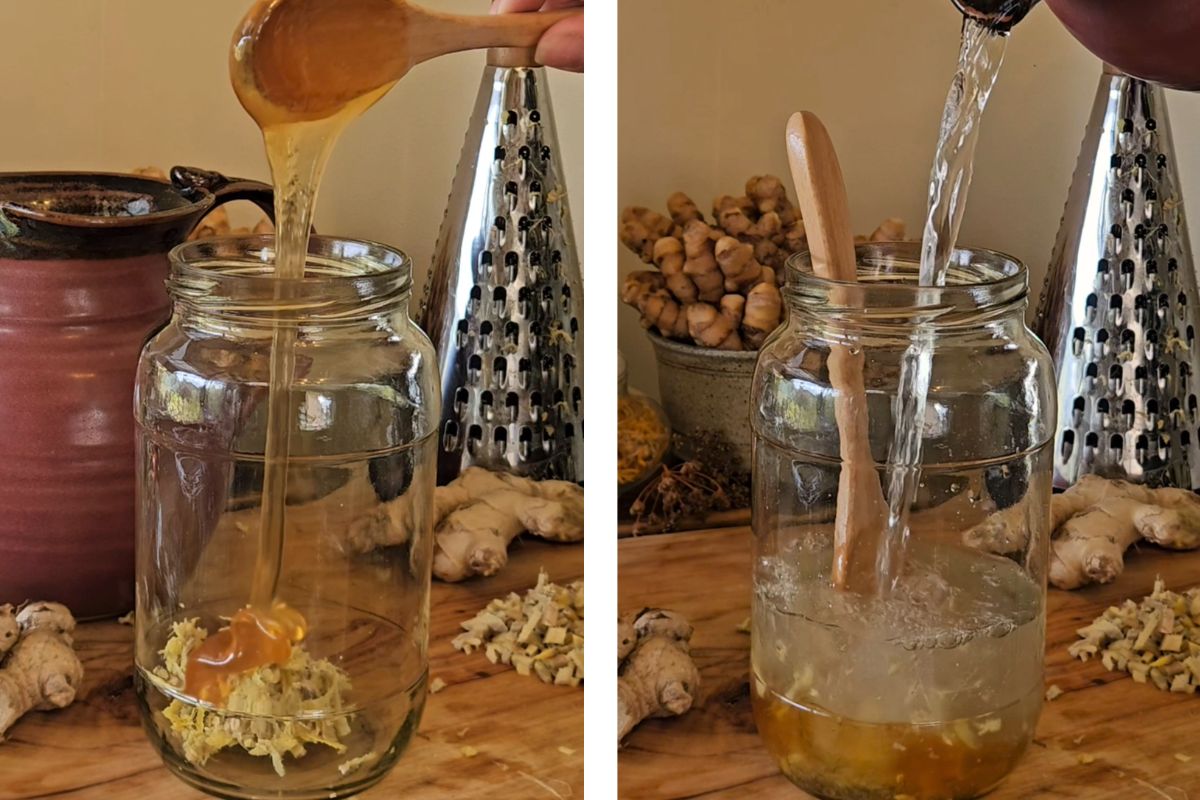
- To a clean jar, add:
- 2 tablespoons finely grated ginger.
- 2 tablespoons raw honey or sugar.
- Filtered water to fill the jar halfway.
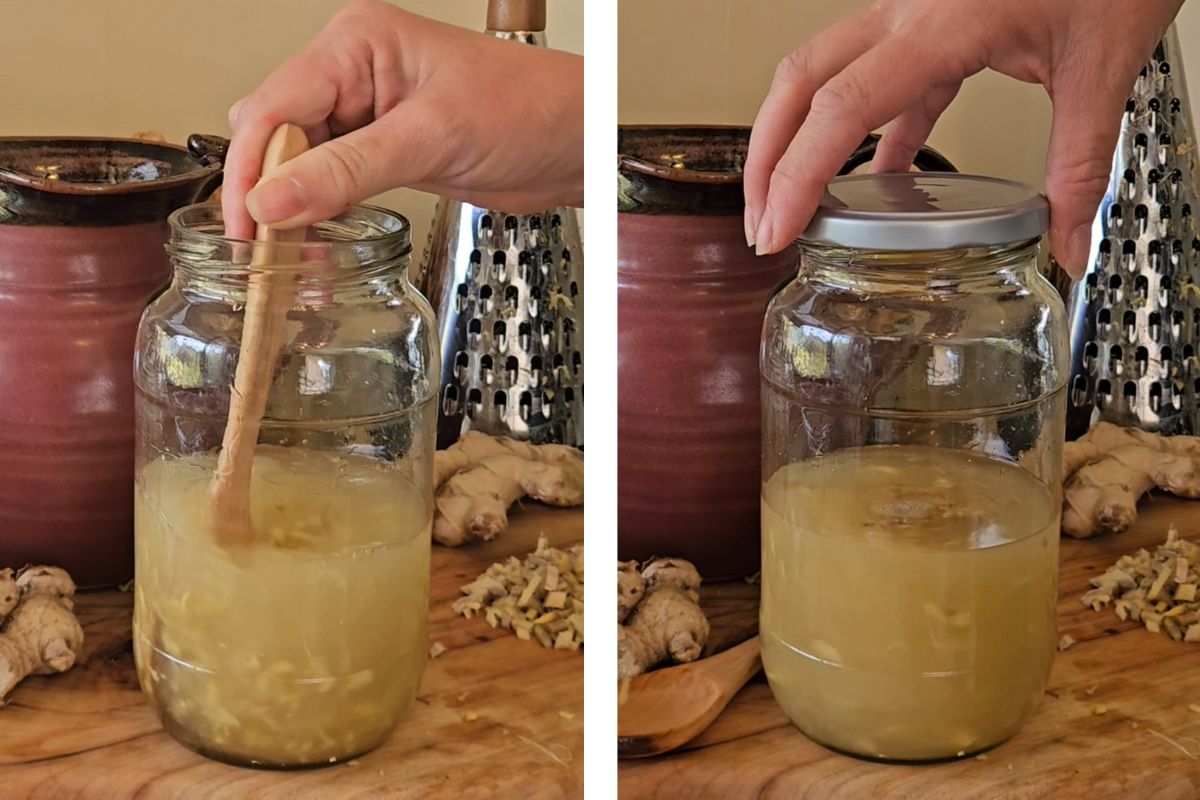
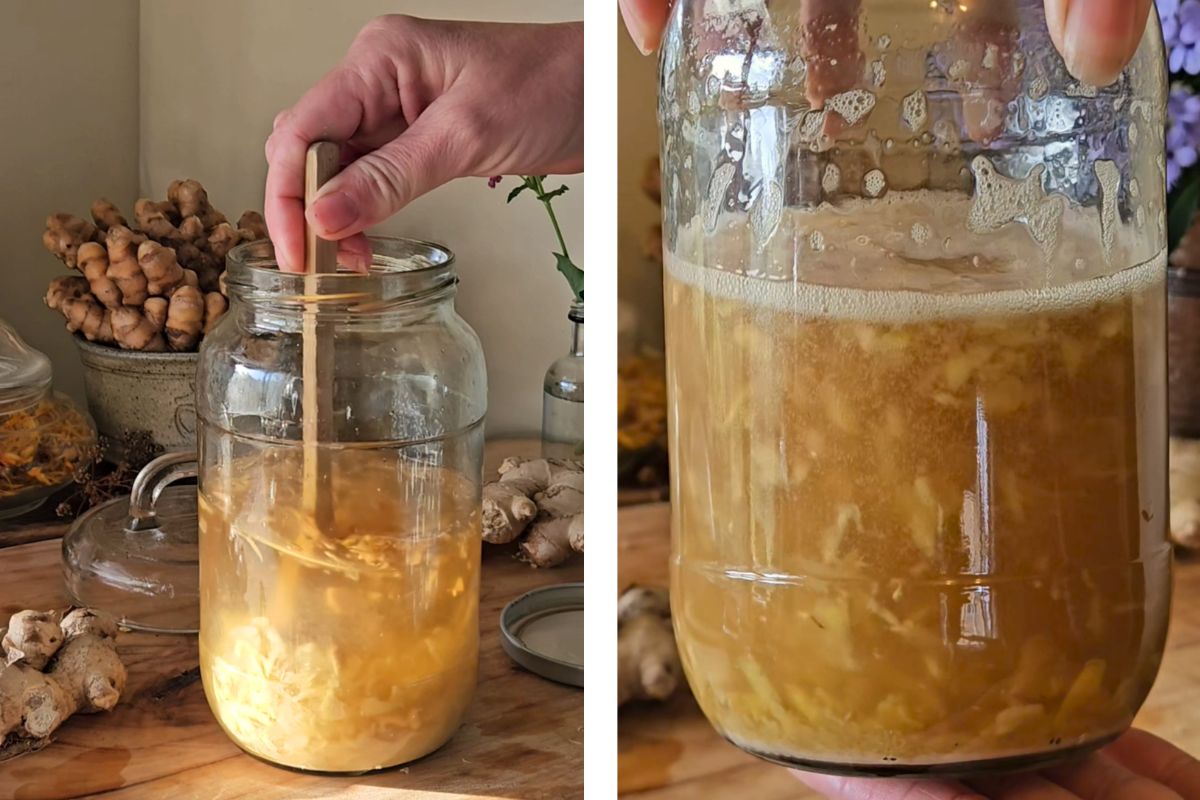
- Stir everything together until the honey or sugar has dissolved.
- Cover the jar loosely so air can move in and out.
- Leave it somewhere at room temperature, away from direct sunlight.
Daily Check-In
Each day you will need to add:
- 1 tablespoon fresh ginger
- 1 tablespoon raw honey or sugar
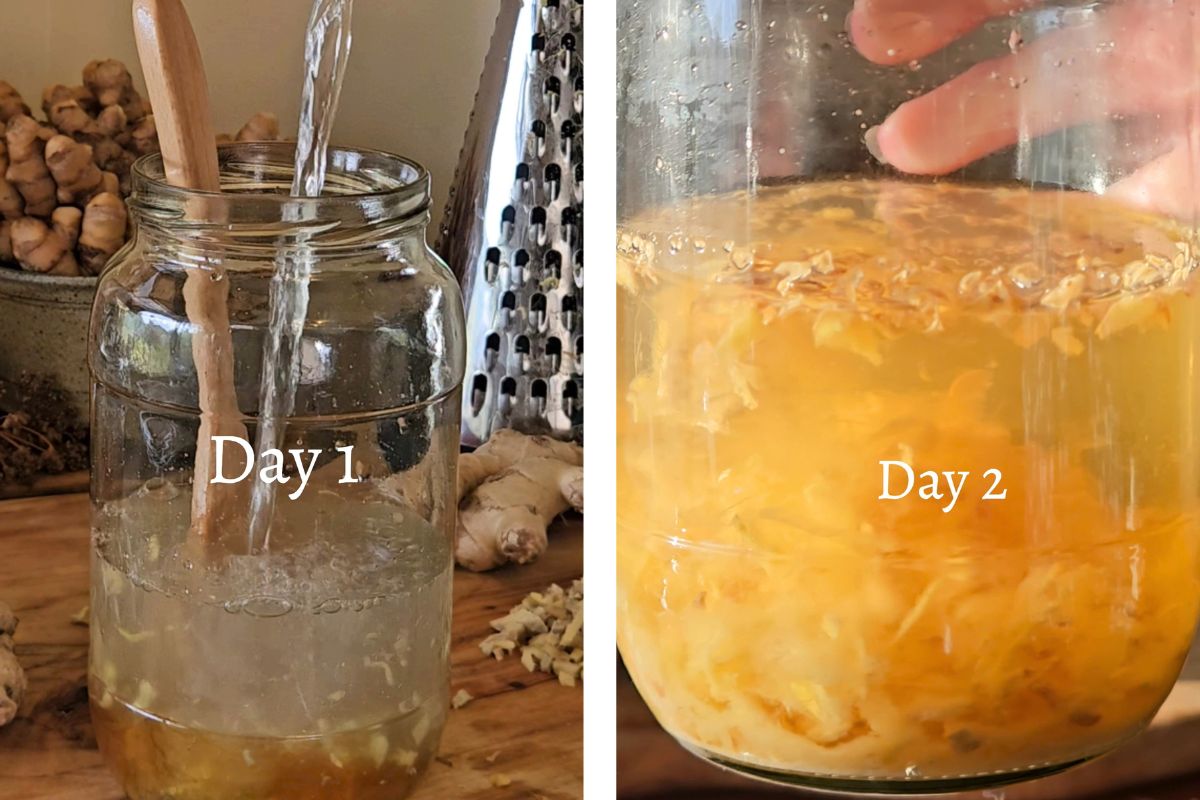
Continue feeding your ginger bug until it becomes noticeably active. Depending on the temperature and the particular culture that develops, this may take several days. There isn't one exact day when every ginger bug will be ready, so it's better to watch for the signs of activity rather than relying entirely on the calendar.
How Do You Know When A Ginger Bug Is Ready?
This is the part I think is most useful to learn, instead of simply counting the days. Look, listen, smell and watch what happens when you feed it.
Look
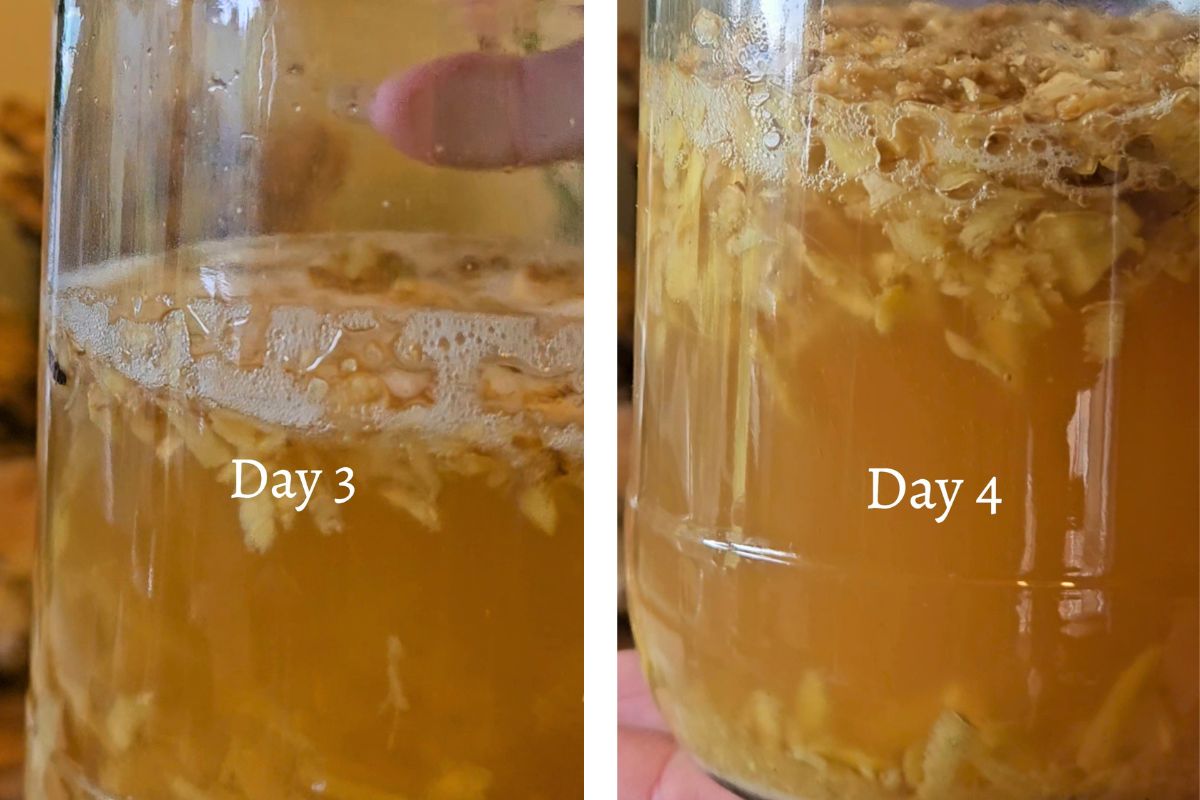
At first, your jar will look almost completely still. But as fermentation develops, you'll begin to notice tiny bubbles around the pieces of ginger and rising through the liquid. As your ginger bug becomes more active, those bubbles will become easier to see and there will be a distinct layer of activity on the top of the liquid.
Listen
Give the jar a gentle stir and listen closely. An active ginger bug can have a quiet little fizz - a tiny sign that fermentation is happening and as your bug becomes more active, the fizz will become louder or more prominent.
Smell
The aroma will change too. A new jar will mostly smell of fresh ginger and sweetness but as it ferments, the aroma will become more complex - still gingery, but with a light fermented or yeasty character and sometimes a little tang.
Activity
The most useful test is what happens after feeding. An active ginger bug should show noticeable bubbling rather than remaining still. Once yours is reliably active, it's ready to use as a starter for your homemade sodas. There is no need to rush this stage. A healthy, active culture is much more useful than simply reaching a specific number of days.
How To Make Naturally Carbonated Sodas
For this, you will need bottles that are safe for fermentation. Once your ginger bug is active, you can use the fermented liquid to start a second fermentation in your chosen drink.
For my soda ratios, I use approximately:
- 50-100ml active ginger bug
- 500ml juice, tea or herbal infusion
- 1 tablespoon sugar or honey
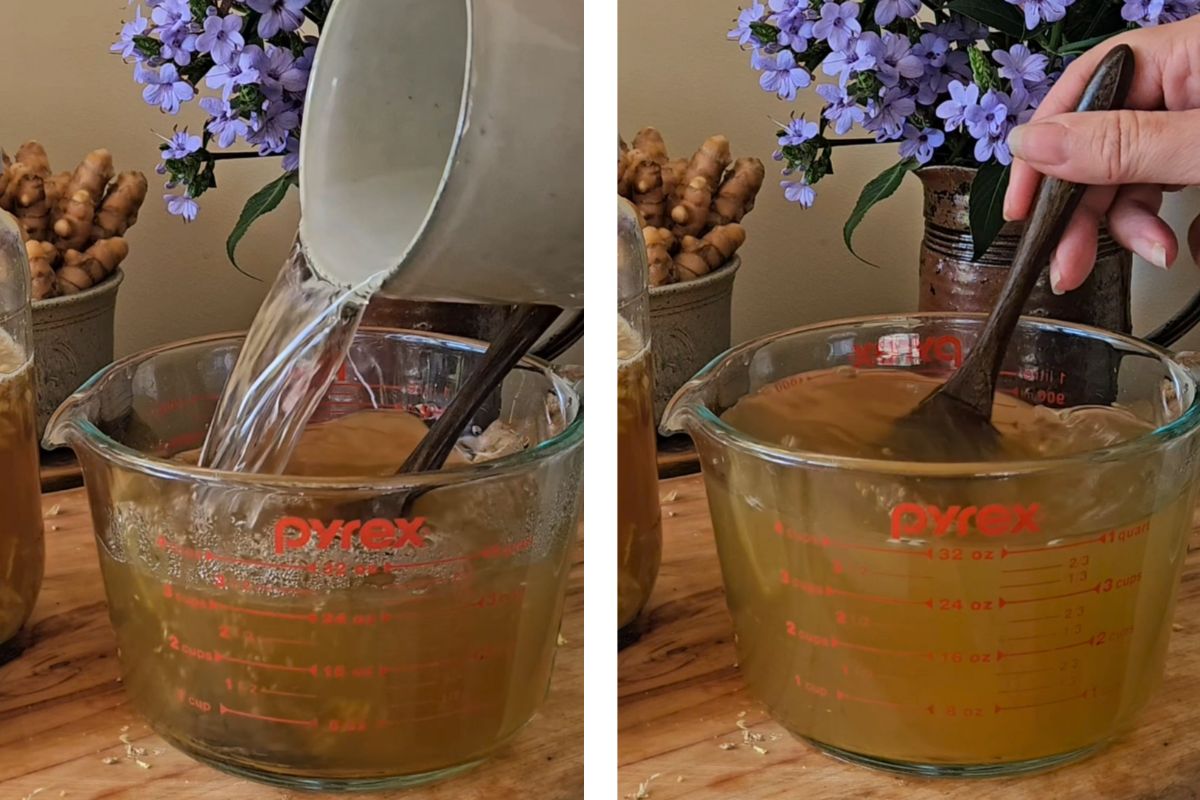
- Ginger bug: Into a clean jug, strain some of the ginger bug liquid and leave the remaining in the original jar.
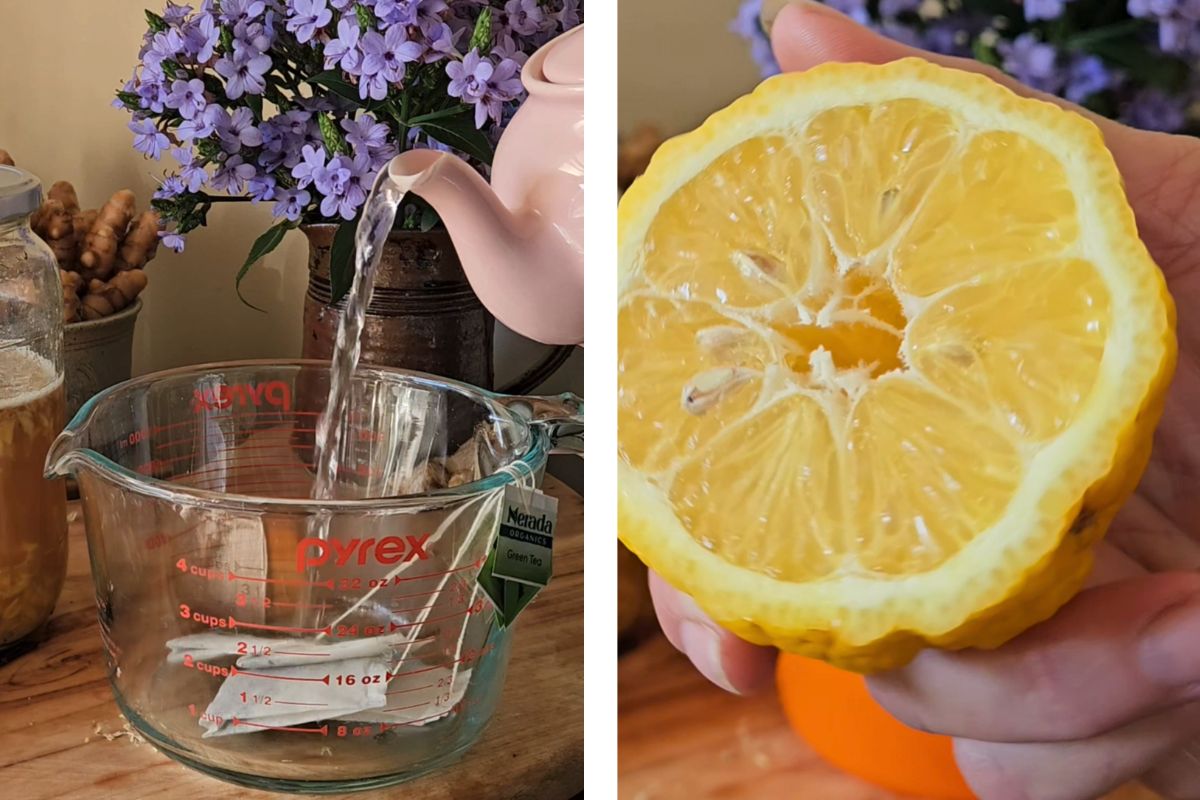
- Pick your flavours: You can experiment with the flavours depending on what you have available. Fresh fruit juice works beautifully, but you can also use a cooled herbal infusion. My favourite combination is green tea with fresh lemon juice. It has the lovely freshness of tea and lemon, a little spicy ginger character, some funk from the fermentation and a gentle natural fizz.
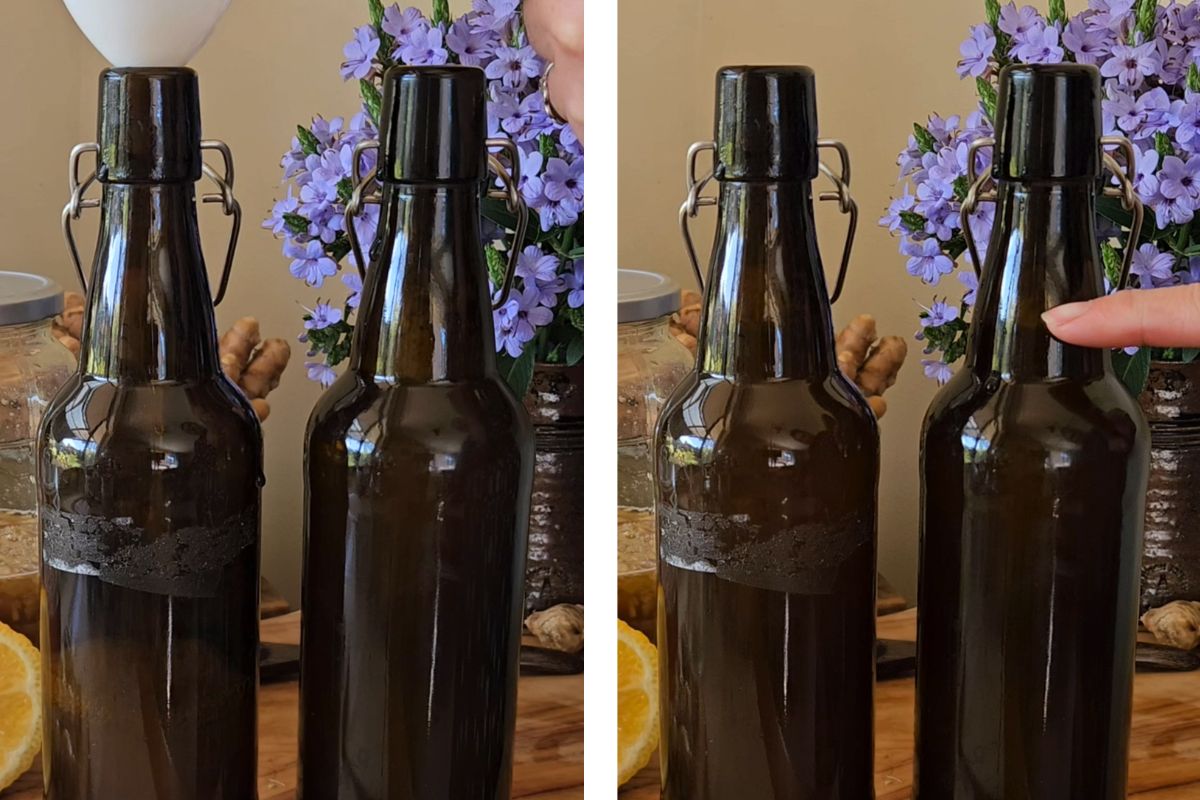
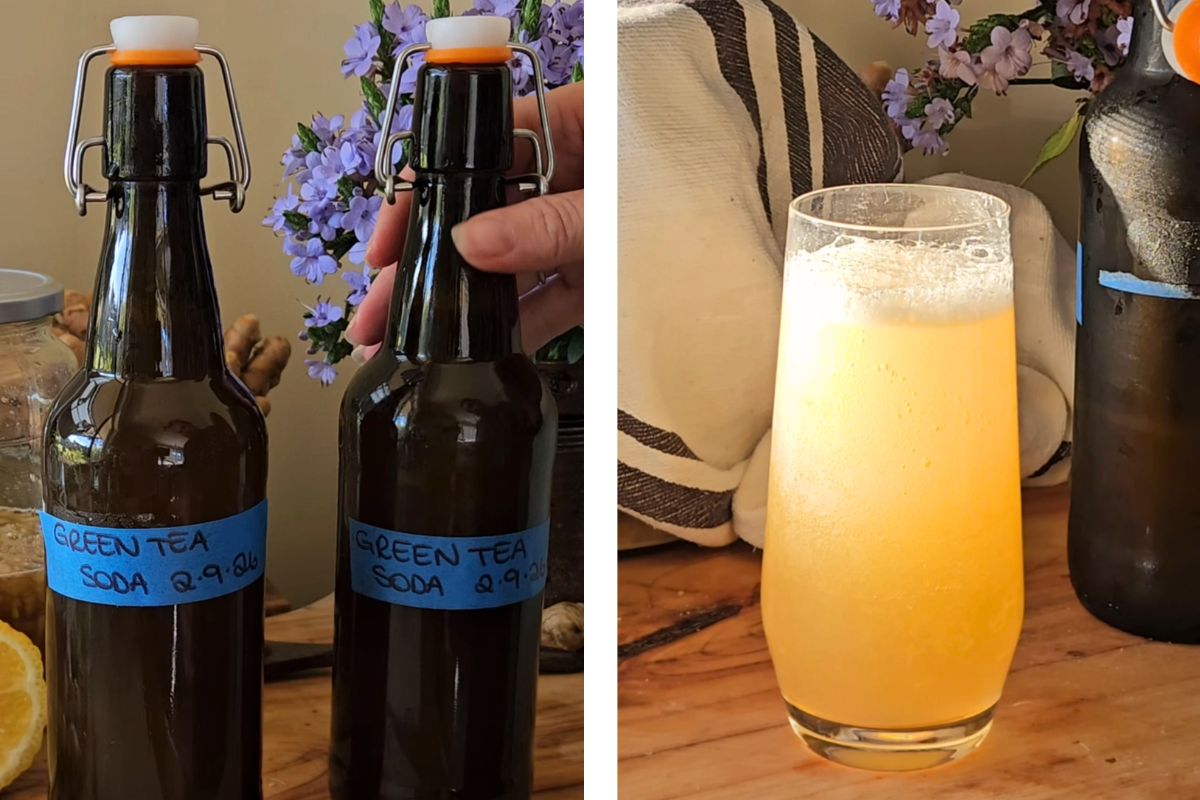
- Mixing your soda: Mix your drink of choice, some ginger bug and a sugar source together and pour it into clean, fermentation safe bottles, leaving about 2 to 3cm of headspace, and seal them tightly. This is where the ginger bug earns its keep. The microorganisms continue using the available sugars and produce carbon dioxide, which becomes trapped in the sealed bottle and creates the fizz.
- Fermentation: Leave your soda bottles at room temperature, out of direct sunlight while they ferment and build carbonation. Release the pressure daily and refrigerate once the drink has reached the level of carbonation you like. The exact timing of this will depend on your ingredients, temperature and the activity of your ginger bug, so watch the bottles rather than relying solely on a number of days. But if you don't reach a good level of fizz within 4 days then your ginger bug might not be strong enough and could benefit from another feeding or two.
Important: Be careful when opening freshly carbonated bottles, as pressure can build quickly during fermentation. Sometimes the secondary-fermentation processes can produce enough carbon dioxide to cause bottles to erupt or, in extreme circumstances, break. This is why it's important to use bottles made specifically for fermentation.
Keeping Your Ginger Bug Going
Once you have an active ginger bug, you don't need to start from scratch every time you want to make a lovely fizzy soda. Whenever you strain some of the liquid from the jar, return the ginger pieces and feed the bug with fresh ginger and honey.
When refreshing my bug, I add:
- 2 tablespoons fresh ginger
- 2 tablespoons raw honey or sugar
- Fresh filtered water to top it up
If you're going to make another batch within a few days, you can keep feeding it at room temperature, going back to adding 1 tablespoon each of ginger and a sugar source daily. And once your ginger bug is nice and strong, you can slow this down to every second day. If you're going to leave it for longer, refrigeration slows the fermentation process down and makes it easier to keep between batches.
Waking Up A Refrigerated Bug
When you're ready to make more soda, bring your ginger bug out of the refrigerator and allow it to come back to room temperature. Give it a fresh feed of ginger and honey or sugar, then wait for the signs of activity to return. You may need to repeat the feeding process a couple of times before it becomes as lively as it was before refrigeration.
The important thing is not to expect a refrigerated culture to be immediately ready to carbonate your next drink. Give it time to become active again and look for those familiar signs - bubbles, aroma and activity after feeding.
What Do I Do With All Of The Ginger?
After a while, your jar is going to fill up with excess ginger. So what do you do with it?
Don't be too hasty to throw it in the compost bin just yet. What I do, is the next time I'm making some soda, I'll strain out at least half of the scraps and pop them into a freezer bag to keep for adding a pinch or two to teas, soups, stir-fries, or stocks. You can also dehydrate your scraps and use them in similar ways.
A Few Important Notes
- Keep everything clean. Use clean jars, utensils and bottles, and wash your hands before handling your ginger bug or finished drinks.
- Watch for anything that looks or smells wrong. Unusual mould, unpleasant or putrid smells, or other obvious signs of spoilage are reasons to discard the ferment rather than taste it.
- Be mindful of pressure. Always use bottles that have been designed for fermentation. The pressure during second fermentation can cause inferior bottles to break. Once your drink is sealed, fermentation can continue producing carbon dioxide. Release pressure carefully and refrigerate once sufficiently carbonated.
- Refrigeration slows fermentation but does not stop it. Your drinks will be best consumed within 7 days.
- Alcohol. Fermentation is a natural process involving yeasts and bacteria. Depending on the ingredients and conditions, fermentation can produce small amounts of alcohol as well as carbon dioxide. So, if you avoid alcohol completely, this is something to keep in mind when making or enjoying fermented drinks.
A Little Something Good For The Gut
There is another lovely thing about fermented foods, they can be a simple way to introduce a little more variety into the diet and support the community of microorganisms that naturally live in our gut. Fermented foods can contain live microorganisms, and regularly including a variety of fermented foods may help support a diverse and healthy gut microbiome.
Exactly what lives in a fermented food depends on how it was made, so not every ferment will contain the same microorganisms or provide the same benefits. But that's part of what makes fermentation so fascinating - these tiny living cultures are quietly transforming our food while creating new flavours, textures and aromas along the way.
So perhaps there's a little more to homemade fermented drinks than simply making something delicious and fizzy.
A little ginger, a little sweetness, a little time... and something wonderfully alive.
Article, Video & Photographs by Christie Fuller