
Getting kids involved in the garden doesn’t have to mean giving them their own vegetables to keep alive, or turning every afternoon into a gardening lesson. Some of the easiest activities are things you’re already doing, with an extra pair of little hands helping along the way.
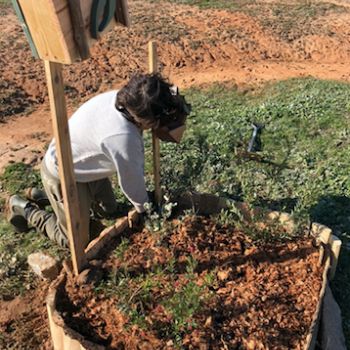
Gardening gives kids the chance to get dirty, explore what’s growing around them and see where food actually comes from. There are plenty of jobs they can genuinely help with too, from spreading mulch and collecting scraps for the compost to harvesting vegetables when they’re finally ready.
The trick is keeping it simple and, most importantly, making it fun. Here are ten easy ways to get kids outside and involved in the garden.
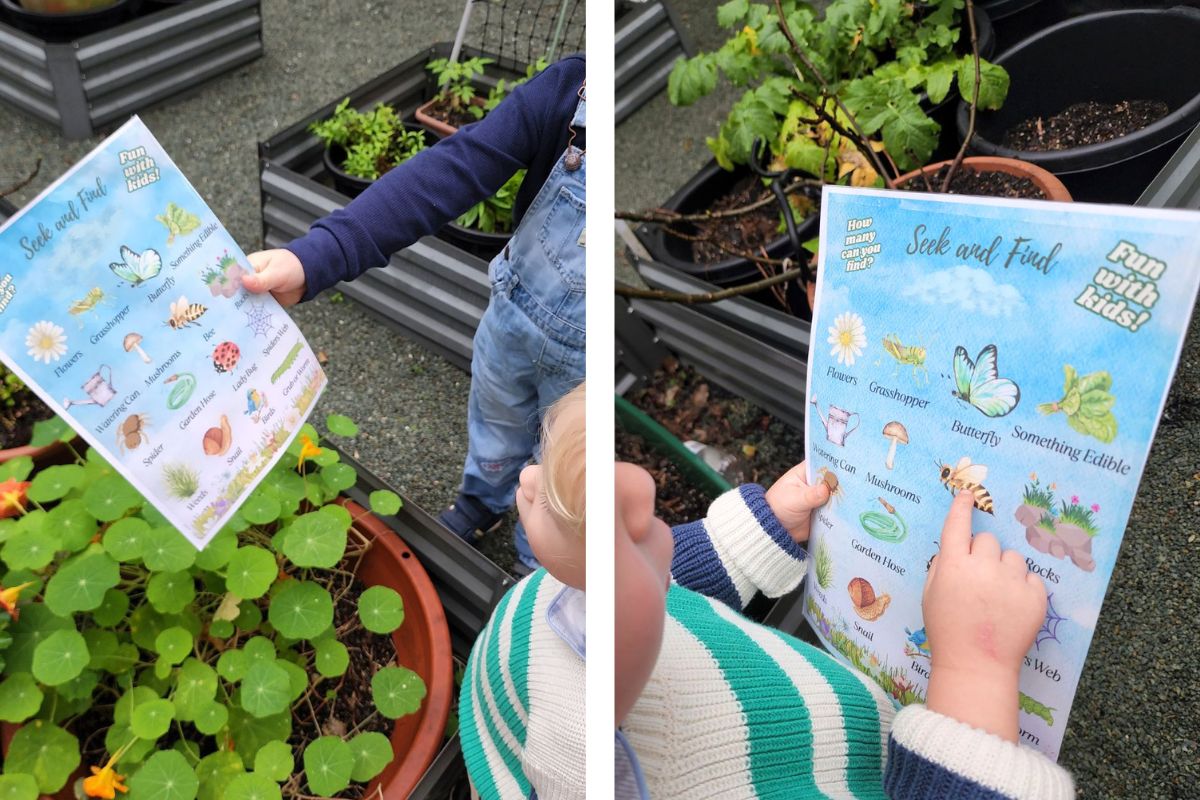
Garden Seek & Find
Turn an ordinary walk around the backyard into a garden treasure hunt with a simple Seek & Find activity.
Create or print a checklist of things the kids might find outside, then send your little explorers off to see how many they can spot.
You can make the list as easy or challenging as you like depending on the age of your children. For younger kids, pictures can be used instead of words.
It’s a simple activity, but it encourages kids to slow down and actually look at what’s happening around them. You might be surprised by what they notice that you’ve walked past a hundred times.
Eating From The Garden
There’s something particularly exciting about being allowed to pick something from the garden and eat it.
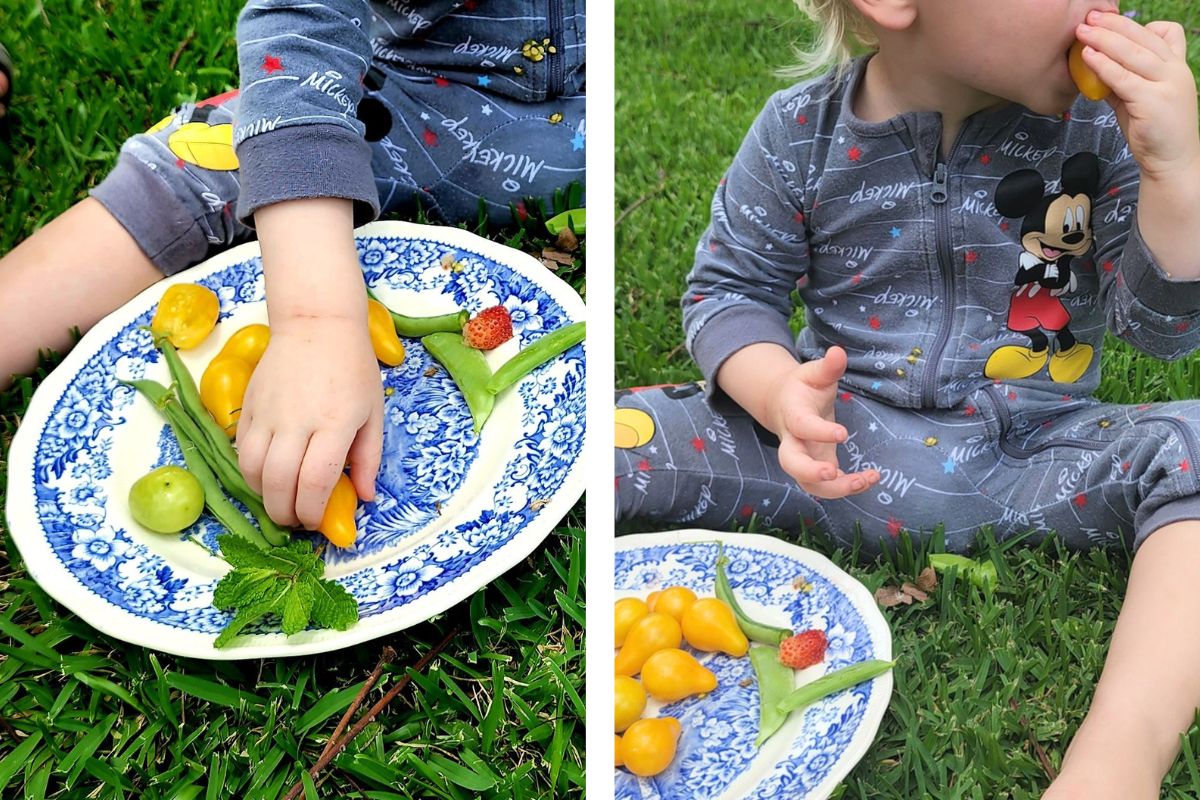
Let the kids make their own garden tasting plate using whatever is ready to harvest. Cherry tomatoes, herbs, leafy greens and edible flowers are all good options, depending on what’s growing.
This is also a great opportunity to let them taste things individually. Pick a herb, smell it, taste a small piece and talk about whether they like it. Compare different tomatoes or lettuces, or let them choose something from the garden to add to lunch or dinner.
Just make sure children know that they should only eat plants you’ve told them are safe. Not everything growing in the garden is edible, so it’s a good habit to establish early.
Growing something from seed and eventually being able to eat it helps children make the connection between the garden and the food on their plate.
Harvesting
If the kids have helped plant, water and look after something, let them be there when it’s finally time to harvest it.
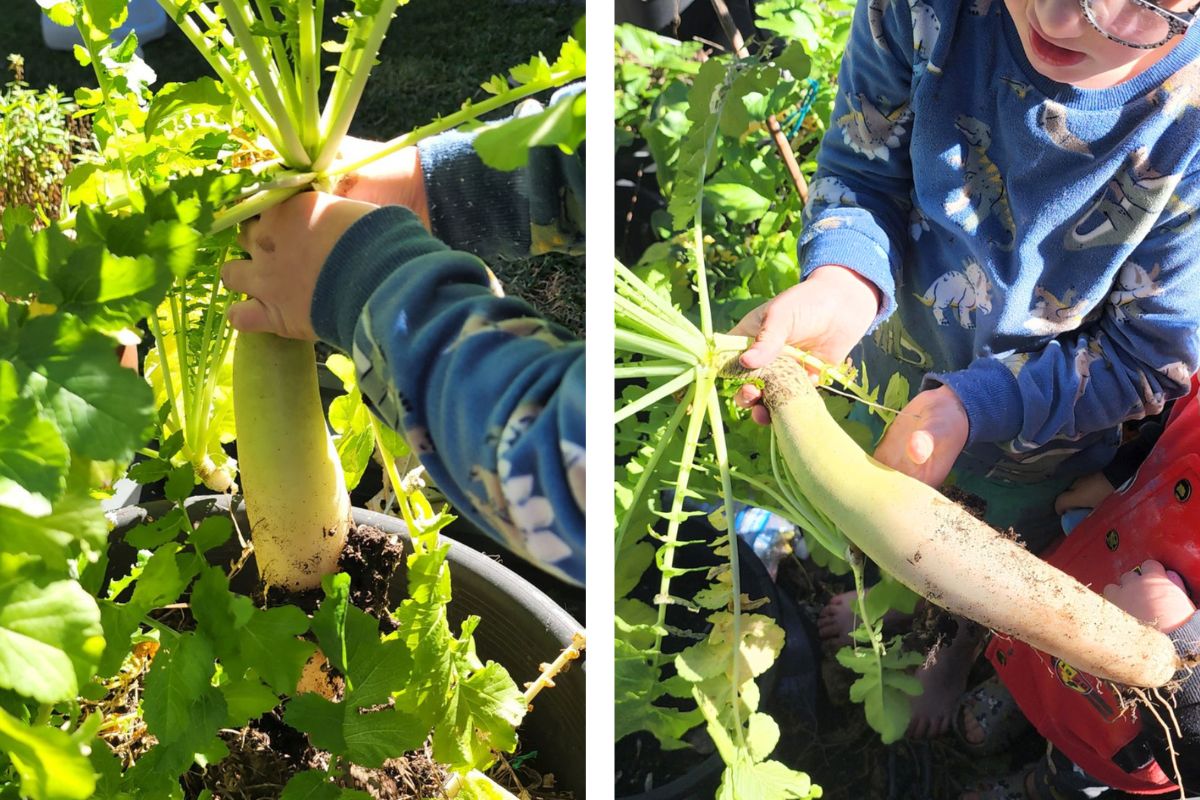
Pulling a carrot from the soil, picking a ripe tomato or snipping a handful of herbs gives them a chance to see the result of all that waiting.
Give younger children easy jobs such as picking tomatoes, beans or strawberries. Older children can use their muscles to pull up carrots and other root vegetables.
A harvest basket can make the job even more fun. Give them the basket and let them walk around collecting whatever is ready.
It doesn’t matter if the carrot is wonky or the tomato is tiny. That’s part of growing your own food, and it gives kids a much more realistic idea of what fruit and vegetables actually look like before they arrive at the supermarket.
Create A Fairy Garden
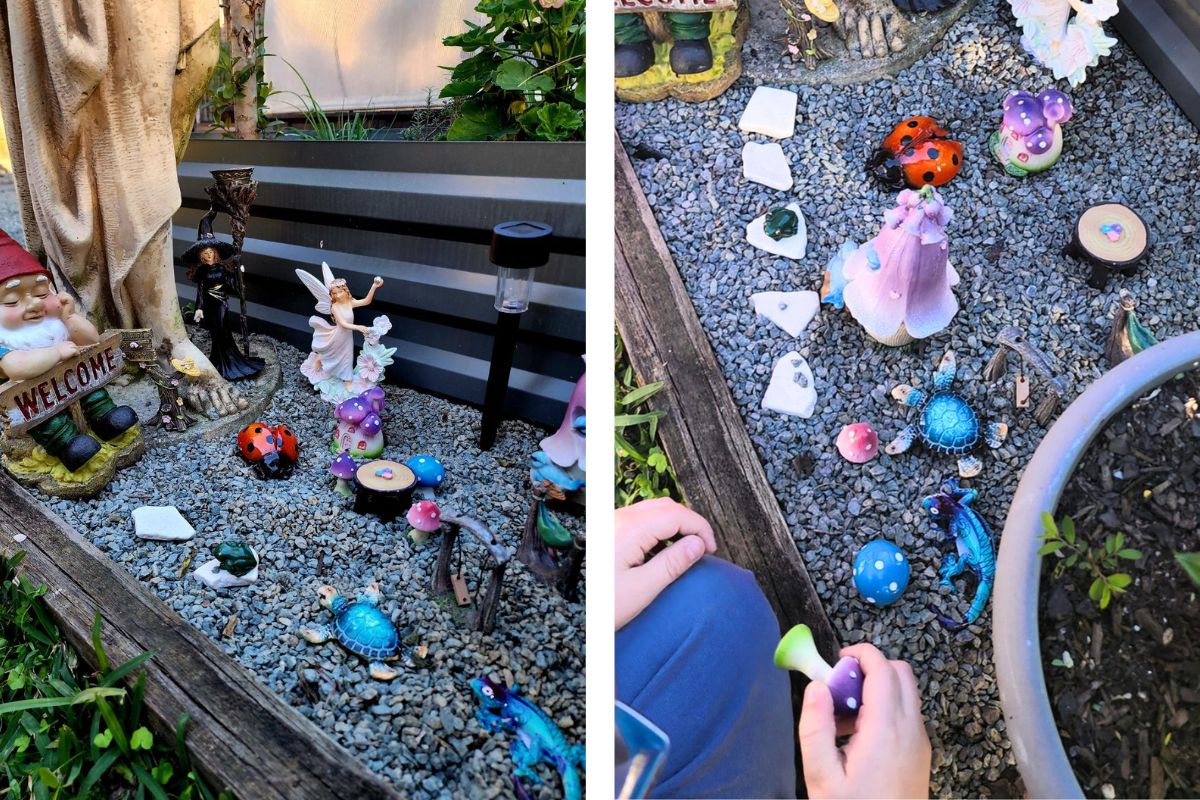
A fairy garden gives kids a small patch of the garden that can feel completely their own.
Choose a quiet corner of a garden bed and let them create a little world that they can visit and look after in the garden. There are lots of shops that offer low-cost fairy or enchanted figures, but also don’t be afraid to look at the bottom of your toy box for little treasures that might feel magical in the garden.
Mulching
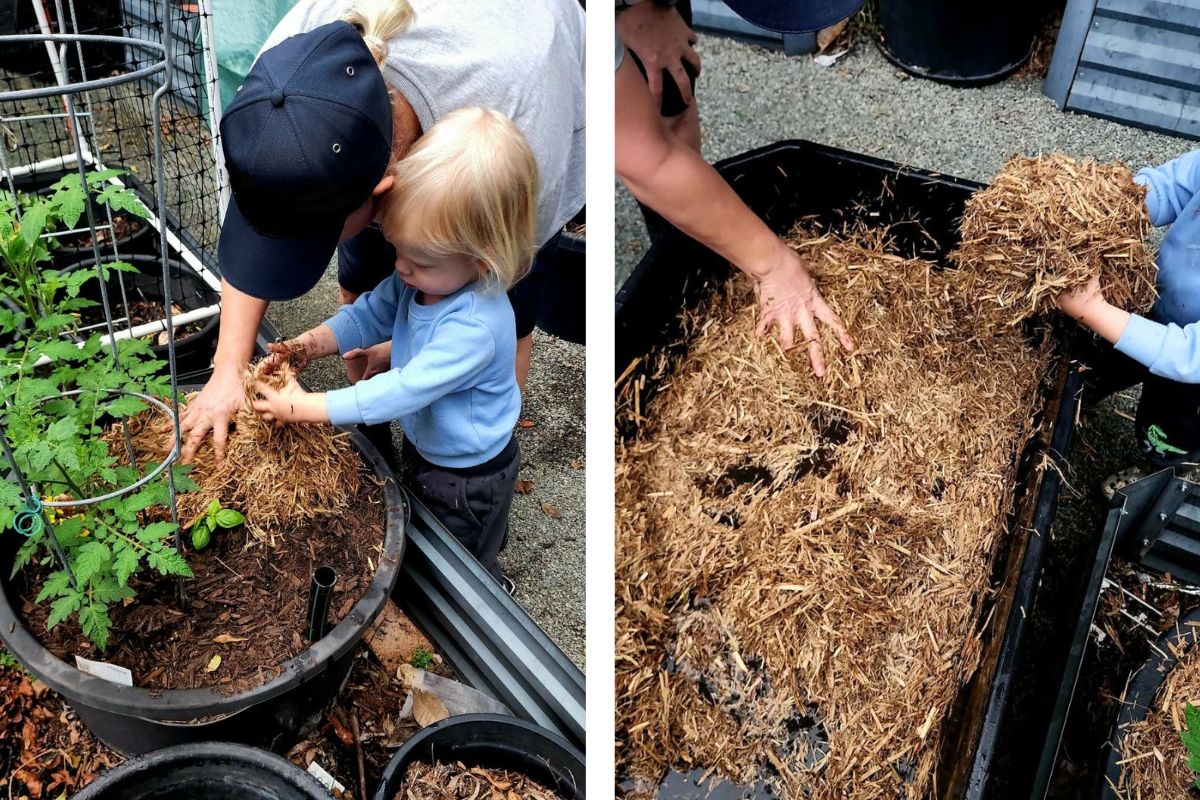
Spreading mulch is one of the easiest real garden jobs for kids to help with because it’s fairly difficult to get wrong.
In our house, we call it “tucking in the plants”. Give the kids small handfuls of mulch and show them how to spread it around the garden while leaving some space immediately around plant stems.
It’s messy, hands-on and gives them a genuine job rather than an activity that’s simply keeping them occupied while someone else gardens.
Before children start handling mulch, give it a good water with the hose to help settle any dust and fine particles.
Start A Worm Farm
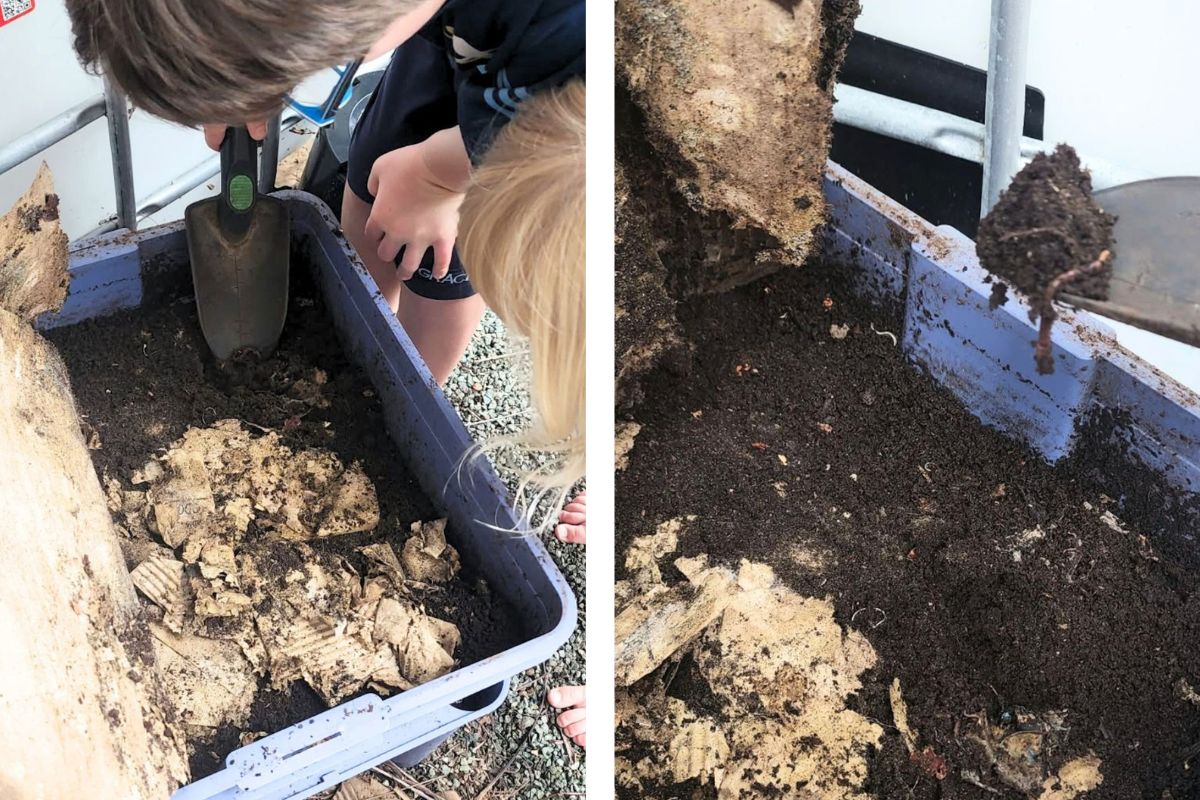
Worm farms are a great way to show children what happens to some of the food scraps that would otherwise go into the bin.
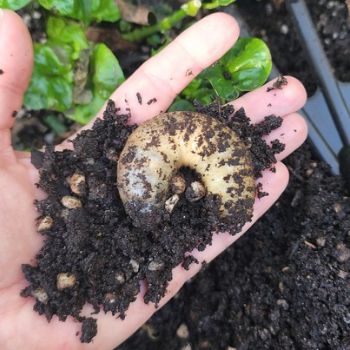
Kids can help collect suitable kitchen scraps, feed the worms and regularly check what’s happening inside the farm. Fruit and vegetable scraps can suddenly become much more interesting when they’re being saved for a tub full of wriggling worms.
It’s also an opportunity to teach children that worms don’t eat everything. Learning what can and can’t go into the worm farm gives them responsibility for looking after something living.
Over time, they can see those scraps being broken down rather than simply disappearing into the rubbish bin.
And for kids who enjoy anything slimy, muddy or slightly gross, checking on a worm farm generally isn’t a difficult sell.
Composting
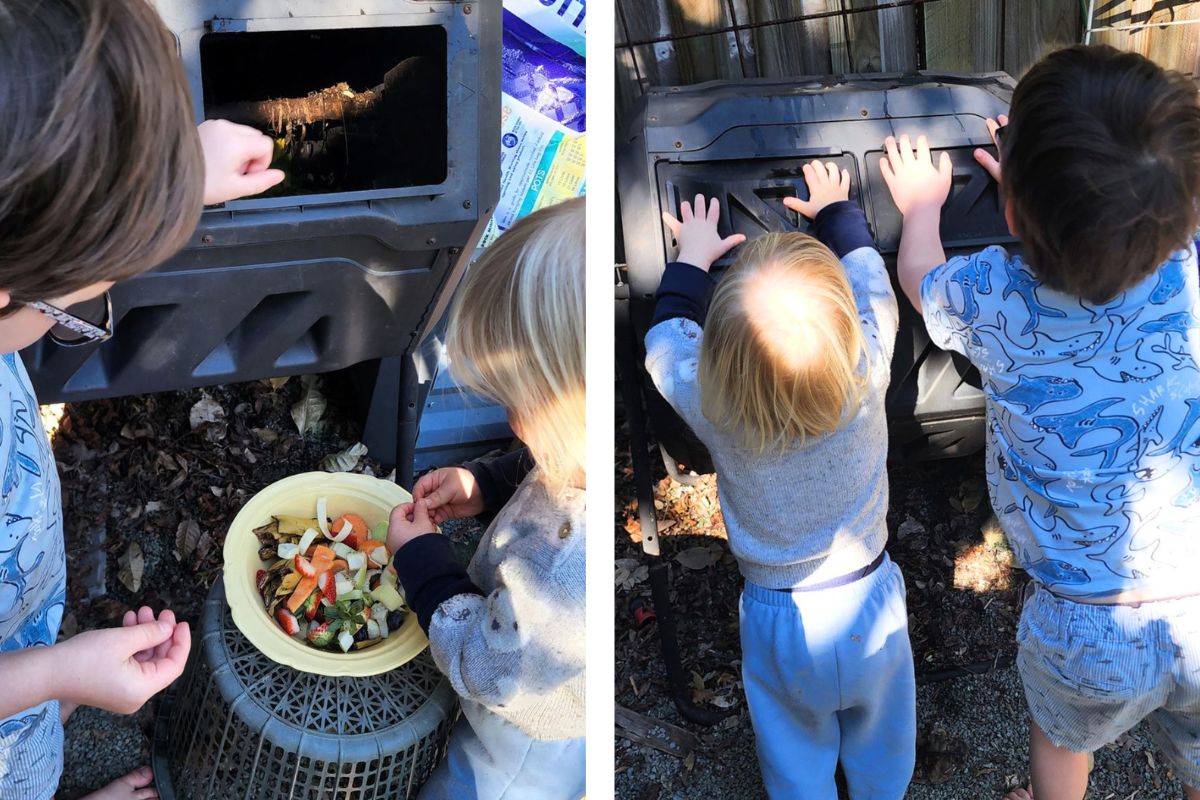
A compost bin or pile is another easy way to involve children in everyday garden jobs while teaching them about food waste.
Give them a small container to collect suitable kitchen scraps and let them empty it into the compost. They can also help add garden clippings and other appropriate materials.
Show them how the contents change over time. What starts as recognisable food and garden scraps gradually breaks down into compost that can eventually be returned to the garden.
Older kids can help turn the compost, which is also a good job for burning off some energy.
It doesn’t need to become a science lesson. Simply seeing scraps leave the kitchen, break down and eventually help grow something new is a practical way for children to understand that not everything needs to be thrown away.
Mud, Mess And Garden Play
Not everything children do in the garden needs to have a productive outcome.
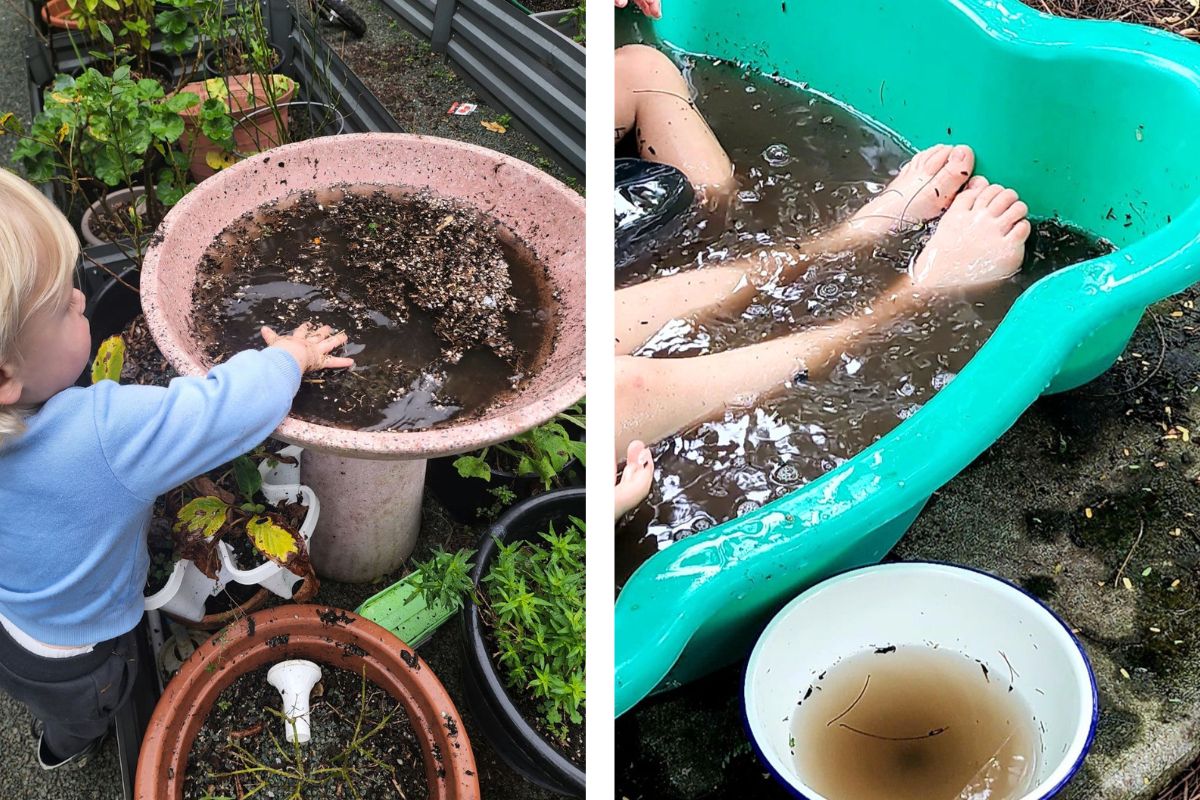
Sometimes it’s enough to give them a patch of dirt, some water and permission to make a mess.
Mud soup and flower potions can keep children occupied while giving them the freedom to experiment with different textures, smells and materials.
Set aside a few old containers, spoons and bowls specifically for outdoor play, then let them collect fallen leaves, flowers, sticks and other safe materials from around the garden.
Wear old clothes and accept from the beginning that they’re probably going to get filthy. That’s part of the fun.
Once they’re finished, the creations can go into the compost where appropriate, the equipment can be rinsed and particularly muddy little gardeners can head straight for the bath.
Helping With The Heavy Loads
Kids often want to help with the jobs that involve the most action.
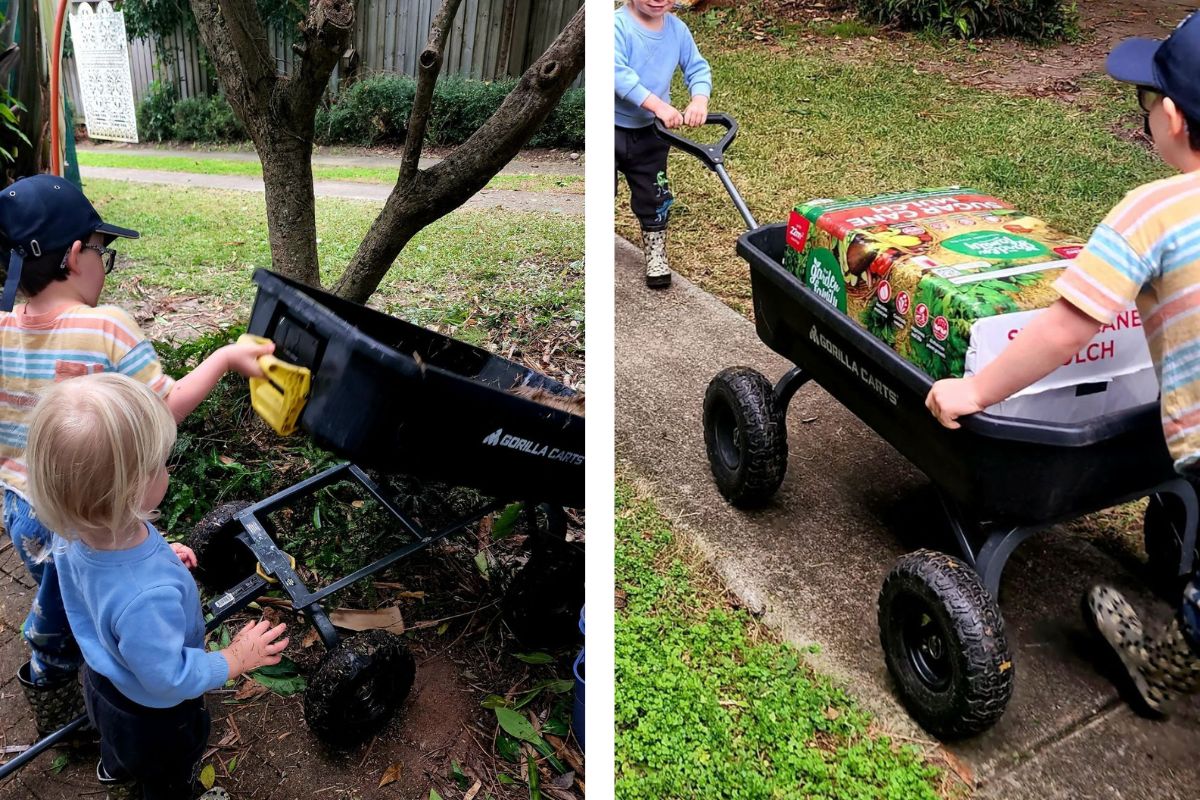
Moving small amounts of soil, pulling a garden cart, carrying light pots or helping tip mulch into a garden bed can make them feel like they’re part of the real work.
The key is matching the job to the child’s age and ability. Keep loads light, avoid anything sharp or awkward and leave genuinely heavy lifting to the adults.
A small bucket is often all younger children need. Fill it with a manageable amount of soil or mulch and give them somewhere specific to take it.
Yes, the job may take longer than doing it yourself. But they’re participating rather than simply watching, and there’s a decent chance all that carrying and digging will help with bedtime later too.
Get Involved In The Community
Gardening with kids doesn’t have to stay in your own backyard.
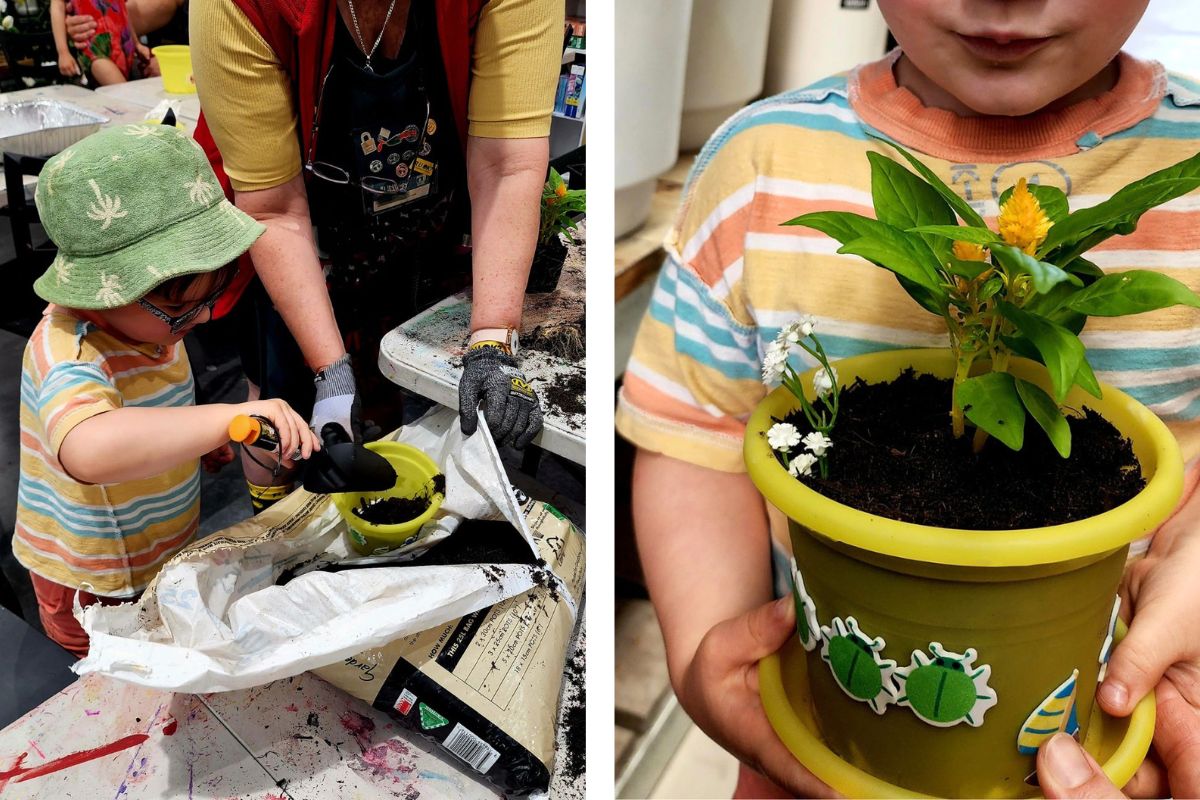
Community gardens, garden centres and local gardening groups can give children the opportunity to see different ways of growing food and flowers. Some also offer children’s activities, workshops or community days where families can get involved.
Look for suitable activities in your local area and see what’s available. A community garden can be particularly useful for families who don’t have much growing space at home.
It also shows kids that gardening isn’t something that happens only in their own backyard. People grow food and plants in courtyards, balconies, community spaces and shared gardens too.
Keep It Fun
Gardening with kids won’t always be the quickest or tidiest way to get a job done, and that’s okay.
Start with something simple that suits their age and interests. One child might happily spend half an hour looking for worms while another wants to pick every tomato they can find.
Give them real jobs when you can, let them get dirty and don’t worry if everything isn’t done perfectly.
The aim isn’t to create expert gardeners overnight. It’s to give kids the chance to spend time outside, understand a little more about where food comes from and discover that the garden can be a pretty good place to play.
Article & Photgraphs by Julia Lewis