
Every day there’s a fresh headline about the summer ahead. A strong El Niño is already underway, and the Bureau of Meteorology expects it to peak around November or December as one of the strongest on record. Its outlook is for above-average temperatures across Australia, with below-average rainfall likely in parts of the south-east. For home gardeners, that means planning for heat and dry spells now.
But rather than feeling frustrated about the forecast, I’ve been channelling this energy into sorting out my property to protect my plants and give them a good chance to weather through the summer successfully. We may not be able to control the weather ourselves but we can certainly take some initiative to prepare.
Important: If you’re in an area prone to bushfires or grass fires, you should consider taking appropriate steps to reduce your risk and have a plan just in case there is an incident. It’s well worth checking out your state or territory’s fire service website for tips and information about how to protect your family, when to evacuate and ways to make your home safer.
Careful Plant Selection
One of the simplest ways you can plan ahead for a hot summer is by selecting drought-friendly plants that are tolerant of the weather we’re expecting.
For instance, eggplant tends to do better than many other fruiting plants in hot weather. Jerusalem artichokes keep powering on through, chillies can handle heatwaves slightly better than other plants and sweet potato is another reasonable option. Many herbs are unbothered by drier soils, and rosemary, thyme, oregano and sage in particular are well known to do well during dry spells.
Lettuce, celery, onions and cucumbers specifically can have a hard time, so you can either skip them, or be ready to take additional precautions to protect them and consider their placement in your garden carefully.
Another option if you’re set on growing specific types of vegetables and fruit is to select varieties that are the most heat and dry tolerant. With this in mind, our tomato patch this year is heavily weighted towards Santorini and Sun Ray varieties. And for zucchinis we have opted for Tromboncino and Lebanese rather than some of the varieties we typically like to plant, such as Cocozelle. Kent, Jarrahdale and Queensland Blue are decent options for pumpkins.
It’s worth doing a little research when you’re purchasing seeds and plants to set yourself up for a good harvest and less hassle from the get-go. This tiny bit of thoughtfulness will help you reduce the workload over summer for these plants and allow you to spend more time tending to those that most need the help.
Water
Advanced irrigation systems, wicking beds or even a few sprinklers on timers make your garden a lot more resilient and can provide a good automated option for those of us who are not inclined to be out in the high heat of the day. There’s still time to look into these more in-depth set-ups.
But not everyone has the time and resources for this type of infrastructure. Luckily, there are simple and effective things everyone can do to build in some more resilience.
Firstly, ensure you have a long enough hose to reach all areas of your garden and multiple watering cans if you’re a household working together on the garden. You can also consider adding a small water tank to your set-up, for instance I use a 100L tank for water collected around my home, such as shower water, that I keep out near my raised beds.
A note on greywater: Shower, bath and laundry rinse water can be reused on the garden, but health authorities advise using it within 24 hours (untreated greywater turns septic quickly), applying it to the soil rather than spraying it, not letting it pool, and keeping it away from edible plants, especially anything eaten raw. Your state health department or EPA has the detailed rules.
Self-watering devices can also be a useful option. I use affordable plastic waterers that take empty bottles of fizzy drink with the end cut off. This ensures a small but steady watering of sensitive plants, which provides some peace of mind during the worst of the heat.
Create a watering and maintenance schedule and stick to it. On the hottest days, your garden might need watering more than once. Work out how long it will take you to water all your plants, which ones are a priority, and make sure to factor this time into your day. Remember that a deep watering once a day at the base of the plants is better than light sprinklings twice a day. Pick your timing carefully, with mornings and evenings better than watering during the height of the day.
Consider getting a moisture sensor (such as a soil moisture meter or a 2 in 1 pH and moisture meter) to measure how dry or damp your soil is. This will help you water appropriately without wasting time and effort. You can also consider anti-transpirant sprays, which coat leaves in a polymer film to slow water loss, and soil wetting agents.
Tips for potted plants: If you have plants in pots, take the simple step of adding saucers to collect additional moisture. Your plants will wick up the moisture from the saucers as they need it. If you’re repotting plants, adding garden water crystals into the potting mix is a good idea. These will help store up moisture and reduce the risk of vulnerable pots drying out.
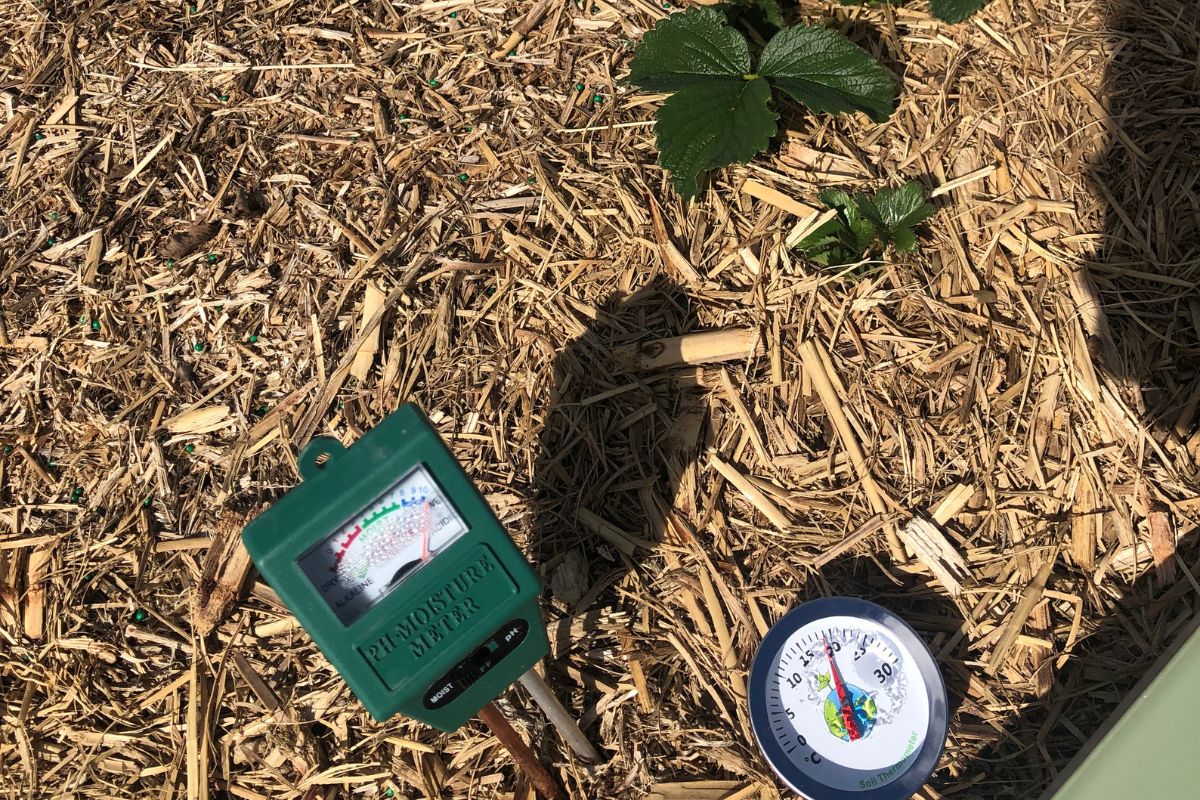 Knowing how moist my soil is saves me from over- or under-watering all year! Knowledge is power.
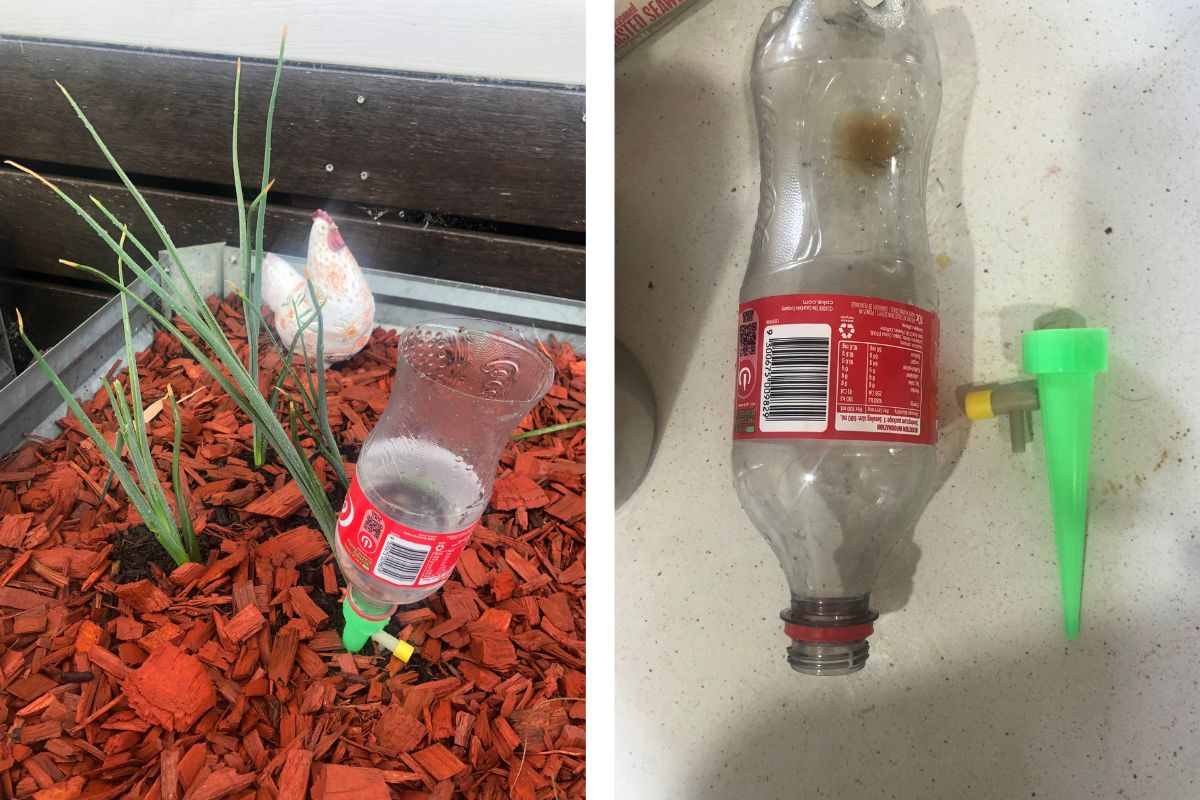 A leftover bottle and an affordable plastic watering spike can save you plenty of hassle. I am putting one of these next to each plant that needs it most.
Shade
A hot, high UV day can risk scorching your plants. Apples, pears and some stone fruit and berries can be quite sensitive to high UV levels and citrus can also be susceptible to damage.
If your trees are in permanent in-ground positions, consider using a 50% shade cloth to protect them on the worst days. Heavier shade cloth, such as 90%, blocks too much sunlight. I attach shade cloth to my tree protectors using shade cloth clips, though on non-windy days you could easily use clothes pegs to do the job. You could also consider installing a shade sail over sensitive raised beds.
Tips for potted plants: Consider where there is already shade in which you could temporarily place your plants during hot parts of the day. This could be along one side of your house, fence or shed or near a tree. Avoid north-facing parts of your garden and consider lighter-coloured pots where possible, as classic black and dark green pots heat up quickly.
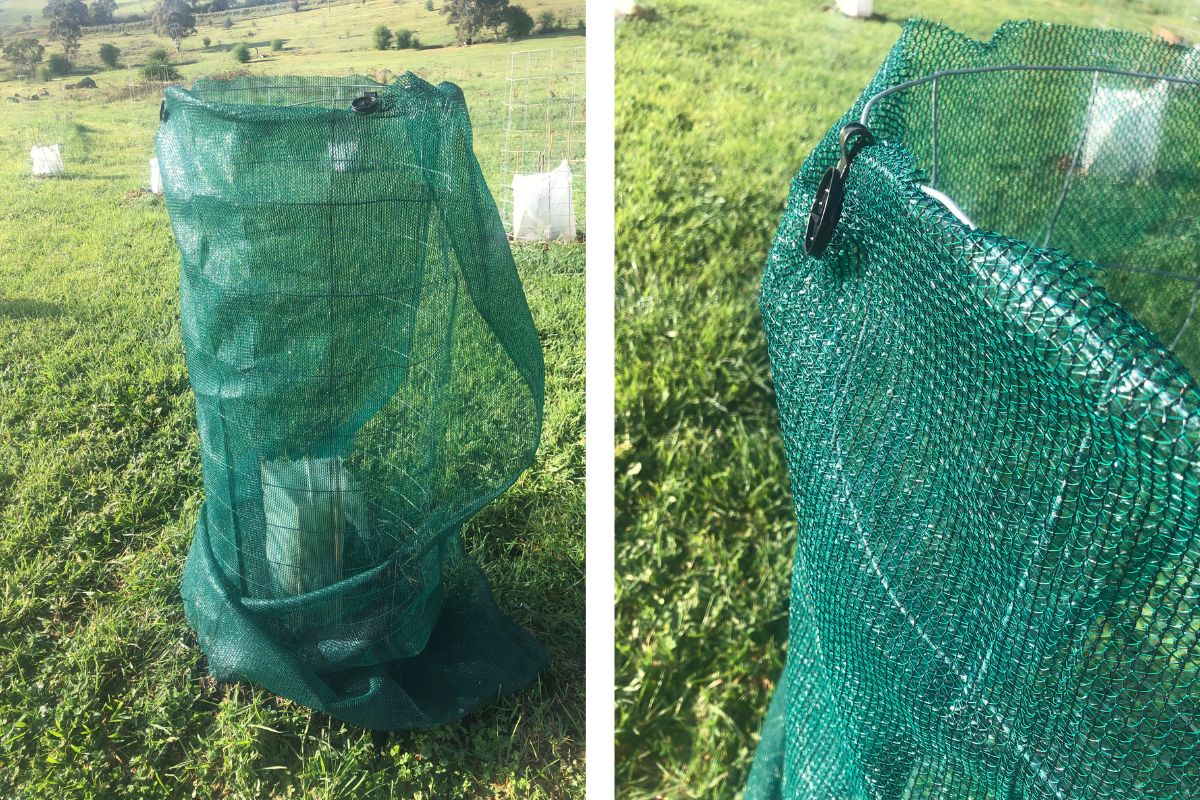 Draping shade cloth around my tree protectors gives them ample coverage from UV and scorching sun during the worst days. These shade cloth clips do not budge, but you can easily find other solutions such as clothes pegs or butterfly clips.
Mulch
A deeply mulched garden is likely to have a better chance of strong harvests during dry, warm spells than those left bare. Mulch helps the soil retain moisture by reducing evaporation and provides some protection for the delicate roots of plants from scorching sun.
Up to seven or eight centimetres of mulch is worthwhile. Sugarcane mulch works well around potatoes and in raised beds. A layer of compost, or specific water-saving mulch, topped with thicker wood chips can be a good solution around the base of trees. Do not skimp on this step as it conditions the soil as well as protecting the most crucial parts of your plants: the roots.
Tips for potted plants: Don’t forget to mulch your potted plants as well. This not only protects the plant and holds in moisture, it also helps avoid water splashing over the sides when you’re watering. Pick lighter, smaller mulch rather than wood chips.
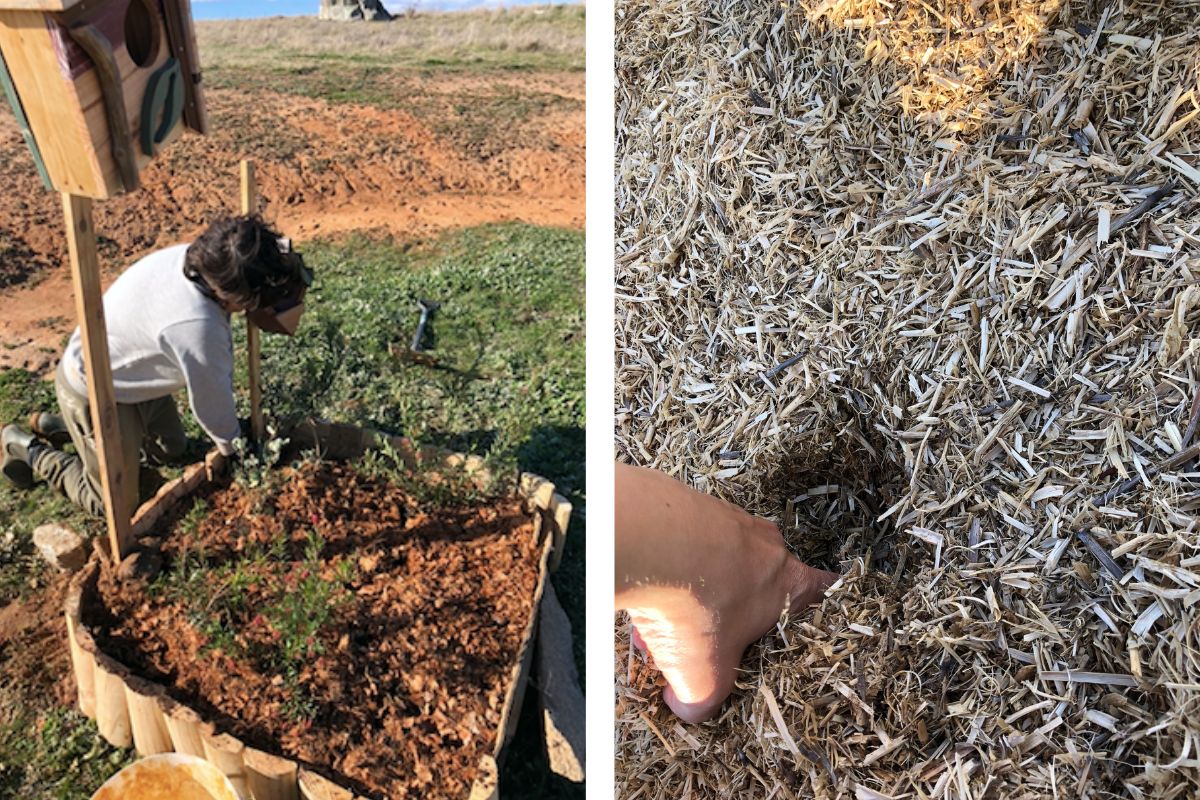 You want your mulch much deeper than you think! Grab a dibber with measurements or a ruler to check. A little bit of sugarcane mulch on top of your pots makes a big difference.
A Final Bit Of TLC
Strong plants weather adversity better than weak ones. You want your plants to be as established as possible before the weather becomes challenging.
For this reason, give your plants extra care and support in the lead-up to summer. Seaweed tonics are a great extra feed. Check for pests and diseases and do your best to fix them ahead of time.
All in all, it’s understandable that El Niño and hot summers can be a source of concern. It certainly is for me in my garden! But rather than spending time feeling anxious, use the next few weeks to get prepared ahead of summer to ensure your garden survives, and thrives, through the warmer weather.
Article & Photographs by Jennifer Brown