
It started with a few plants that weren't looking quite right. There was some yellowing, a little wilting and generally a few plants that seemed to be struggling despite being watered and otherwise well cared for.
Then I started digging.
Under the soil I found fat, creamy-white grubs curled up around the roots of my plants. And there wasn't just one or two. They seemed to be everywhere.
I'd found curl grubs.
.jpg)
What Are Curl Grubs?
- Curl grubs are the larvae of a range of scarab beetles. This includes introduced species such as the African black beetle and Argentinian scarab, along with native scarabs, including some Christmas beetles.
- The adult beetles lay their eggs in the soil. The eggs then hatch and the larvae spend most of their time underground before eventually emerging as beetles. How long this takes depends on the species. Some complete their lifecycle within a year, while others can take several years (this is one reason you may come across scarab larvae at different times of the year).
- Some species feed on living plant roots while underground, and that's when they can become a problem in the garden.
How Do You Identify a Curl Grub?
Once you've seen a curl grub, you'll probably recognise one fairly quickly.
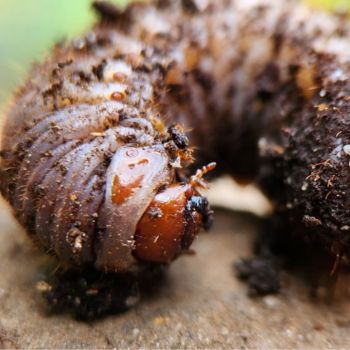
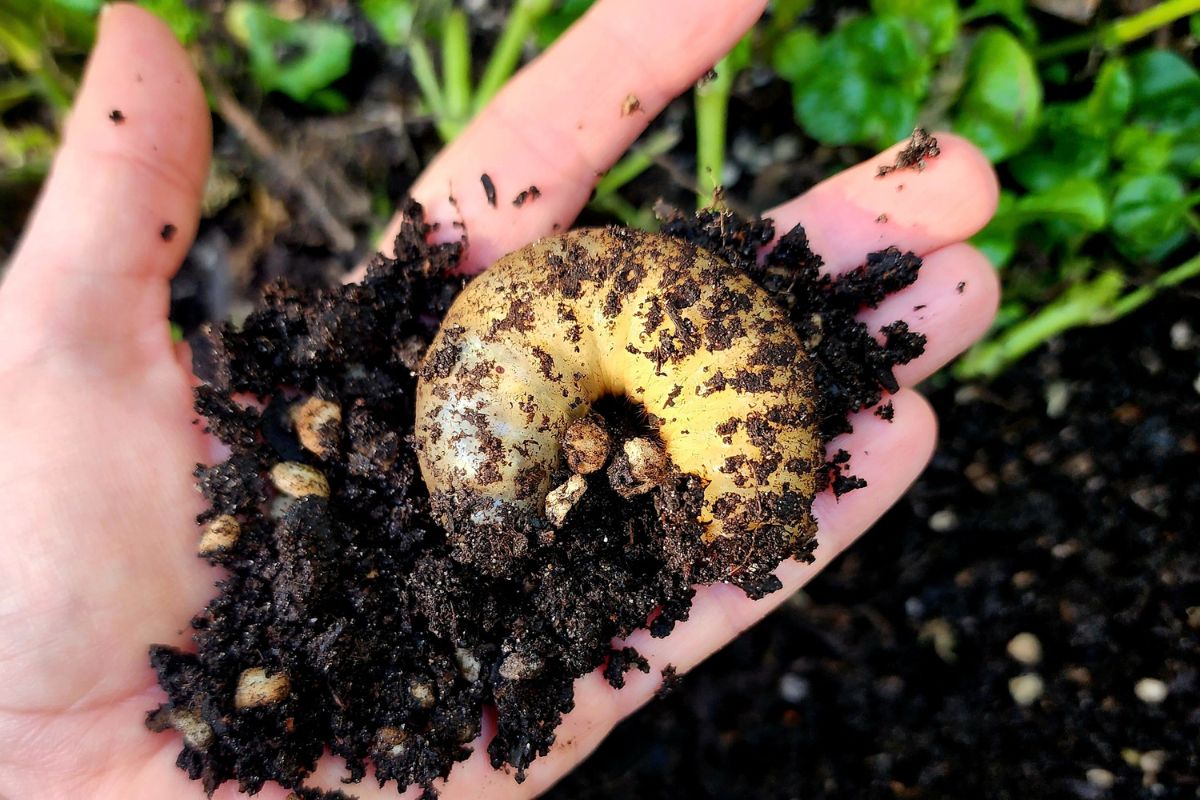
Their most obvious feature is the way they curl into a C shape, hence the name. They're usually creamy white or pale in colour, with a noticeably darker head and six legs towards the front of the body.
Size varies between species. Some common species grow to around 2.5cm long, while the larvae of other scarab beetles can grow considerably larger (6cm+).
Are Curl Grubs Damaging My Plants?
This is where you need to do a little detective work.
Finding one or two curl grubs while digging around an otherwise healthy plant isn't always a problem. But if you're finding a lot of them around the roots of plants that have suddenly started looking unhealthy, it's worth taking a closer look.
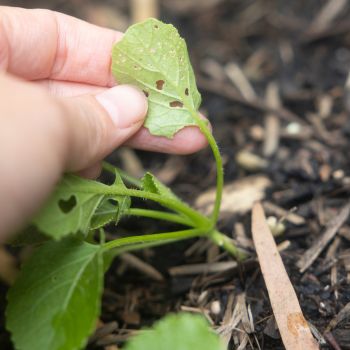
When roots are damaged, a plant can look thirsty even when the soil has plenty of moisture. You might notice yellowing leaves, wilting, slow growth or a plant that just doesn't seem to be doing well.
Potted plants can be particularly vulnerable. A plant growing in the ground has much more room to spread its roots, whereas everything in a pot is confined to a relatively small space. If enough of those roots are being damaged, the plant can go downhill fairly quickly.
This is something I've become much more aware of in my own garden. If a plant starts to look like it's struggling, I now take a look at what's happening below the soil rather than assuming it needs more water.
Of course, a yellowing or wilting plant doesn't automatically mean curl grubs are to blame. Check the obvious things first, including watering, drainage and the overall health of the plant.
In fact, curl grubs can be beneficial because they aerate the soil and can mix nutrients within your soil.
.jpg)
Curl Grubs in Pots
Curl grubs can be troublesome in pots because the plant has a limited root system to begin with. If you find them while repotting, check the roots for damage and remove any grubs as you work through the potting mix.
For a larger infestation, replacing some or all of the potting mix may be worthwhile. If you're considering an insecticide, always check the label first, particularly for edible plants, as not all products are suitable for use around vegetables and herbs.
For just a few grubs, hand removal is usually the simplest place to start.
Yes, Curl Grubs Can Appear in Your Lawn, too!
Lawns are another place where curl grubs can turn up.
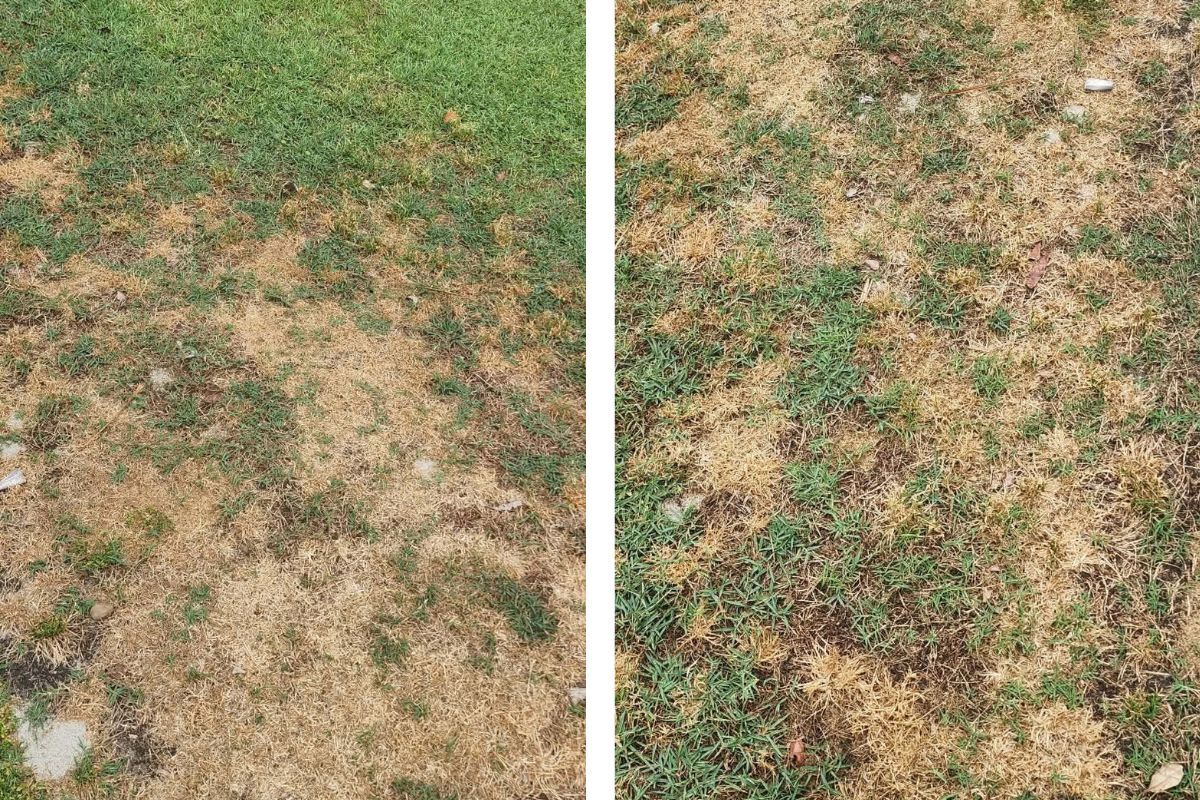
Some species feed on grass roots and, if there are enough of them, you'll eventually start to see the damage above ground. Patches of lawn may turn brown, thin out or die. You might also notice birds spending a lot of time pecking at one particular spot. There's a good chance they've found something worth digging for.
The grubs themselves are down in the soil, feeding around the roots of the grass. Once enough roots have been eaten, the grass isn't anchored as well as it should be, and it can feel soft or spongy when you walk over it. Badly affected turf may come away from the soil with very little effort.
If a patch of lawn suddenly starts dying, don't automatically assume it's dry. Dig up a small section and take a look underneath. You may find the answer wriggling around in the soil.
Are All Curl Grubs Harmful?
Surprisingly, not every curl grub you come across is a problem.
Something I didn't realise until I started reading more about them was just how much their diets differ. The root-eating species are the ones gardeners tend to hear about, but that's not the whole story. Other scarab larvae live on decomposing plant matter and old, rotting wood.
So, a grub turning up in the garden doesn't necessarily mean your plants are on the menu. One living among compost, old mulch or rotting timber could be there for the decomposing material rather than your plants.
The tricky part is that you can't always tell what a grub has been eating just by looking at it. There are many different scarab species, and their feeding habits aren't all the same.
So don't judge the situation on the grub alone. Have a look at where it turned up, whether there are others nearby and what your plants are telling you.
Grubs found living in compost, mulch, rotting wood, etc., if they're not doing harm to living plants, then leave them alone.
What Should I Do if I Find Curl Grubs?
If you do feel the grubs are affecting your garden, you have a few options.
- Hand removal: In a pot or small garden bed, the easiest option is often to go through the soil by hand and remove the ones you find.
- Birds: Magpies, currawongs, ibis and other birds will happily forage through lawns and garden beds looking for beetle larvae.
- Nematodes: Beneficial nematodes are microscopic organisms that live in soil, and certain types are used to control particular insect larvae.
- Insecticide: I'd be wary of treating the whole area with insecticide, especially if you haven't identified the grub. You could end up killing insects that weren't causing a problem in the first place, including native species.
.jpg)
Can You Prevent Curl Grub Damage?
You can't completely stop scarab beetles from visiting your garden and laying eggs, but there are a few things you can do to reduce the risk of curl grubs becoming a bigger problem:
- Keep lawns healthy. A well-maintained lawn is better able to cope with some root damage.
- Turn off unnecessary outdoor lights. Some adult scarab beetles are attracted to lights at night. If you're seeing lots of beetles around outdoor lighting, switching it off when it's not needed may help reduce the number hanging around.
- Act early if something changes. Brown patches in the lawn, loose turf or a plant that suddenly starts struggling are all reasons to check what's happening below the soil.
You probably won't prevent every curl grub from appearing, and you don't necessarily need to. The idea is to stop a large population of root-feeding grubs from getting established and causing noticeable damage.
Bottom Line: Don't Panic When You Find One
After finding so many curl grubs in my own garden, I look at them a little differently now.
I'm certainly not going to ignore a large number of them sitting around the roots of a plant. But I'm also not going to panic every time I turn over some soil and find one.
One grub doesn't tell you much on its own. Where you found it, how many there are and how the plants around it are doing will give you a much better idea of whether you actually have a problem.
And that's probably the biggest thing I've learnt from finding them in my own garden: find out what you're dealing with before deciding it needs to go.
.jpg)
Article & Photographs by Julia Lewis