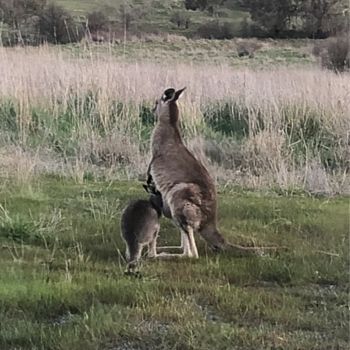

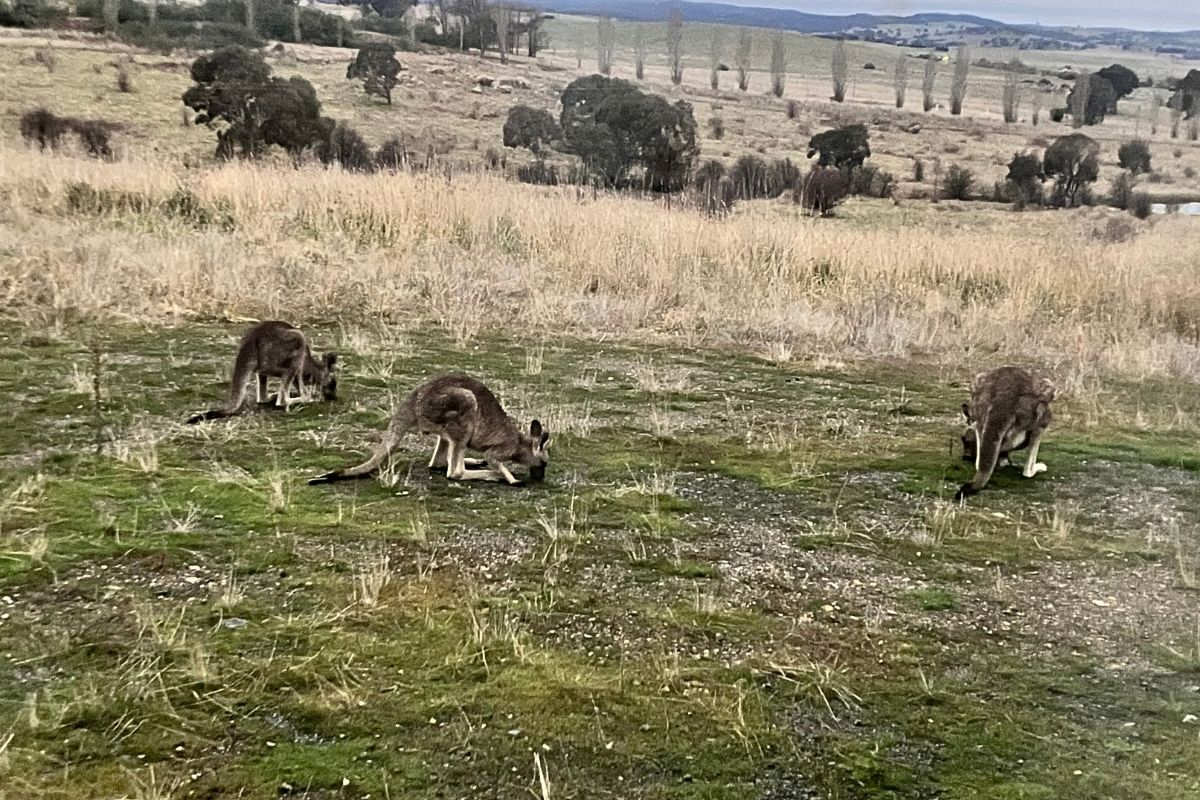
It is hard to dislike kangaroos.
They’re beautiful, they’re a national emblem, and playful joeys are a delight to watch on a rural property. But they come with their own complications for those of us growing gardens: they can be destructive to your plants.
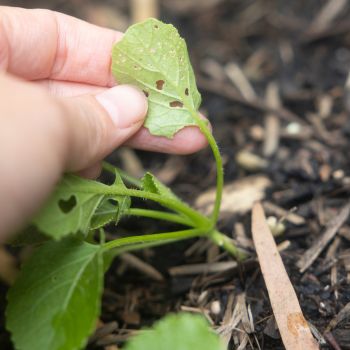
Kangaroos are herbivores and if my experience is anything to go by, they love young shoots of your most delicate plants, particularly as they start to revive in spring. These are usually the exact plants you don’t want them munching on. I’ve lost blueberries, the tops of young quince trees and even an entire bunch of young kale to hungry roos. They’ll also dig into your mulch seeking out roots or trample plants when a mob comes bouncing through. I’ve even seen them rub against bigger plants, snapping branches in the process, to reach a difficult itchy spot!
Rather than get frustrated with the native wildlife exploring your land, you need to get prepared.
Plant Selection And Property Maintenance
Firstly, it’s worth mentioning that you can avoid plenty of the problems associated with kangaroos with a bit of upfront planning.
Pick plants kangaroos don’t want to touch and eat. If you’re growing native plants, consider prickly options such as grevilleas or tough-leaved natives like Westringia. If you want to include a citrus tree that’s resilient to wildlife, I find kangaroos tend to aim straight for my lemons and oranges, but they leave my finger limes alone because they have tougher thorns.
You should also consider making your garden as unattractive to kangaroos as possible in the areas you would like them to avoid. Reduce water sources and keep your grass short. Cut back shady trees. Consider keeping some plants in pots nearer your home where kangaroos are less likely to visit.
And, if your property is large, consider making other areas more attractive. We are on acreage and down one far-away end we put out water under a large tree to encourage them to favour that side rather than near our home and gardens.
Deterrents
Equipment:
- Motion-sensor lights
- Menthol-based rubs
If I see kangaroos around my veggie gardens during the day, I’ll actively “shoo” them away and I am convinced they slowly realise I don’t want them in certain parts of the property. But it is impractical to consider this a long-term solution. One alternative is to install motion-activated solar garden lights to stop unwanted guests overnight.
There are other options, too, which won’t see your garden lighting up all evening.
A classic, and one I’ve had temporary success trialling, is using Vicks VapoRub or any other menthol-smelling ointment around the plant. You can rub it onto bamboo canes, or add menthol essential oil to water and spray a little around the base of the plant (try to avoid the plant itself). Roos definitely don’t like it. But you do have to reapply every few days as it doesn’t have significant staying power. Watering your plants, rain or even just evaporation into the air can see it diffuse very quickly. Some gardeners I know also opt for tin cans on string or even wind chimes to deter kangaroos.
Low-Intervention Options
While it’s not possible for everyone to have a fully fenced Colorbond veggie patch, that’s no reason to leave your plants unprotected. Here are some different options I’ve personally used and have found effective.
Equipment:
- Plant protection domes
- Short rolls of gardening edging
- Plastic tree protectors
- Bamboo canes
My first step when protecting a plant is always to think about the lowest-cost, lowest-effort method to solve the problem. In many cases, this will actually be enough.
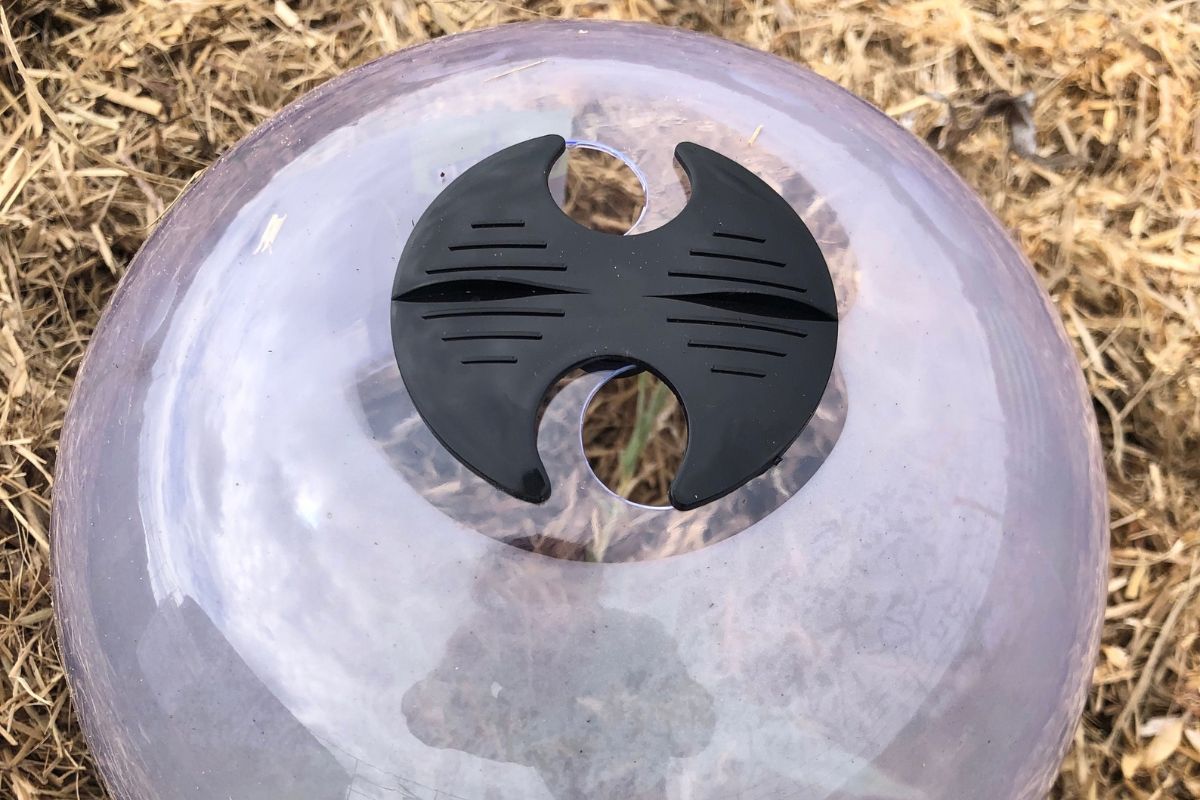
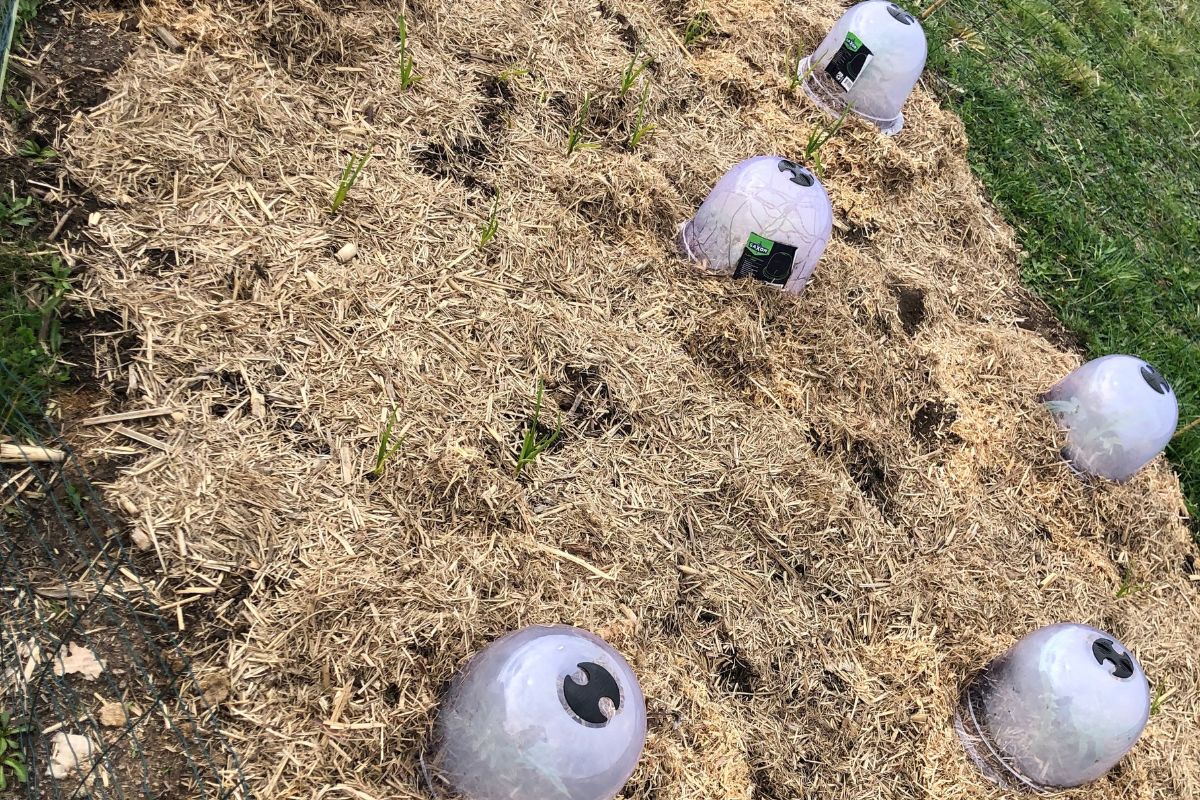 These individual plant protection domes look a bit like you’re in space, but they can keep kangaroos from trampling or sampling your young plants. They are also good for protecting against a light frost and intense winds.
For young plants getting established, particularly through the colder months, I use a simple plastic plant protecting dome at a cost of a few dollars a piece. These can be re-used over the years. This stops kangaroo damage entirely during establishment but it can be high maintenance, requiring you to place them on individual plants, eventually remove them and keep a close eye to ensure the plant isn’t out-growing the protector.
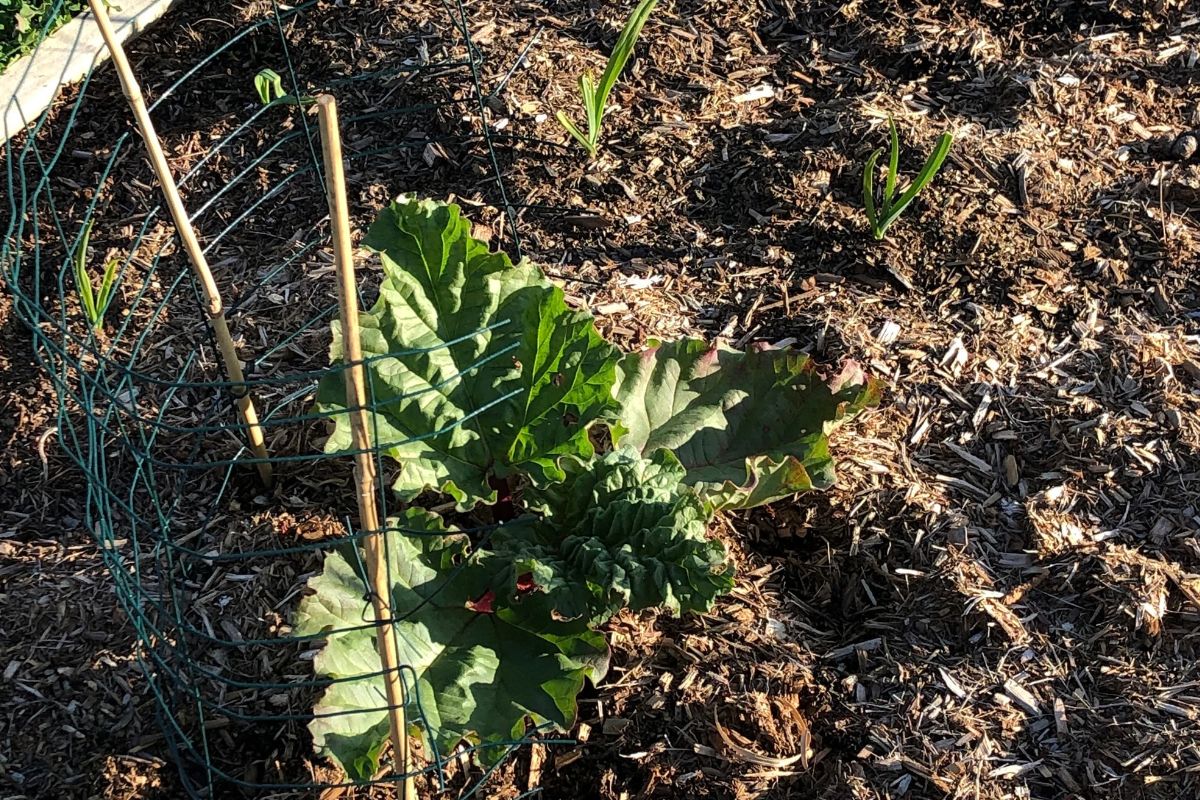
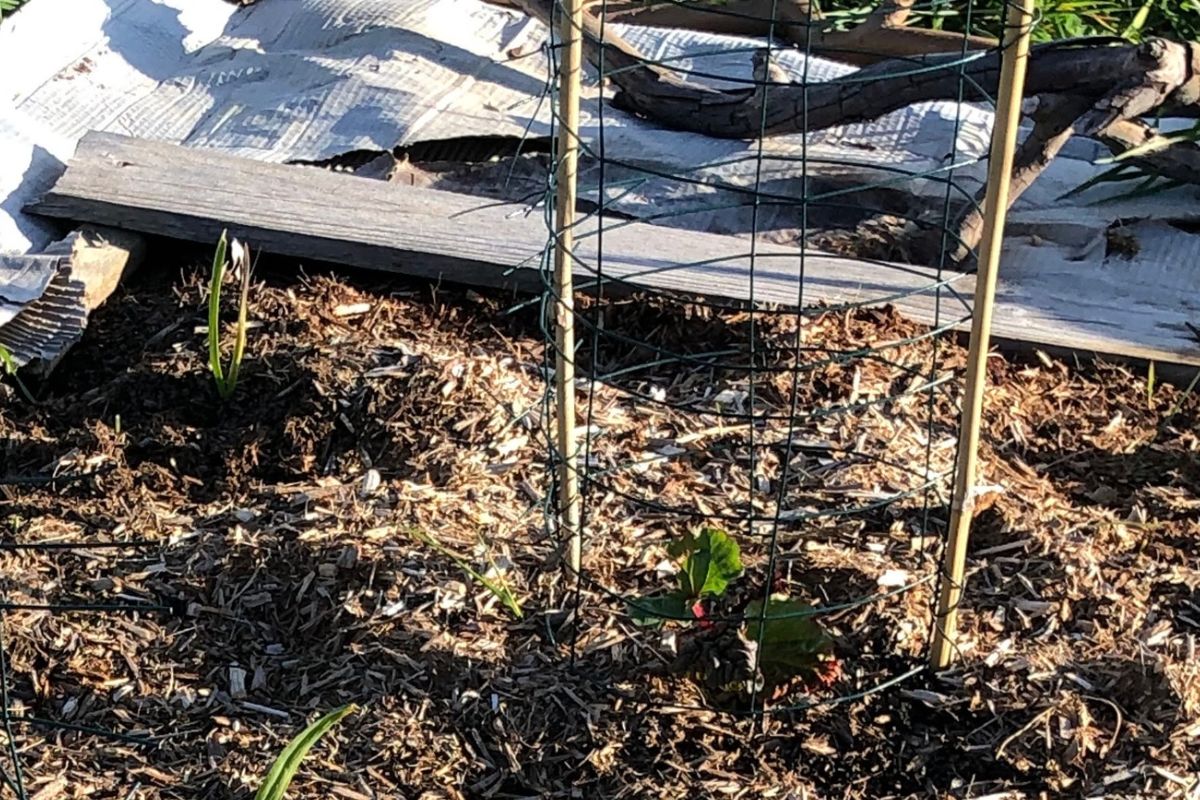 These are very easy, tacked together and work wonders for smaller garden beds where you might get one or two kangaroos having a peek. They won’t stand up to major trampling, but it is enough to stop most incidences.
Another option is to get a short roll of gardening edging, about 350mm tall, and use bamboo sticks or other supports to create a small protective barrier. This works well around individual plants that are establishing. One tip is to make these in a C-shape that is almost a full circle, to allow you to widen it out as the plant gets larger. I used these successfully on rhubarb crowns as they established over the winter, which kangaroos tend not to eat but are quite comfortable trampling.
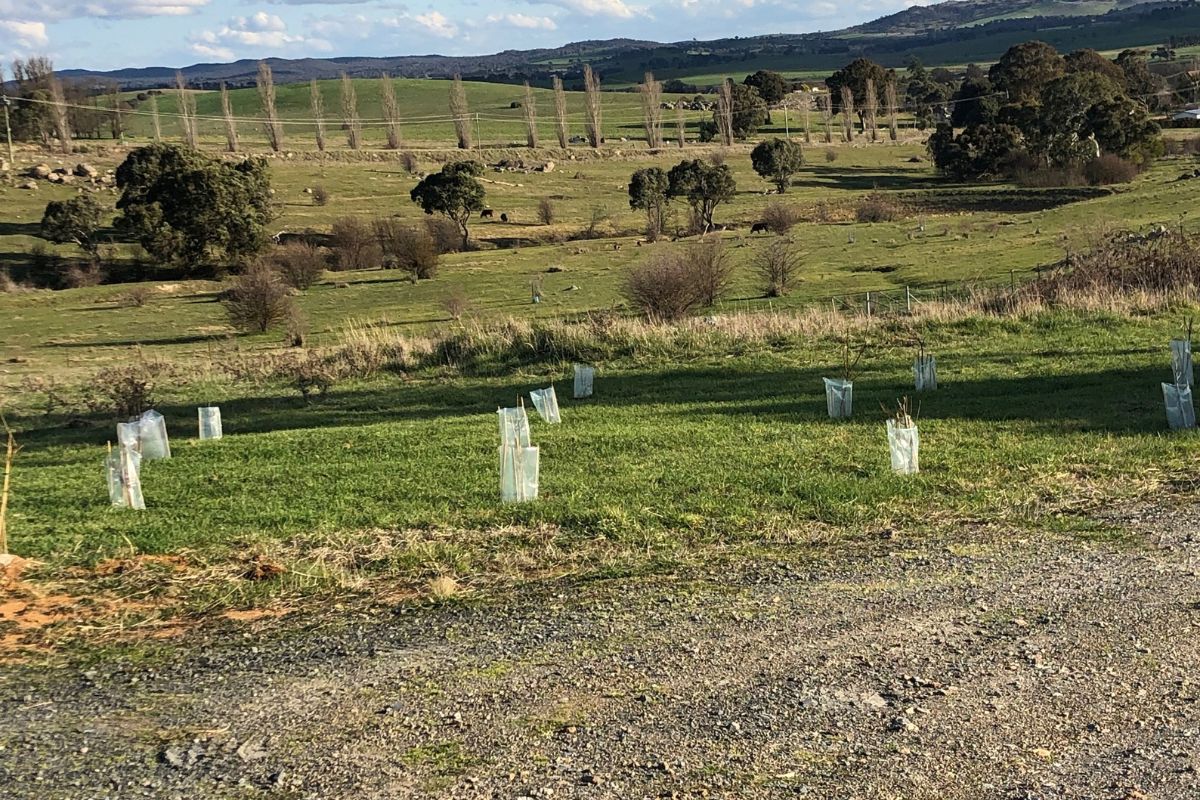 Plastic plant protection sheaths, or even a clear plastic bag with the bottom cut off, can help provide some gentle, temporary protection for young shrubs and trees. They also have some level of UV and wind protection. But they’re far from a permanent solution for kangaroos.
The third option I’ve had some degree of success with is using plastic tree protectors held up with bamboo canes around smaller shrubs. The trick is to make sure the tree protector is taller than the plant. This works 80% of the time. I find that, sometimes, a curious kangaroo would find a way to pull the plant protector right off the shrub for a closer look. But it is a good intermediary measure.
More Intensive Options
If you want to protect a large garden area, you may find yourself needing to install high fences. There is one alternative, though, which involves tall protectors on each individual plant.
Equipment:
- Heavy-duty wire fencing, 120cm plus
- Weed mat pins
While at least 1.8 metres is required for full fences to keep out kangaroos, you can get away with a slightly shorter mesh directly around individual trees and shrubs. In my orchard, where fresh shoots started appearing this spring out of my 16 newly planted bare-root trees, I was experiencing a significant amount of kangaroo nibbling early in the morning. I had already used the bamboo stick method with plastic tree protectors and for many of the smaller trees that was fine, but those with longer branches have clearly proven too enticing.
The solution I landed on was to purchase heavy-duty wire fencing, the type typically described as dog mesh or farm fencing, and create cylinders around the plants to protect them. Using this fencing means there’s no risk of the fencing bending around in the wind and damaging the plant.
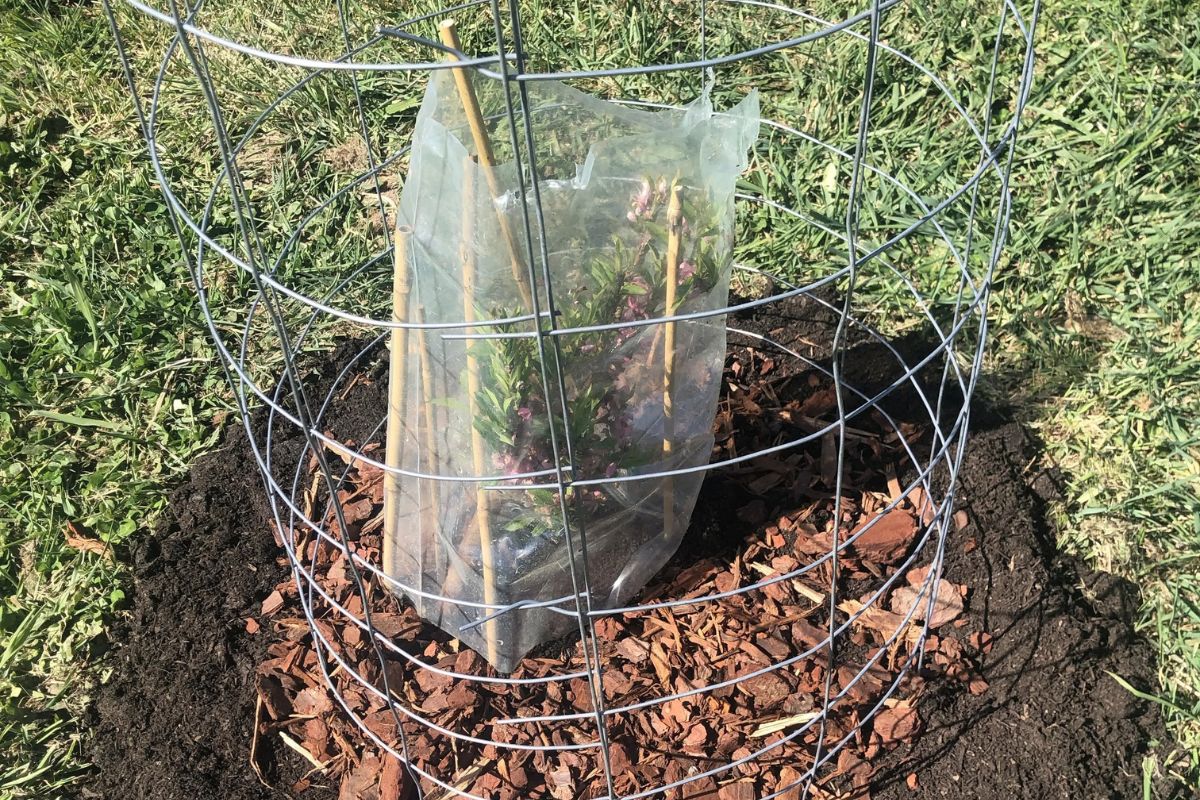 This cylindrical ‘cage’ around each of the young trees provides ample protection from kangaroos and other wildlife and holds up to strong wind.
I pinned the cylinders into the ground using weed mat pins (artificial lawn pins or even tent pegs would work just fine too) and poured some compost around the edges to help keep weeds down, slowly feed the plants and wedge in the weed pins further. These keep out the worst of the roos very well, but the fencing can be pricey and it takes time to put them together if you have many individual plants that need protecting.
(1).jpg) The same material works well around raised beds and it’s large enough to still fit a hose or even a watering can through without issue. You can quite easily harvest through the fencing and you can remove and reuse as required.
The same material works well around raised beds and it’s large enough to still fit a hose or even a watering can through without issue. You can quite easily harvest through the fencing and you can remove and reuse as required.
You can use this same fencing material around raised beds, small and large, simply by connecting one end to the other. I didn’t even need to peg it into the ground and it has stopped all kangaroos accessing plants in my raised beds to date.
Be Empathetic
Finally, if all else fails, remember to have empathy for kangaroos. This is especially the case during the warmer months, long dry spells and drought. Often they’re hungry, thirsty and looking for a way to survive when the grass dies back.
Gardening is a way to appreciate nature, even when it makes growing more difficult, and kangaroos are all part of the experience.
Article & Photography by Jennifer Brown