
Weaving with nature is as simple as it is beautiful.
A few sticks, some twine and a handful of treasures collected from outside can become an invitation to slow down, notice, create and connect. There is no right or wrong finished product. No template to follow. No two creations will look the same.
There is simply a frame, some natural materials and an opportunity to connect to the natural world, work with your hands and see what happens.
Nature weaving brings together fine motor coordination, sensory exploration, creativity, problem-solving and a sense of connection to place. Perhaps best of all, the materials can be gathered from the ground around us. For free!
Making The Weaving Frame
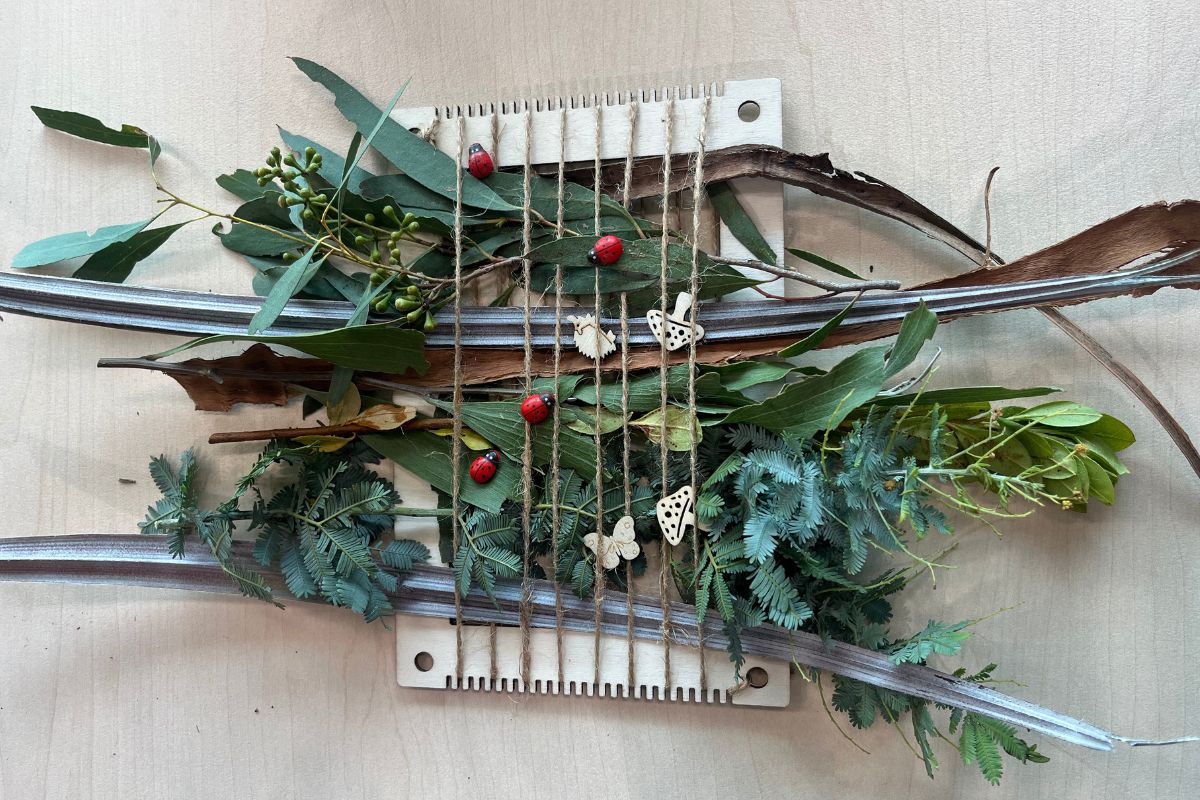
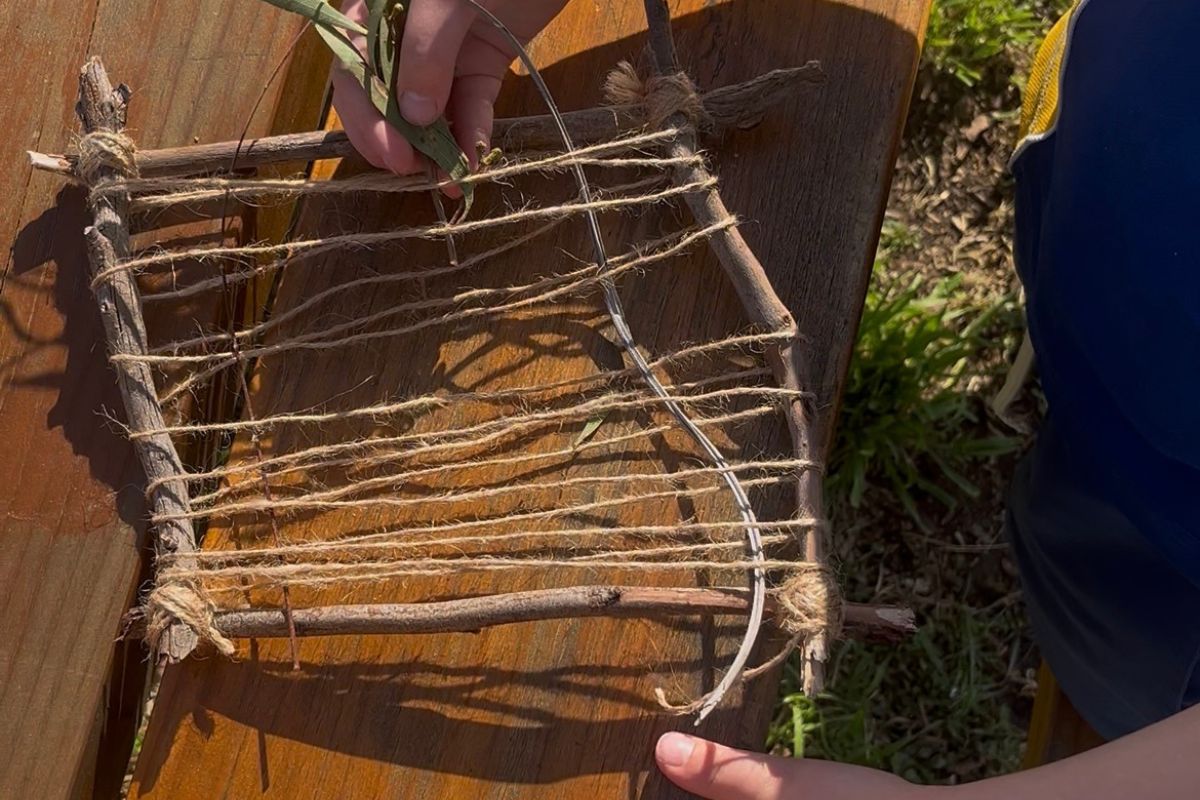
The first step is to make a simple frame using sticks.
Look for four reasonably straight sticks. They don't need to be perfectly straight or identical. A slightly crooked stick, a knobbly branch or a piece of bark still has a place in the process.
Arrange the sticks into a square or rectangle and tie the corners together using twine. Younger children might need an adult to make the frame and secure the corners. Older children and adults can be involved in collecting the sticks, arranging them, holding them in position and helping to wrap or tie the twine.
Once the frame is secure, stretch lengths of twine from one side of the frame to the other. These become the warp threads that the natural materials will be woven through.
Keep the spaces between the twine wider for younger children, making it easier to manipulate the materials. For those ready for a greater challenge, create narrower spaces or use thinner materials.
The purpose isn't to create a professionally constructed loom. It is simply an accessible tool that allows the process of weaving.
Time For A Nature Treasure Hunt
Perhaps my favourite part of nature weaving happens before the weaving even begins.
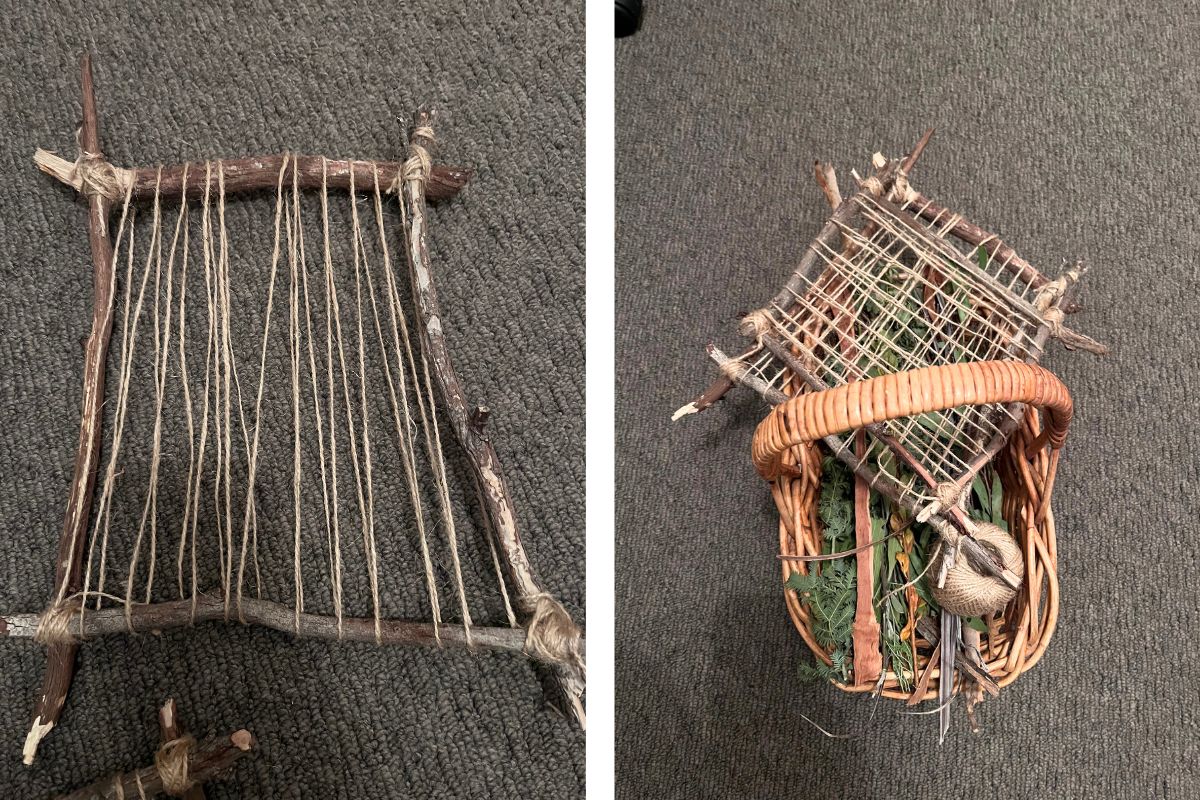
Head outside and go looking for materials. The possibilities are endless. Gather long, thin pieces of natural material such as:
- Grasses
- Long leaves
- Strips of bark
- Seed pods
- Vines
- Reeds
- Soft, flexible stems
- Dried plant material
- Long pieces of foliage
The best materials are generally flexible enough to bend without immediately breaking.
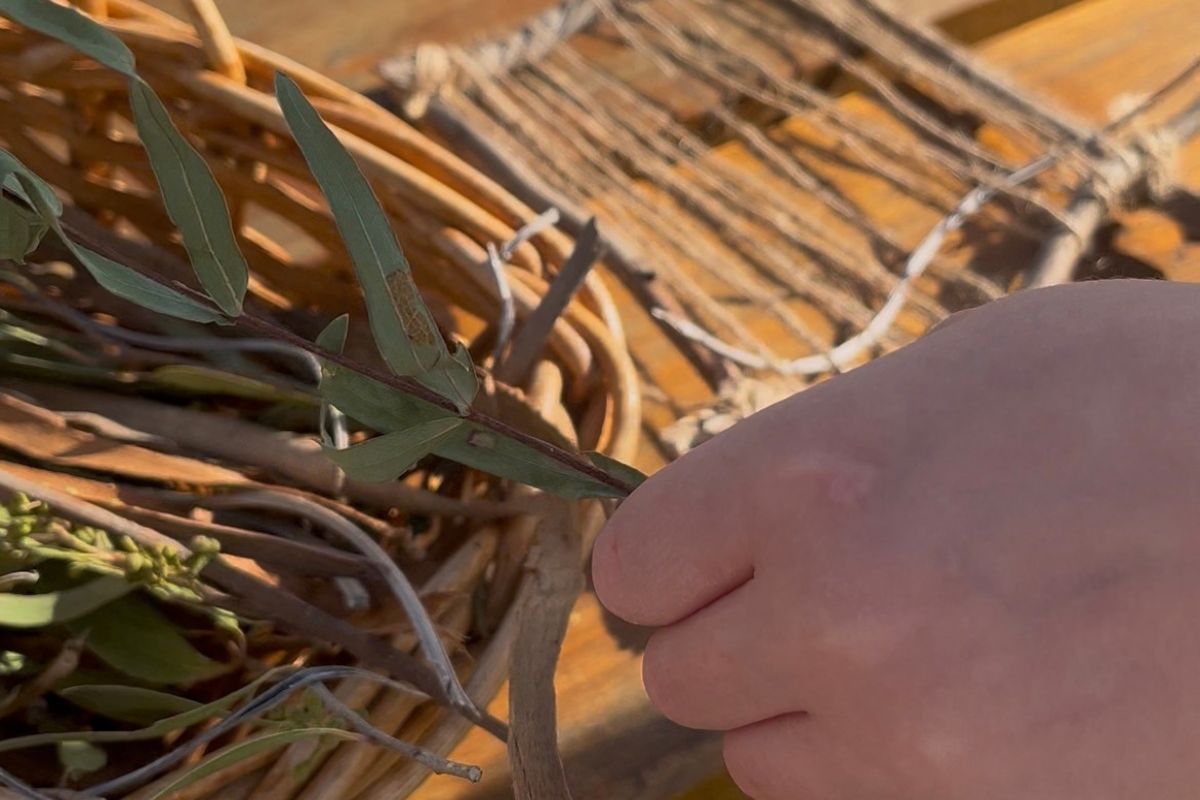
The gathering is part of the activity and can happen ahead of time if needed. Take a few moments to look carefully at different plants, textures, shapes and colours. Making decisions about what to collect and what to leave behind can lead to interesting conversations and build connections with the environment.
“I like this one.”
“This is too crunchy.”
“Look how long this grass is.”
“This one feels soft.”
These seemingly small observations are rich with learning and connection.
Let The Weaving Begin
Once you have gathered your materials, the weaving can begin.
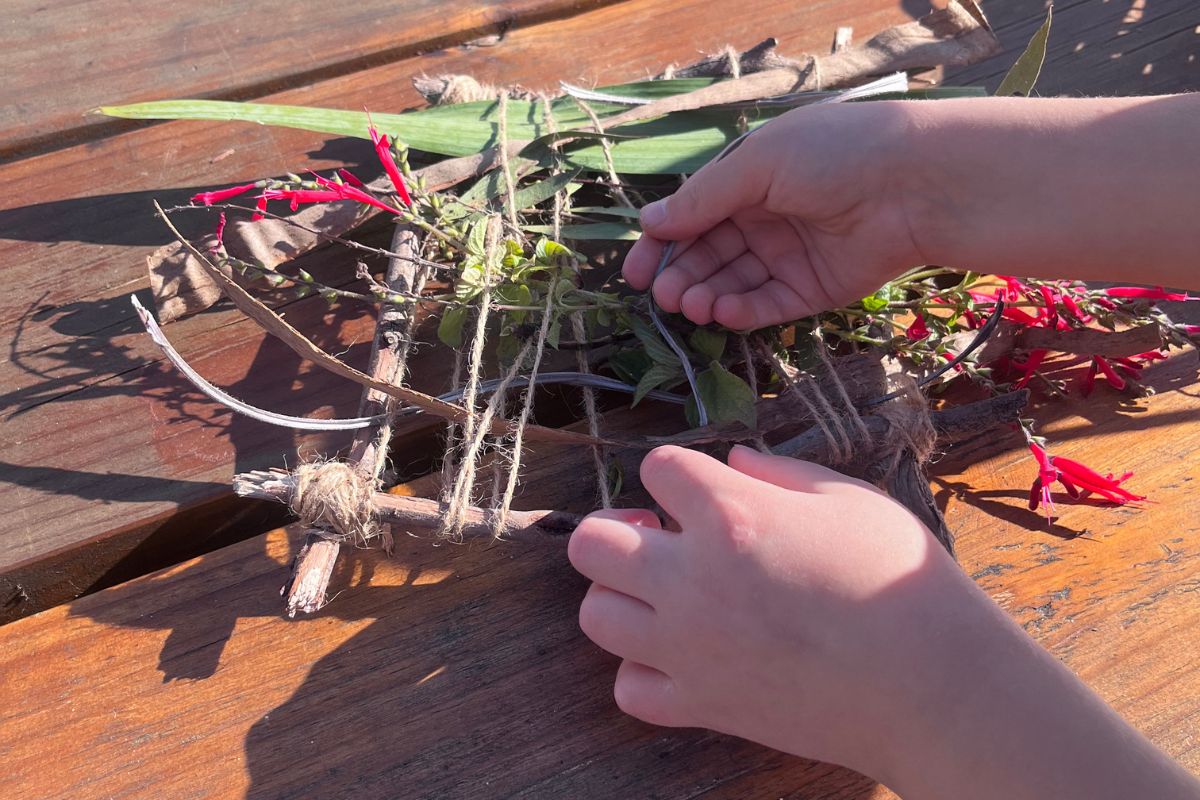
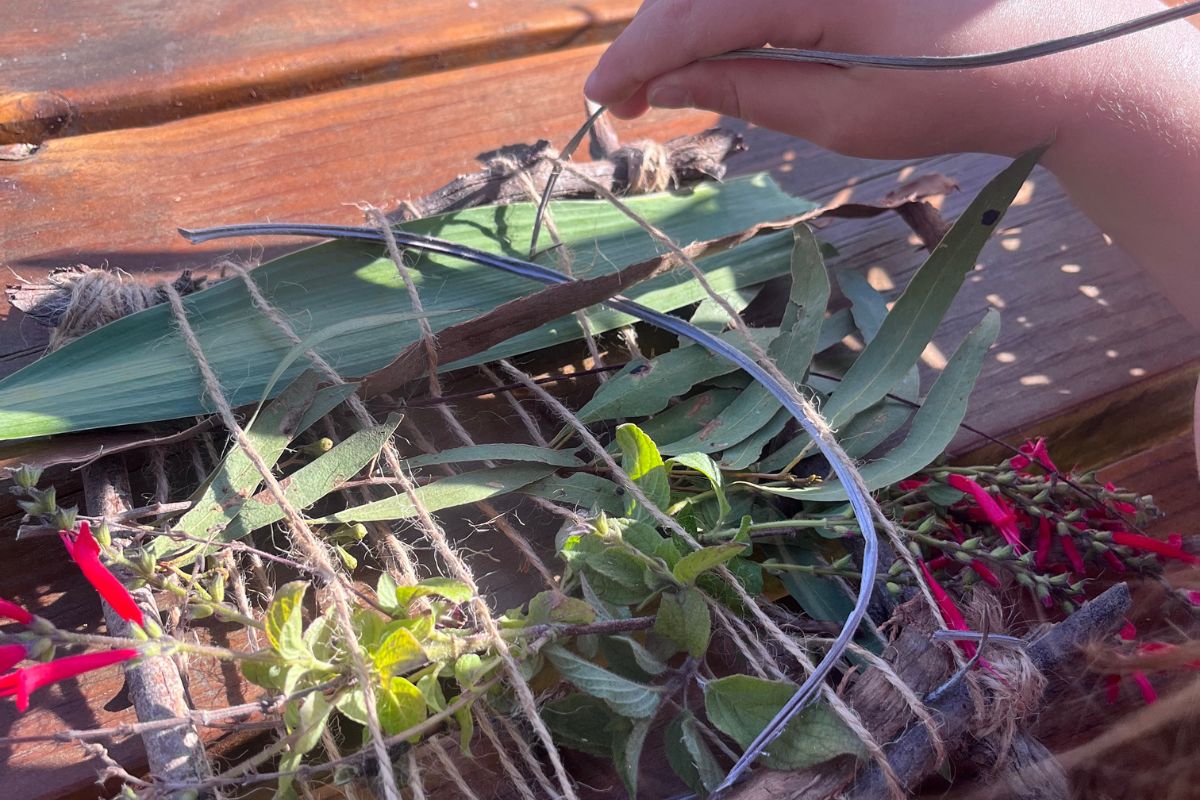
Take one piece of natural material and pass it under and over the twine, moving across the frame from one side to the other. The next piece can be woven in the opposite pattern, crossed over the first piece, or threaded only part way through.
That's really it.
Simple but effective.
If you're providing this experience for children, there is quite a lot happening. Children need to coordinate their eyes and hands as they locate the next piece of twine. They need to manipulate the natural material, bend it around the frame and decide where it should go next.
They are practising and strengthening:
- Hand-eye coordination
- Finger strength
- Bilateral coordination
- Pincer and grasping skills
- Wrist and hand movements
- Visual tracking
- Spatial awareness
- Concentration
- Planning and sequencing
The process of pushing, pulling, threading, twisting and tucking provides plenty of opportunities for fine motor practice without it being a prescribed “fine motor activity”.
Nature weaving provides an authentic reason to manipulate materials. There is repetition too.
Under.
Over.
Pull.
Adjust.
Under.
Over.
Pull.
Repetition is valuable for developing motor patterns and coordination, and can provide a calming, predictable rhythm.
Nature weaving is an activity that can benefit all ages and can be particularly meaningful for people living with dementia.
A Sensory Experience Disguised As Art
Nature weaving is wonderfully sensory.
Think about the materials you might encounter:
Rough bark.
Smooth leaves.
Dry grass.
Soft seed heads.
Crisp foliage.
Flexible stems.
Different colours, scents and temperatures.
Different sounds as materials bend, snap, rustle or brush against one another.
Choosing materials invites exploration through touch, sight, smell and sound. For some, sensory exploration will be the main attraction. For others, the predictability of the weaving pattern may provide a calming and repetitive experience.
There is no single way to experience this activity.
Grounded Art: Slowing Down And Connecting
I think of this kind of activity as grounded art.
It starts with the earth.
We walk outside.
We notice.
We collect.
We touch.
We create.
The finished artwork carries traces of the place where it was made. Perhaps there are gum leaves collected from beneath a tree, grasses from the garden, pieces of bark found on the ground or seed pods discovered during a walk.
The materials don't need to come from a craft shop. Their imperfections are part of the artwork. A crooked stem can create an unexpected shape. A leaf might curl as it dries. A piece of bark might change colour over time.
The artwork can continue to change even after the weaving has finished.
Nature weaving can also be surprisingly meditative. The repetitive movement of under, over, under, over encourages focus, attention and mind-body connection, with an awareness of what your hands are doing.
In a world where we are often hurried from one activity to the next, there is incredible value in experiences where there is nothing else you need to be doing.
The finished artwork is lovely, but it isn't necessarily the most important part.
The real value is in the process.
Adding A Little Extra Sparkle
While I love the simplicity of sticks, twine and natural materials, there is nothing wrong with adding a few extra elements.
Depending on the purpose of the activity, you could introduce small wooden insects, bees, butterflies, buttons, feathers, beads or gems. These extras can provide another layer of fine motor challenge and create opportunities for storytelling.
Perhaps the woven frame becomes a garden for a tiny wooden bee. Maybe a butterfly is resting among the grasses. Perhaps it becomes an imaginary forest, habitat or magical garden.
The natural materials become more than craft supplies. They become part of a story.
A Simple Invitation To Get Grounded
Nature weaving doesn't require expensive resources, a complicated setup or a perfectly designed craft space. It can happen in a backyard, early learning setting, school garden, community garden or during a walk.
Because sometimes the simplest activities offer the richest opportunities.
This is grounded art.
It happens with our feet on the earth, our hands covered in nature and our attention caught by something beautiful we have made ourselves.
Article & Photographs by Brooke Shiebel