
When we think about cultivating a healthy, thriving garden we often focus on soil, sunlight and fertiliser. Yet, one of the most powerful tools for your garden’s ecosystem isn't a product you get off of the shelf at your local hardware store - it’s a simple dish of fresh water. Adding a bird bath to your outdoor space does much more than just provide a scenic water feature. It creates a vital sanctuary for local wildlife to drink and bathe, while simultaneously recruiting a natural, highly efficient pest control team to protect your plants. Here is everything you need to know about setting up the perfect bird bath to support your backyards ecosystem.
.jpg)
Why Bird Baths Matter in Your Garden
Adding a bird bath to your garden is one of the simplest ways to boost the ecosystem in your garden. A clean and reliable water source is often more valuable to birds than food - especially during Australia's hot dry summers. Birds use bird baths for drinking, bathing, cooling down, removing dust and parasites, and keeping their feathers in top condition.
Birds as Natural Pest Control
Encouraging birds to your garden can help significantly with organic pest control. Many species diet consists of small insects such as caterpillars, grasshoppers, spiders, aphids, mosquitos, larvae, snails and slugs. By providing reliable clean freshwater birds will begin to visit daily and help reduce pest populations quickly. It is a simple and effective way to work with nature and create a healthier, more balanced garden. Small birds such as Fairywrens, Thornbills, Silvereyes and Fantails are particularly skilled at hunting insects amongst foliage. Birds are creatures of habit once they learn they have a reliable source of clean water, they will often return daily, even throughout winter.
Contrary to popular belief, encouraging birds to your garden does not mean they will eat your produce. Most small native birds feed on insects and nectar.
.jpg) Fairy Wren hunting insects.
Fairy Wren hunting insects.
Choosing the Right Bird Bath
Birds prefer shallow water sources, large flat dishes with room for perching around the side. Ideally, a gently sloped sided dish or bowl with a deeper center (no more than 10 cm) is ideal. A rough surface is better than a smooth glazed surface which can be slippery. Adding a large rock, or branch as a perch for smaller birds makes it easier for them to safely access the water and allows easy passage for insects and bees.
.jpg) Rock placed in the middle of bird bath as a perch.
Rock placed in the middle of bird bath as a perch.
Positioning Your Bird Bath
When choosing a location for your bird bath, the position needs to be open enough to allow the birds an easy flight path in and out. Placing the dish within a few meters of a bush or shrub is ideal as it gives the birds somewhere safe to escape to and to hide if a predator arrives. Birds feel safest near dense twiggy foliage with plenty of perching space, a native flowering shrub would be preferred.
Placing your bird bath in a location where it gets morning sun and afternoon shade is the best, as it stops the water getting too hot in the late afternoon. Keeping bird baths cool enough in summer can be a challenge. Ceramic and stone bird baths tend to stay cooler than metal, plastic, or fiberglass alternatives. In temperatures over 35°C, refreshing the water a couple of times throughout the day is ideal, however if you’re not home to do so, you can freeze a bottle of water and add this to your bird bath before you leave for work to keep it cool throughout the day.
.jpg) Bird baths positioned in an open space near bushy areas.
Bird baths positioned in an open space near bushy areas.
Moving Water = More Birds
Moving water attracts more birds. Adding a small solar fountain to your bird bath can encourage more birds as the noise travels further, and the moving reflection attracts their attention.
.jpg) Added water feature to attract more birds.
Added water feature to attract more birds.
Multiple Bird Baths
If you have the space to add multiple bird baths, positioning in different locations and at different heights will help attract a wider variety of bird species to your yard and reduce the competition between bird species. If you have resident cats or dogs, creating a high elevated bird bath is ideal to protect the birds and encourage them to feel safe and secure.
(1).jpg) Several baths set up in a bird safe area.
Several baths set up in a bird safe area.
Cleaning and Hygiene
Bird bath water needs to be changed every 2-3 days, especially with concerns around avian influenza. The best way to clean bird baths is with plain water and a scrubbing brush. If you need to clean more thoroughly, using a 1:10 white vinegar solution is safe for birds. Do not use detergents or bleach. The combination of fresh water and frequent cleaning is the most effective way to reduce the spread of disease.
.jpg) Clean, fresh water for the birds and pollinators.
Clean, fresh water for the birds and pollinators.
A Small Addition With A Big Impact
Adding a well-placed bird bath can be one of the cheapest and most rewarding additions to any garden. It invites a team of natural pest controllers, supports local wildlife, and helps create a healthier balanced ecosystem.
.jpg) Bird bath positioned with surrounding pollinator plants.
Bird bath positioned with surrounding pollinator plants.
.jpg) Low positioned bird bath.
Low positioned bird bath.
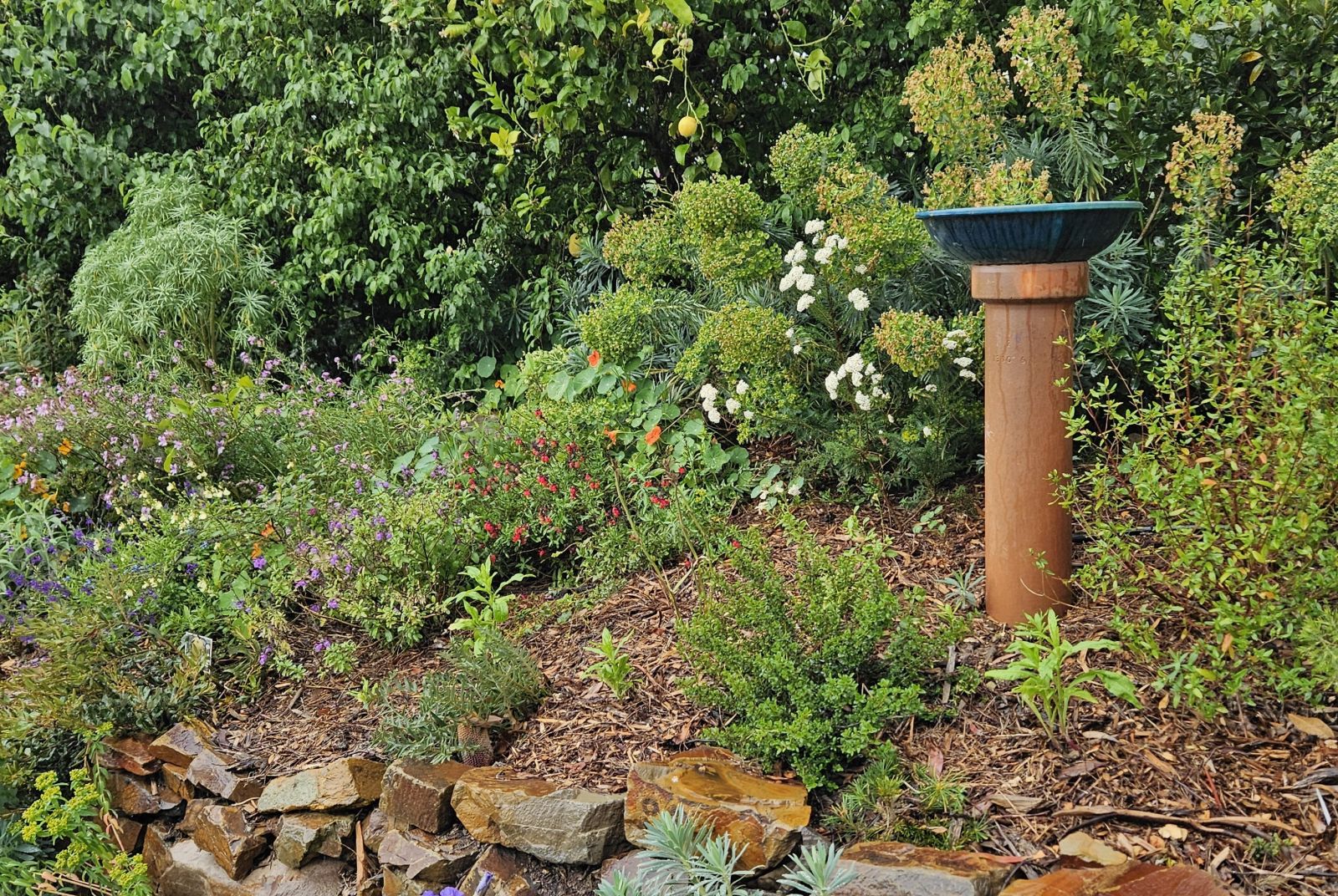 High postioned bird bath.
Article & Images by Nat Buttenshaw