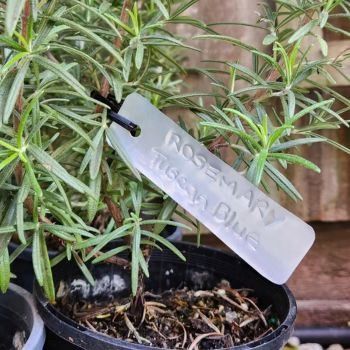

There is something grounding about making things for the garden with materials collected from the natural world. A smooth stone becomes a canvas, a plant becomes the inspiration and invitation to get creative, and a simple garden label becomes something much more meaningful than a plastic tag.
Making stone garden markers is an easy, hands-on activity that brings together observation, creativity, gardening and even a little bit of science. It is also a beautiful way to invite and allow children to slow down and really notice the plants growing around them.
Whether you are creating labels for a vegetable patch, herb spiral, sensory garden or a flower bed, these little painted rocks add another element of creativity to the garden.

What You'll Need
- Stones and rocks (the smoother the better)
- Acrylic paint markers or paint and a fine paint brush
- Water-based varnish
- Bucket (to collect your rocks)
Start With A Collection Walk
The first step is to find some suitable rocks.
Get your bucket and start to look for smooth, relatively flat and slightly rounded stones that will provide a good surface for drawing or painting on. You might find them in your own garden, on a family or friend’s property, or in places like rocky beaches or river beds. Make sure that collecting natural materials is permitted in your area, as some beaches, riverbanks and other bushland or natural areas can prohibit the removal of rocks, plants or other materials. Check with your local council if you are not sure.
For children, the collecting process can be just as valuable as the making. Encourage them to notice the different shapes, textures, colours and sizes of the stones.
- Which ones feel smoothest?
- Are they cold, or warm from the sun?
- Which one would make the best canvas?
Observe Your Plant
Spend some time looking closely at the plants you are going to label. This is where the activity can become much more than just an art project.
Invite children to sit beside the plant and really notice its details.
- What shape are the leaves?
- Are they long, round, jagged or delicate?
- What colours can they see?
- Does the plant have flowers?
- What do the flowers look like?
- Is the stem smooth or hairy?
You might encourage children to sketch the plant on paper before they paint it onto the stone. Explore the colours they might need. The drawing doesn't need to be botanically accurate. In fact, it is often more interesting when it isn't.
This process of observing and drawing encourages children to look carefully. Rather than simply being told what a plant looks like, they are noticing its details for themselves. They are developing observation skills, building a visual vocabulary and forming a relationship with the living thing in front of them. This is one of those beautiful moments where the garden becomes the learning environment.
.jpg)
Create Your Labels
Once you've chosen your stone (this is serious work) and observed your plant, it's time to paint it. Acrylic paint marker pens work particularly well for this project. They are easy to handle, provide good coverage and allow children to draw directly onto the stone without needing lots of brushes and paint pots. You can often find dual tip paint pens with one wide tip for colouring and one narrower tip for detail or outlines.
This project is all about the process. There is no need for the finished stone to look perfect. The beauty of a handmade garden marker is that it carries the mark of the person who made it. You might begin with a simple outline of the plant before adding details. Alternatively, children might create patterns, dots, lines or abstract representations of what they have observed.

Name The Plant
Writing the plant's name onto the stone turns the artwork into a functional part of the garden. For younger children, an adult can help with this part, or this might be an opportunity for them to copy the name from a card or plant label. Older children can write the name themselves, supporting their knowledge about spelling, letter formation or even the plant's scientific name.
You could include both the common and botanical name if the child wants to. Some common ones for example are:
- Lavender - Lavandula angustifolia
- Sunflower - Helianthus annuus
- Snow pea - Pisum sativum
A simple art activity really does have the potential to become a big learning opportunity. It can also help children recognise that plants have names and identities just like we do.

Protect Your Finished Labels
Once the decorated stones are completely dry, seal your artwork with a water-based varnish suitable for outdoor use. This helps protect the labels from weather and moisture and makes them more durable when they are placed outside in the garden.
Seal the whole stone rather than just the painted face. The underside sits against damp soil and is watered every time the garden is, so moisture will find its way in from below if it can. Two or three thin coats last far better than one thick one, with proper drying time between each.
Follow the instructions on your particular varnish, including drying and curing times. It is worth allowing the finished stones plenty of time to dry before placing them outdoors.
Once they're ready, your garden markers can be nestled into the soil beside the plants they represent. And that's where the magic happens. Your garden becomes even more colourful!
Let The Garden Keep Teaching
A stone garden marker might seem like a small thing, but it can become a big part of an ongoing relationship with the garden. Children will take pride in showing their labels to visitors. They can return to them and notice how the plant has changed. This creates opportunities for conversations about growth, seasons, life cycles, weather, food and care. While their label stays in place, the plant and the environment continually transform.
You can even return to the original drawings months later and compare them with the plant as it looks now. What has changed? What stayed the same? What did we notice then that we don't notice now?
The stones can become part of imaginative play. They can mark out different garden spaces, identify herbs in pots outside the back door, or help children remember where they planted their seeds.
Most importantly, the process of creating stone plant labels invites children to slow down, collect, observe, create, and then to return. That is the beauty of garden-based learning. The activity doesn't finish when the artwork is done. The creation becomes part of the environment, and the environment continues to offer opportunities for curiosity, connection and learning.
.jpg)

Article & Photography by Brooke Schiebel