
If you ask me what I think everyone should experience in a garden, growing something from seed would be pretty high on my list. And if that something happens to climb, twist, flower, produce food and invite you to pick it straight from the vine? Even better.
Enter the humble Snow Pea Tower.
It might look like a simple garden project, but a little tower of snow peas can become so much more than a vegetable crop. It can be a beautiful garden feature, a clever way to grow food in a small space, a source of fresh produce and a reason to slow down and pay attention.
For children, it can also provide opportunities to practise patience, build confidence, develop coordination and experience the very satisfying feeling of “I grew that.”
But you certainly don't have to be a child to enjoy one.
So, What Exactly Is A Snow Pea Tower?
Quite simply, it is a climbing structure that gives snow peas somewhere to grow.
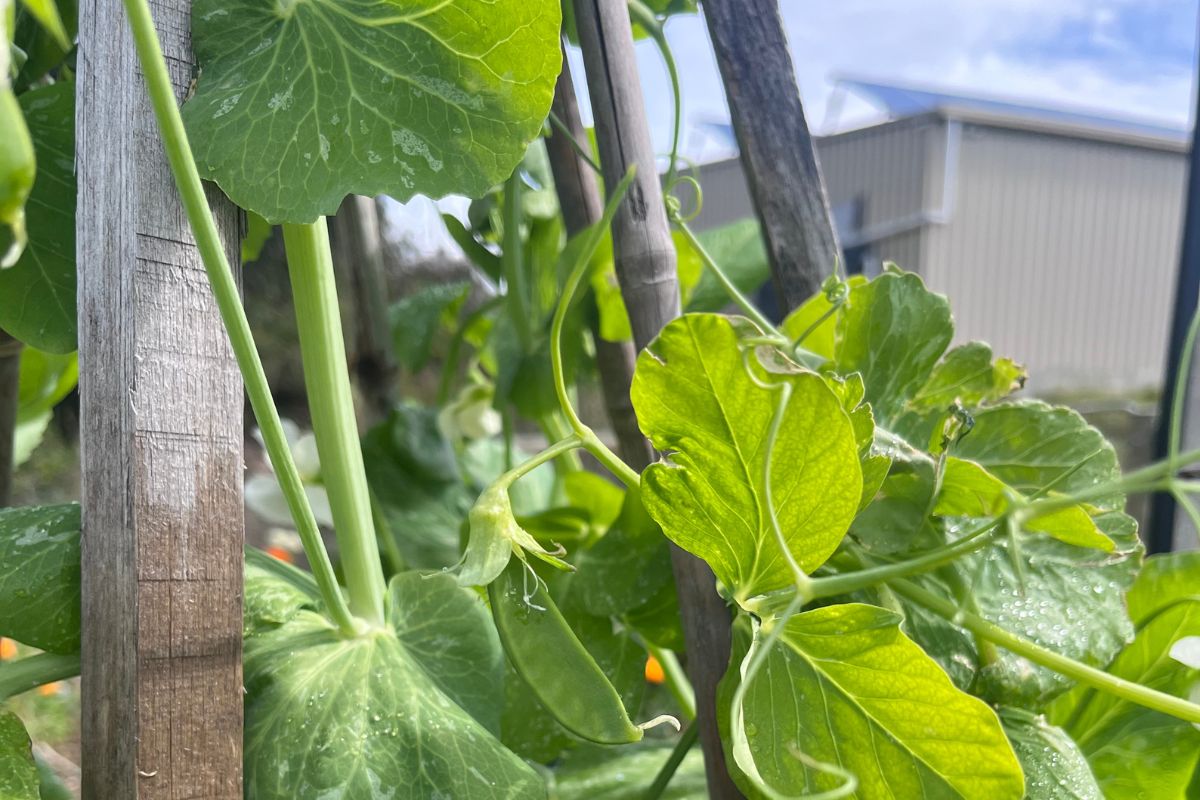
You can make one from bamboo stakes, garden mesh, collected sticks, string or other repurposed materials. Snow peas are natural climbers, using their delicate tendrils to grab onto supports and work their way upwards.
This makes them particularly useful for:
- Small gardens
- Raised beds
- Courtyards and balconies
- Community and school gardens
- Rental properties
- Containers
They can be grown successfully in a decent-sized pot with a simple climbing structure. Aim for around 40cm in diameter.
And there is something wonderfully satisfying about watching a handful of seeds transform into a lush green tower covered in flowers and edible pods.
Beautiful, As Well As Productive
One of the things I love about growing vertically is that food-producing plants don't have to be purely functional.
A snow pea tower adds height, texture, movement and seasonal interest to a garden. Fresh green foliage softens hard structures, delicate tendrils curl around their supports and small flowers appear among the leaves before the snow peas develop.
A simple teepee can become a focal point, while a trellis or mesh structure can create a living screen or divide between different areas.
It's a garden feature that changes as it grows — and one you can eat.
How To Make Your Own Snow Pea Tower
- Choose Your Spot: Find a sunny position with good drainage. Snow peas prefer fertile, well-drained soil and generally grow best in cooler conditions. They can be grown in the ground, raised beds or large containers.If you're using a pot, choose one with enough depth and volume to support healthy roots and a stable climbing structure.
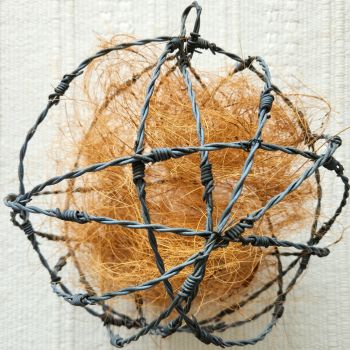
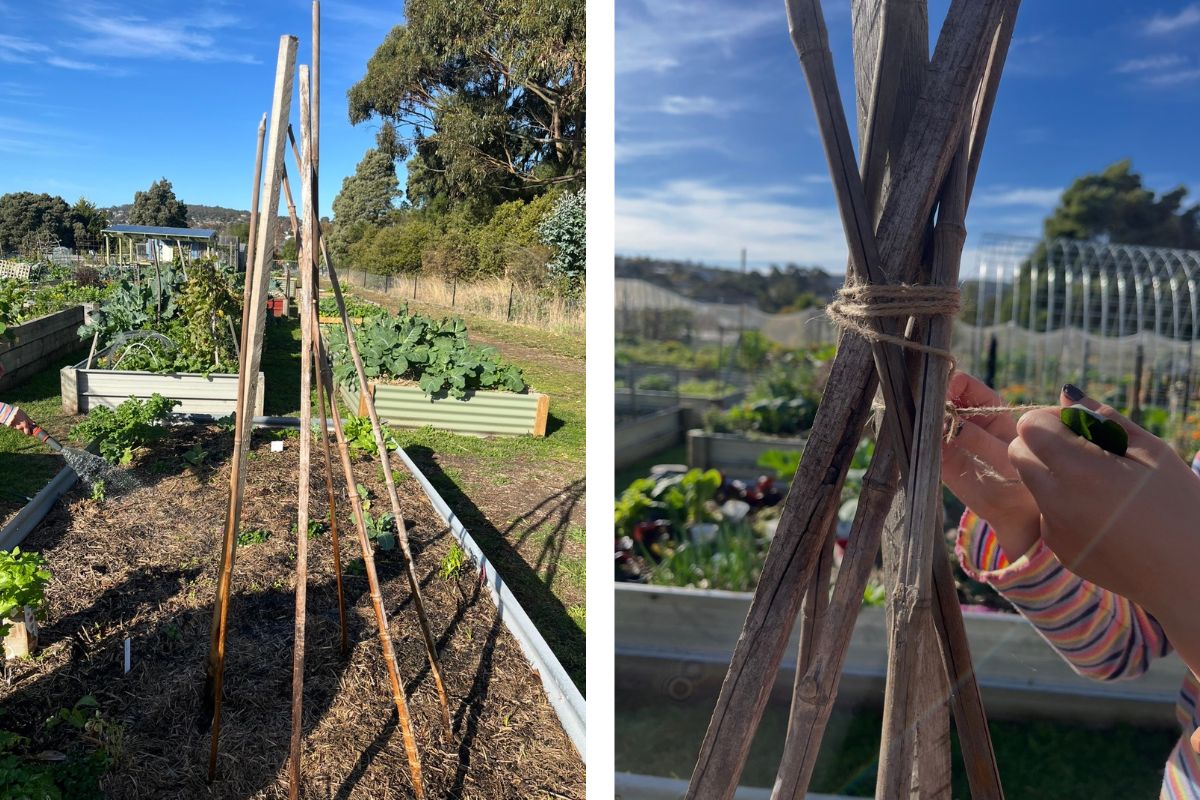
- Build Your Tower: Try three to six bamboo stakes, long sticks or other suitable supports pushed firmly into the soil and tied together at the top to create a simple teepee. The goal is simply to give the tendrils something to grab onto. Using natural or repurposed materials can add even more character.
- Prepare The Soil: Add plenty of organic matter and make sure the soil drains well. Peas don't generally need large amounts of nitrogen-rich fertiliser because, like other legumes, they can obtain nitrogen through their relationship with soil bacteria.
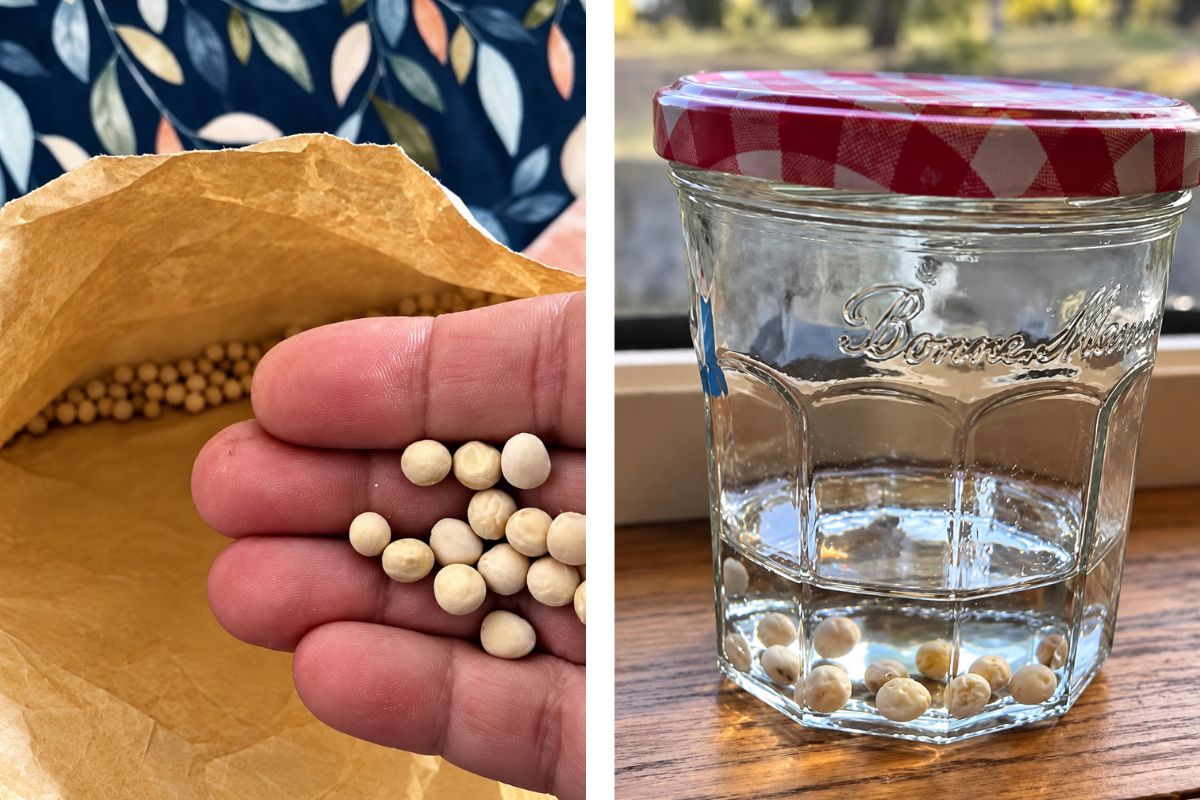
- Plant The Seeds: Snow peas are best sown directly where they are going to grow. Some gardeners like to soak the seeds overnight before planting. This can be a fun way to observe the seeds swelling as they take up water.Plant them around 2–5 cm deep and roughly 10 cm apart, near the base of the climbing support. Water gently.
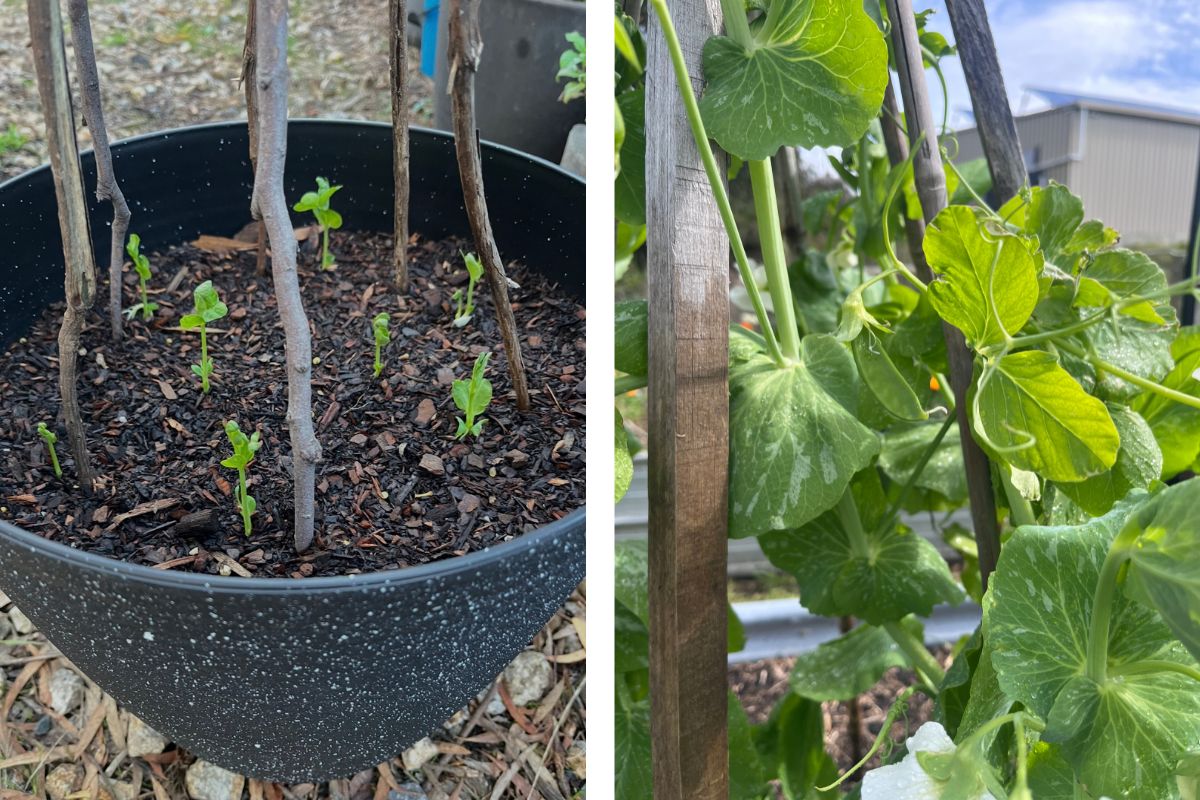
- Watch, Wait And Wonder: As the plants emerge, watch for those first tiny tendrils and gently guide them towards their support if needed. Then watch them take over. Notice the flowers, look for pollinators, check beneath the leaves for developing pods and, when those first snow peas appear, pick one and eat it straight from the garden. Because honestly, food just tastes better when you've grown it yourself.
A Clever Way To Save Space
If you're working with limited garden space, growing vertically is one of the simplest ways to make more of what you already have. Instead of allowing crops to spread horizontally, a tower encourages them to grow upwards, allowing you to produce food from a relatively small footprint.
A large pot, sunny courtyard or small corner of a garden can be enough. When garden space is limited, look up.
They Make Gardening Achievable
You don't need to be an experienced gardener, have a huge backyard or own fancy equipment.
A child can help measure the space, fill a pot, push seeds into the soil, water them, watch for the first shoots and guide the vines upwards. There is a job for almost everyone.
Give children meaningful jobs. Let them scoop the soil. Count the seeds. Get muddy. Make mistakes. Notice. Gardening doesn't have to be an activity where adults do the complicated bits while children watch.
They Create A Reason To Slow Down
Gardening asks us to wait. You can't rush a seed or tell a tendril to climb faster. A snow pea tower gives us something living to return to and notice:
- Has it germinated?
- What's changed?
- Where is the new tendril?
- Can you find a flower?
- Is that pea ready to pick?
This kind of slow noticing isn't just valuable for children. In a world where so much of our attention is pulled towards screens and busy schedules, having something that asks us to pause and observe can be a gift at any age.
The garden doesn't hurry. Neither do the peas.
They Offer Sensory Experiences
Think about everything happening around a snow pea tower: cool soil between your fingers, the smell of damp earth, the texture of leaves, tendrils wrapping around string, flowers attracting garden visitors and the crunch of a freshly picked snow pea.
For some people, these experiences can be calming and grounding. For others, they're simply an invitation to explore and connect with nature. There is no single “right” way to interact with a pea tower. One person might plant, another might water, while someone else might simply sit nearby and observe. There is room for different ways of participating.
There's A Little Bit Of Science Hiding In There
A snow pea tower is practically a living science experiment. You can explore:
- Germination
- Roots and shoots
- Sunlight and water
- Plant growth and climbing
- Flowers and pollination
- Seed formation
- Harvesting and food production
- Seasonal change
Because the learning happens through something real, it doesn't necessarily feel like a lesson. You can simply be curious.
- Why is this tendril curling that way?
- What happens if the plant doesn't have something to climb?
- Why is this pea bigger than that one?
The garden provides the questions — and often the answers too.
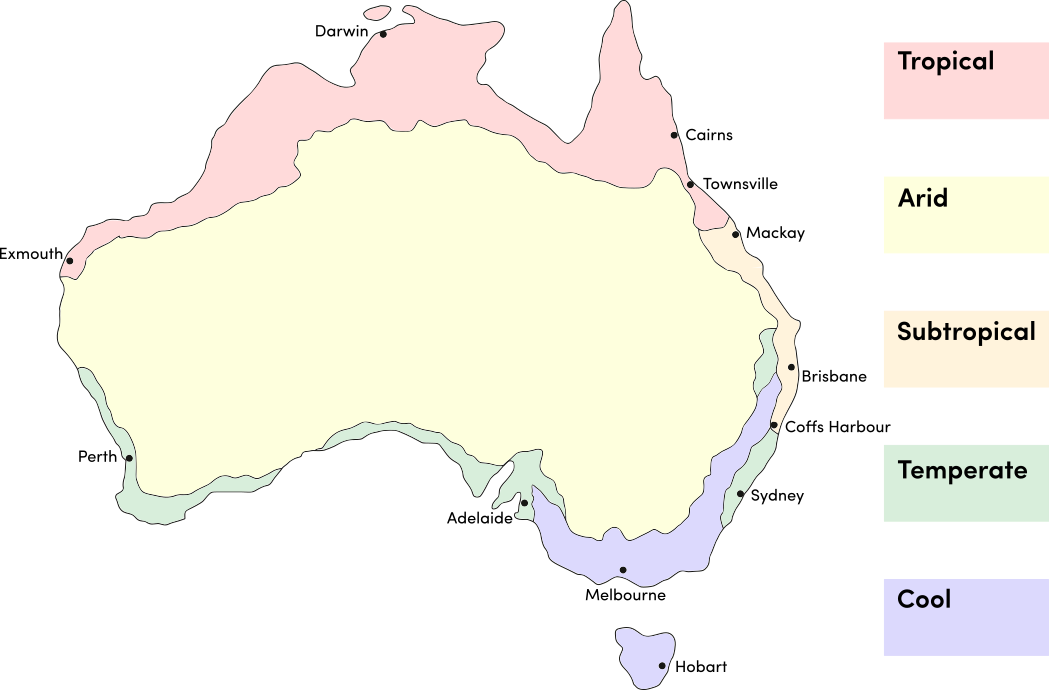
When Should You Plant Snow Peas In Australia?
Snow peas are a cool-season crop, so timing depends heavily on your local climate.
|
Climate zone |
General sowing window |
|
Cool – Tasmania, alpine areas and cooler southern regions |
March–May and late winter–spring (Aug–Oct) |
|
Temperate – much of southern NSW, Victoria, SA & WA |
March–June and late winter–spring |
|
Arid – inland areas |
March–August, avoiding the hottest periods |
|
Subtropical – Brisbane, northern NSW and similar areas |
April–July, generally through the cooler months |
|
Tropical – northern Australia |
Dry season, roughly May–August, when temperatures are cooler |
Always check your local growing conditions, as frost, heat, rainfall and microclimate can make a difference.
Who Can Make A Snow Pea Tower?
Almost anyone.
A child can plant and observe. A teenager can design and build. A family can make one together. A gardener with limited space can grow vertically in a pot. A school or community garden can create productive climbing spaces.
That's what I love about them. They're productive without taking up much room, beautiful without needing to be elaborate, and engaging without requiring much equipment.
And perhaps most importantly, they remind us that gardening isn't only about the end result. It's about the watching, the waiting, the noticing, the doing — and, of course, the eating.
So, if you've got a sunny little corner, a handful of snow pea seeds and something for them to climb... Why not grow up?
Your garden might just thank you for it.
Article & Photographs by Brooke Shiebel