Climate Zones for Australian Gardeners
Knowing your climate zone will help you decide the best time to sow the vegetables, herbs and flowers you want to grow, and which varieties should perform well in your garden. Growing plants that are suited to your climate zone will usually give you the best results in your garden.
How to Use Climate Zones
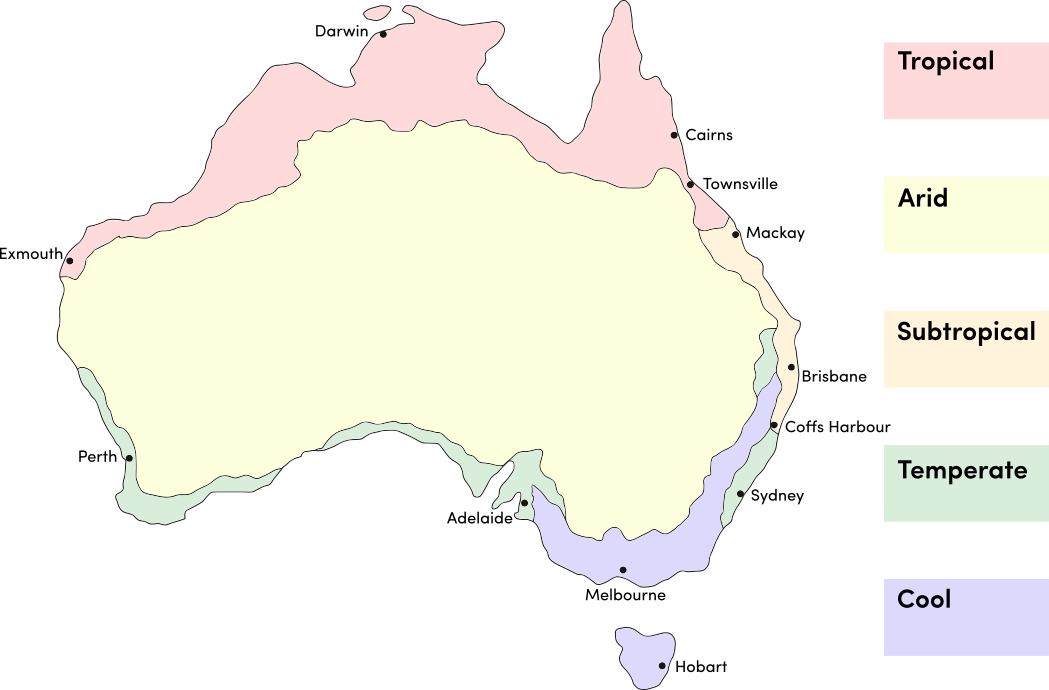
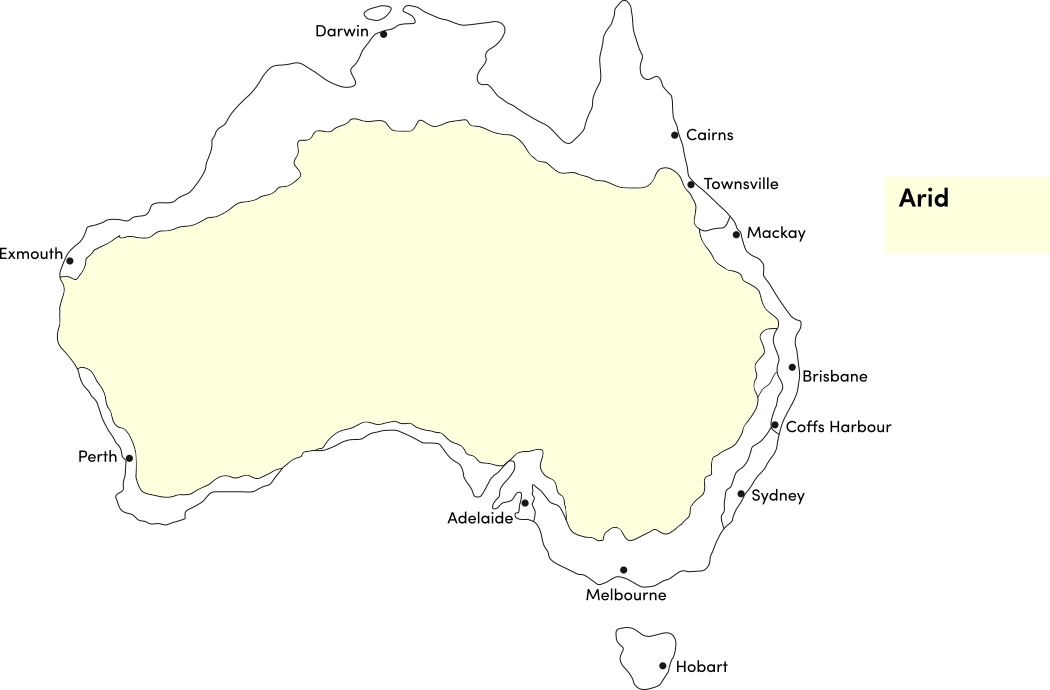
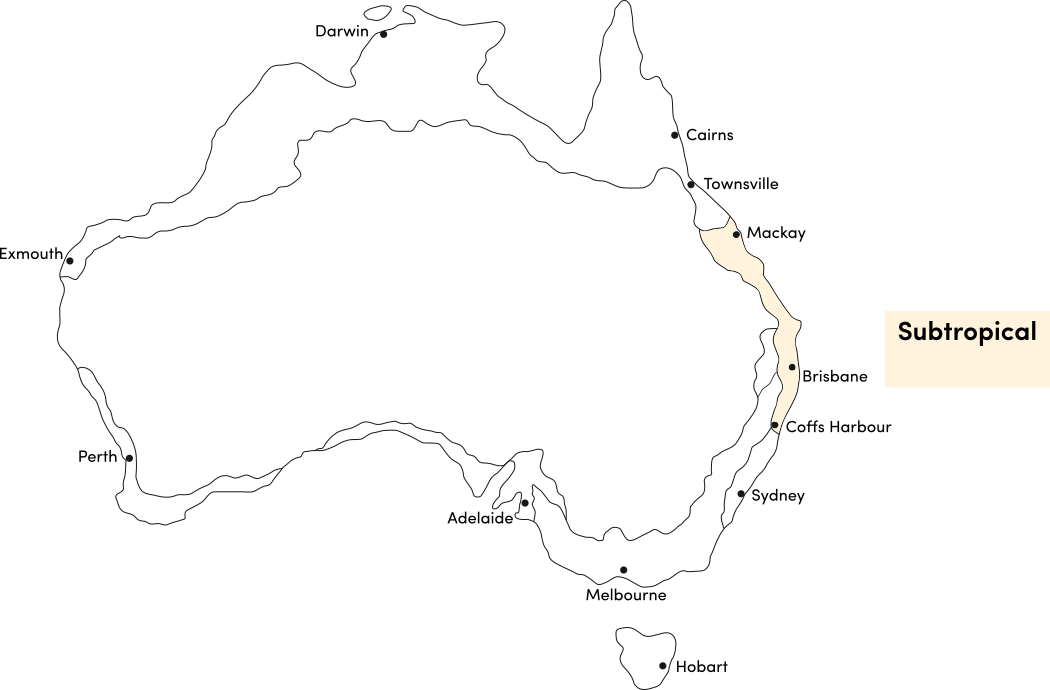
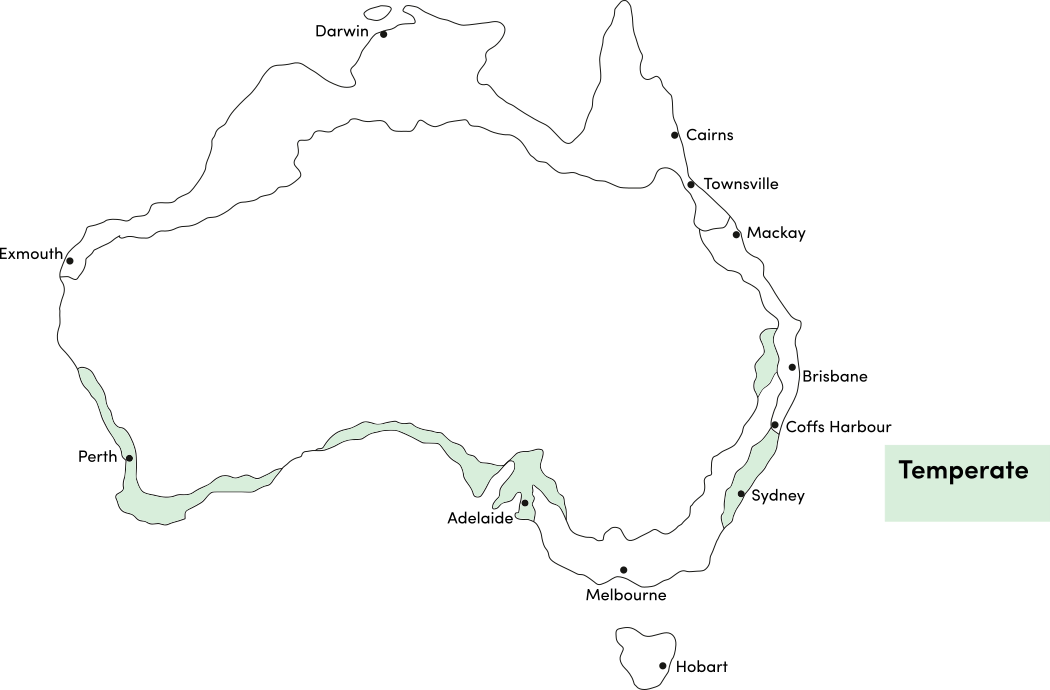
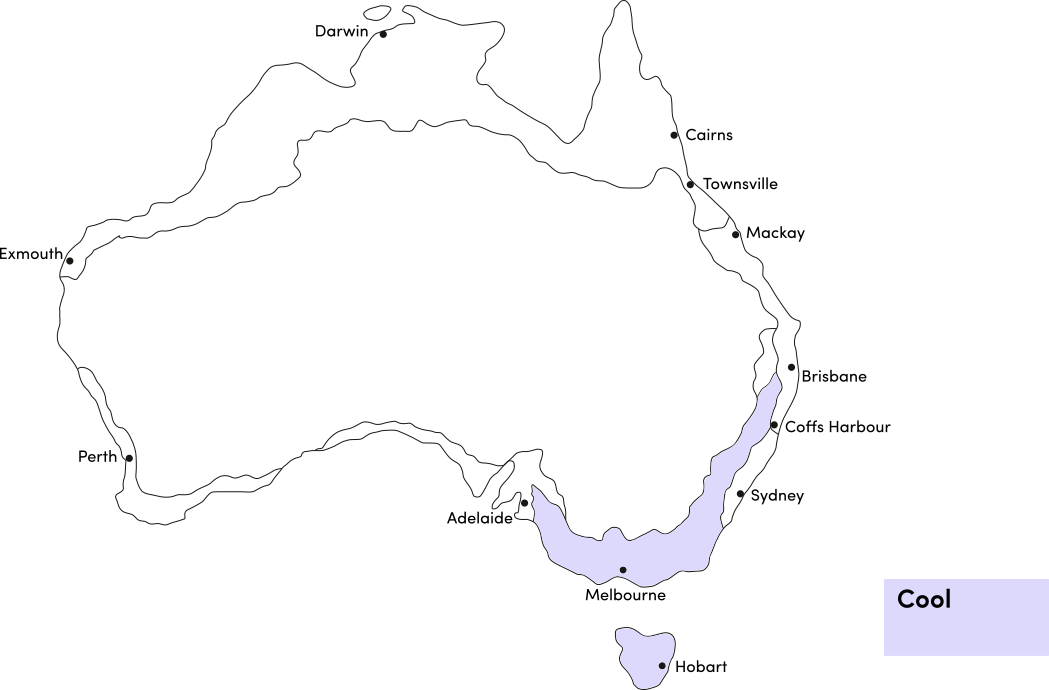
First, find your climate zone using the map or descriptions below. Next, refer to our sowing chart, which provides approximate sowing times for our most popular seeds for each climate zone.
While knowing your climate zone is helpful when planning your garden, there are many other factors that may affect how your plants grow, including unseasonal weather conditions, the specific microclimate of your garden and how you care for your plants. You know your garden better than us, so if a different climate zone seems to ‘fit’ your garden better, go ahead and use it as a guide.
Our climate zones cover huge areas of Australia, so we recommend gardeners also consider their local conditions when planning what and when to plant. For example, gardeners in alpine areas have shorter growing seasons than gardeners in cool coastal areas, even though both alpine and coastal areas are included in our ‘Cool Temperate’ climate zone. We recommend gardeners in cool regions look at the ‘days to maturity’ information provided for each variety and choose those that will mature in a short (6-12 week) growing season.
Tropical
- Includes: Darwin, Cairns, Townsville, Exmouth
- High humidity summers with most rainfall in summer and dry, warm winters. Includes northern Australia from Exmouth (WA) across to south of Townsville (Qld).
- Set as my climate
Arid
- Includes: Alice Springs, Mildura, Albury-Wodonga, Shepparton, Wagga Wagga, Dubbo
- Hot dry summers, winters can be warm or cool depending on the region. Includes a large area of central Australia from the WA coast to Charleville (Qld), Tamworth (NSW) and Albury-Wodonga (NSW/Vic).
- Set as my climate
Subtropical
- Includes: Brisbane, Bundaberg, Coffs Harbour, Gold Coast, Hervey Bay, Mackay, Rockhampton, Sunshine Coast
- Warm humid summers with high summer rainfall and mild winters. Includes coastal Queensland and northern NSW from north of Mackay to just south of Coffs Harbour.
- Set as my climate
Temperate
- Includes: Sydney, Perth, Adelaide, Newcastle, Toowoomba, Central Coast NSW, Wollongong, Bunbury
- Moderate humidity and reliable rainfall, with four distinct seasons. Includes coastal areas from north of Port Macquarie to south of Woollongong in NSW, coastal SA and the southeastern coast of WA.
- Set as my climate
Cool Temperate
- Includes: Melbourne, Canberra, Hobart, Launceston, Ballarat, Bendigo, Geelong, Mt Gambier
- Low humidity with most rainfall in winter; hot dry summers and cold winters. Some regions will experience frosts and snow. Includes coastal areas of south-eastern Australia and alpine areas of Victoria, NSW and Tasmania.
- Set as my climate
Climate Zones FAQ
What if I can’t find my climate zone?
If you can’t locate your zone from looking at the map or the descriptions on this page, we suggest that you think of
an area that has a climate that’s similar to yours and use the zone for that area as a guide.
What if I live on the border of two zones?
If you live near the border between two zones we suggest you read the descriptions for both zones and decide which
best describes the climate where you live. Depending on the microclimate in your garden, you may be able to grow a
wider range of plants over a longer season than others in your zone. Lucky you!
What is a microclimate?
A microclimate is a small area where the temperature or humidity differs to the climate of the surrounding area. For
example, if you live in a climate zone where frosts are common but your garden is protected by buildings or large
trees, your garden may be frost-free. Similarly, if you live in a warm temperate zone but your garden is at a high
altitude your microclimate may have more in common with the cool temperate zone, so use this as a guide when
deciding which zone is relevant to you.
Can I grow varieties not listed for my climate zone?
While our climate zones and sowing chart will help you decide what is suitable to plant in your garden, they provide
general guidance only. We recommend you start by sowing seed that’s recommended for your climate zone; once you get
a few successes under your belt you can experiment with varieties in neighbouring zones and see how you go –
gardening is all about experimenting after all!
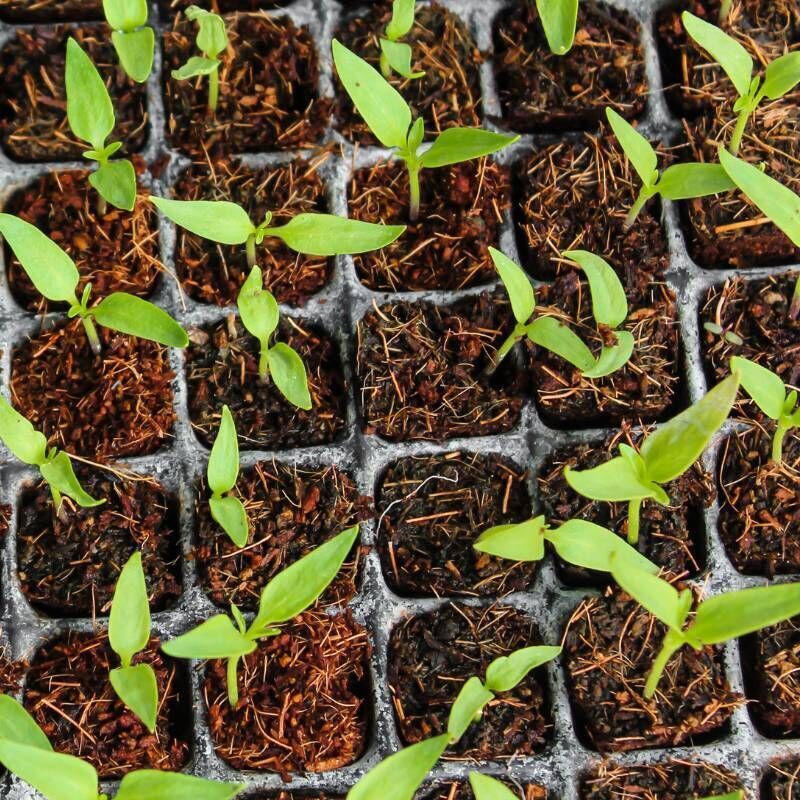
Seed Subscription: Vegetable, Arid Climate, Winter 2026
Description
Seed Subscription: Vegetable, Arid Climate, Winter 2026
Subscriptions are an excellent way to explore new seed varieties without having to spend time choosing the seeds yourself, and are perfect for busy gardeners, delivering seeds and all the information you need to plant them directly to your letterbox.
Each season we’ll choose a selection of seed varieties tailored to your climate, and send you the seeds plus a colour information sheet with photos, tips and sowing information - all you need to do is plant!
You are currently viewing a single season of seeds which can be purchased individually. To subscribe to a years worth of seeds click here.
Seeds included in this subscription:
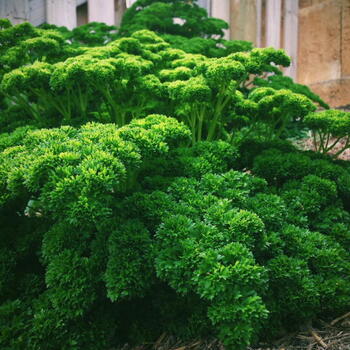
Parsley- Triple Curled
Biennial often grown annually. Upright plant with dark green, curled leaves. Decorative variety, used as garnish. More mild than Italian Parsley. Fast growing. Usable fresh/dried, raw/cooked. Suitable for container growth.
Sow direct or raise seedlings, 3mm. Germination 14-21 days @ 10-30°C.Biennial (usually grown as an annual). Spacing 30cm. 70-80 days.
Best months in Arid Climates: MAY JUN JUL (Click for full sowing chart, grow guide and more)
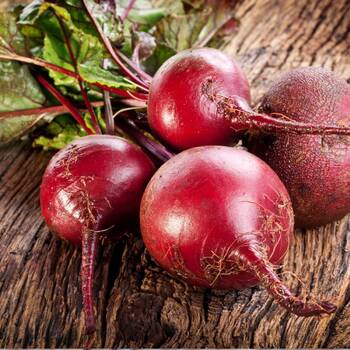
Beetroot- Detroit
Very popular variety for growing roots, baby leaves and microgreens. Dark red, globe shaped roots growing up to 7cm; very good flavour. Green tops with tinges of dark red. Resistant to downy mildew.
Sow direct, 15mm. Germination 5-10 days @ 10-30°C.Biennial (usually grown as an annual). Rows 50cm, Spacing 10cm. 60 days (30 days for baby leaves).
Best months in Arid Climates: FEB MAR APR MAY JUN JUL AUG SEP OCT (Click for full sowing chart, grow guide and more)
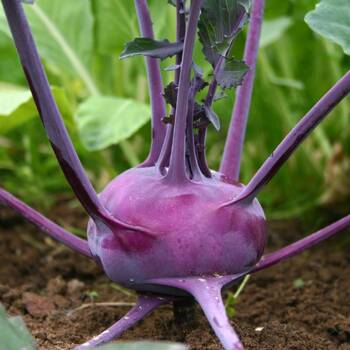
Kohlrabi- Purple Vienna
Purple skin with crisp white flesh; tender and sweet. Excellent flavour; can be eaten raw or cooked. Good in salads, soups and stews.
Sow direct, 5mm. Germination 3-10 days @ 16-27°C.Biennial (usually grown as an annual). Rows 40cm, Spacing 20cm. 55-75 days.
Best months in Arid Climates: MAR APR MAY JUN JUL AUG (Click for full sowing chart, grow guide and more)
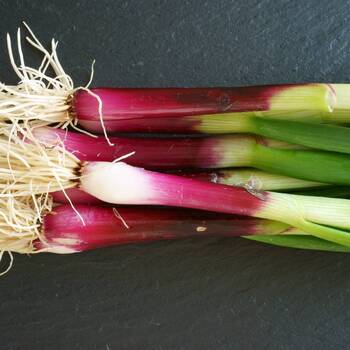
Bunching Onion- Red Beard
Attractive red stems with green tops. Tender with mild flavour. Good both raw and cooked. Hardy variety; good for winter. Bunching onions are also known as "Welsh onions", often used as "spring onions" and sometimes incorrectly called "Shallots".
Sow direct or raise seedlings, 5mm. Germination 7-10 days @ 15-25°C.Perennial (usually grown as an annual). Spacing 3cm. 60-90 days.
Best months in Arid Climates: MAR APR MAY JUN JUL AUG SEP OCT NOV (Click for full sowing chart, grow guide and more)
-
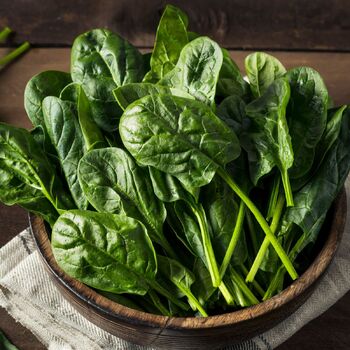
Spinach- Winter Giant
A frost-hardy English spinach variety, ideal for autumn, winter, and early spring growth. Fast-growing annual plants with large, dark green, slightly crinkled leaves. Suitable for baby leaf production. Can be eaten raw or cooked. Best in cooler climates.
Sow direct , 10mm. Germination 5-10 days @ 4-25°C.Annual. Rows 40cm, Spacing 30cm. 40 days.
Best months in Arid Climates: MAR APR MAY JUN JUL AUG SEP OCT (Click for full sowing chart, grow guide and more)
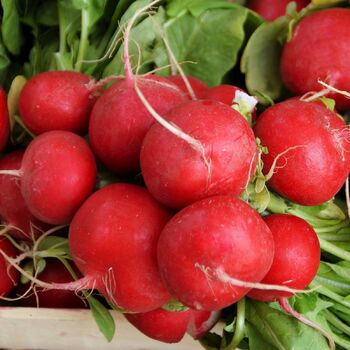
Radish- Raphael F1
Round cherry-sized radish with deep rich red skin. These uniform sized radishes are ideal for salads and garnishes. Less prone to becoming pithy but as with all radishes, and for best results, will benefit from regular watering in hot weather.
Sow direct, 10mm. Germination 3-14 days @ 8-30°C.Annual. Rows 30cm, Spacing 10cm. 30 days.
Best months in Arid Climates: JAN FEB MAR APR MAY JUN JUL AUG SEP OCT NOV DEC (Click for full sowing chart, grow guide and more)
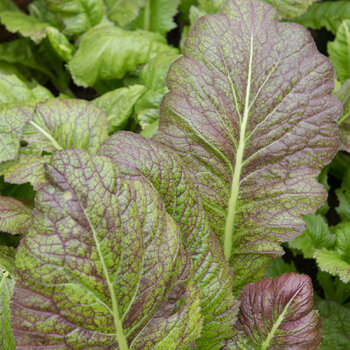
Mustard- Osaka Purple
Annual leaf vegetable or herb. Rounded thick deep green leaves with savoyed texture. Upright growth habit. Mild mustard flavour. Good for baby leaf and use as a salad green or can be cooked. Vigorous, hardy and quick to grow.
Sow direct, 5mm. Germination 7-14 days @ 18-20°C.Annual. Rows 50cm, Height 30cm, Spacing 50cm. 25-45 days.
Best months in Arid Climates: JAN FEB MAR APR MAY JUN JUL AUG SEP OCT NOV DEC (Click for full sowing chart, grow guide and more)
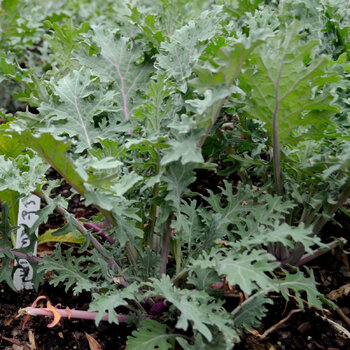
Kale- Red Winter
An improved selection of the popular Red Russian Kale. The dark green frilled leaves have purple-red veins and are more tender, and sweeter, than some other kale varieties. Use young leaves in salads. Mature leaves have a sweet flavour.
Sow direct or raise seedlings, 10mm. Germination 3-7 days @ 8-30°C.Biennial (usually grown as an annual). Rows 50cm, Height 75cm, Spacing 50cm. 55-65 days.
Best months in Arid Climates: MAR APR MAY JUN JUL AUG (Click for full sowing chart, grow guide and more)
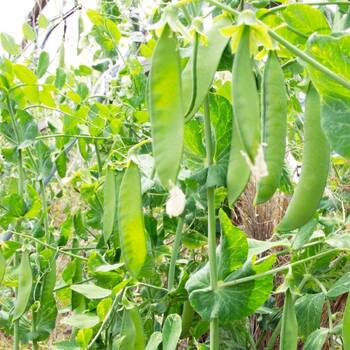
Snow Pea- Oregon Sugar Pod
Dwarf plants to 90cm producing flat, light green, edible pods growing to 10cm. Sweet, juicy and crunchy. Resistant to powdery mildew. Heavy cropping. Can be eaten raw or cooked; excellent in salads and stir-fries.
Sow direct, 20mm. Germination 7-21 days @ 5-25°C.Annual. Rows 50cm, Height 90cm, Spacing 10cm. 65 days.
Best months in Arid Climates: MAR APR MAY JUN JUL (Click for full sowing chart, grow guide and more)
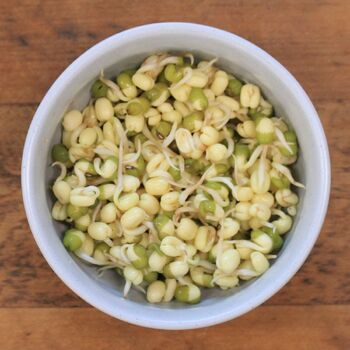
Sprouting Seeds- Mung Bean 50g
Mung bean seeds can be sprouted indoors at any time of year. Grow sprouts in a position away from direct sunlight. Growing the sprouts in the dark will produce sweeter shoots than growing them in a brightly lit position.
1) Place seed in a sieve and wash to remove any dust and damaged or discoloured seeds. (2) Add seed to a large flat-sided jar and cover with lukewarm water. A 500ml jar needs around 15ml of seed. (3) Cover jar with cheesecloth and secure with a rubber band. (4) Let soak for 12hrs then tip the jar upside down and let excess water drain through the cheesecloth. Rinse and drain again. (5) Place jar on its side in a dark warm location. (6) Rinse and drain the seeds every 8-12 hours until the shoots are approx. 3.5-5cm long. (7) Your sprouts are now ready to eat
Tips for gardening in winter:
Weeding and tidying: Rain helps weed seeds germinate and it is easier to remove them when the soil is damp. Be sure to remove weeds before they get a chance to mature and set seed, and ensure you get the weeds out roots and all. Hand tools are useful for small areas and hoes or tillers make the job go faster in larger gardens. Rake up fallen leaves so they don’t form a compact layer which can stop water reaching the soil. Add these extra leaves to your compost heap. Clear out any dead or diseased plants and to prevent the spread of disease, place this plant material in the bin rather than the compost bin.
Pruning: Check your tools. Cleaning and sharpening your secateurs and pruning saws makes the job much easier, and a clean cut means there is less chance for disease to enter ragged wounds. It is easier to prune deciduous trees and shrubs in winter because you can see the structure of the plant more clearly. Remove any dead wood, and take out crossing branches or stems that might rub against each other.
Watering: You may not need to water your plants as frequently in winter, but make sure your plants are still getting enough. If required, give them a deep soak once a week early in the day so that excess moisture can evaporate before nightfall and avoid the risk of fungal diseases.
Plot and plan: Use some of the down time in winter to review your garden and think about what you’d like to plant in the coming seasons. If you’re growing annuals, do you want to plant the same again, or try some new varieties or colour schemes? If you’re growing veggies, remember that crop rotation is a good idea to break the cycle or build-up of any pests and diseases that may be in the soil. This has the added benefit of reducing, or even eliminating, the need to spray with chemicals.
Pests and diseases to look out for in winter:
Slugs and snails: These pests can damage a wide range of plants, especially flower and vegetable seedlings. They are most active in the cooler wetter months, or when thunderstorms activate them in summer, and come out at night to feed. Controlling weeds and removing places that can harbour slugs and snails can be an effective way to control and reduce the number of these pests. If you choose to use bait, it is best applied in Autumn before snails get a chance to lay eggs. Most baits can be toxic to pets and other wildlife, so use any bait with caution.
Fungal diseases: A range of fungal diseases can occur in winter. You can prevent these from taking hold by practising good hygiene. Pick up any fallen and rotting fruit and put it into the rubbish, as it can cause disease which carries over into the following year’s crop.
Product code: SS_VEG_ARID_WIN_2026
Contains
-
1 x Parsley- Triple Curled (Petroselinum crispum)
Biennial often grown as an annual. Upright plant with curled dark green leaves. Very decorative variety; often used as a garnish. Milder in flavour than Italian Parsley. Fast growing. Can be used fresh or dried, raw or cooked. Can be grown in containers.
Life Cycle: Hardy Biennial (usually grown as an annual)
Plant Height:
Position: Part or full sun, moist well drained soil -
1 x Beetroot- Detroit (Beta vulgaris)
Very popular variety for growing roots, baby leaves and microgreens. Dark red, globe shaped roots growing up to 7cm; very good flavour. Green tops with tinges of dark red. Resistant to downy mildew.
Life Cycle: Hardy Biennial (usually grown as an annual)
Plant Height:
Position: Full sun, moist well drained soil -
1 x Kohlrabi- Purple Vienna (Brassica oleracea var. gongylodes)
Purple skin with crisp white flesh; tender and sweet. Excellent flavour; can be eaten raw or cooked. Good in salads, soups and stews.
Life Cycle: Hardy Biennial (usually grown as an annual)
Plant Height:
Position: Full or part sun, moist soil -
1 x Bunching Onion- Red Beard (Allium fistulosum)
Attractive red stems with green tops. Tender with mild flavour. Good both raw and cooked. Hardy variety; good for winter. Bunching onions are also known as "Welsh onions", often used as "spring onions" and sometimes incorrectly called "Shallots".
Life Cycle: Hardy Perennial (usually grown as an annual)
Plant Height:
Position: Full sun, well drained soil -
1 x Spinach- Winter Giant (Spinacia oleracea)
A leafy green variety of English spinach that's frost hardy and suited to growing through autumn, winter and early spring. Annual plants are fast growing and produce large, dark green, slightly crinkled leaves. Suitable for baby leaf production. Can be eaten raw or cooked. Mature leaves have a bold spinach flavour and are best cooked as a leaf vegetable. Spinach is best suited to cooler climates.
Life Cycle: Hardy Annual
Plant Height:
Position: Part or full sun, moist soil -
1 x Radish- Raphael F1 (Raphanus sativus)
Round cherry-sized radish with deep rich-red skin and white interior. These uniform sized radishes are ideal for salads and garnishes. Less prone to becoming pithy but as with all radishes, and for best results, will benefit from regular watering in hot weather. Fast growing.
Life Cycle: Hardy Annual
Plant Height:
Position: Full sun, well drained soil -
1 x Mustard- Osaka Purple (Brassica juncea var. purpurascens)
Annual leaf vegetable. Broad, deeply lobed, thick purple leaves with a slightly ruffled texture. Upright rosette growth habit. Pungent, peppery mustard flavour. Good for baby leaf and use as a salad green or can be cooked. Vigorous, hardy and quick to grow. Colour intensifies in cool.
Life Cycle: Hardy Annual
Plant Height: 30cm
Position: Part or full sun, moist soil -
1 x Kale- Red Winter (Brassica oleracea)
An improved selection of the popular Red Russian Kale. The dark green frilled leaves have purple-red veins and are more tender, and sweeter, than some other kale varieties. Use young leaves in salads. Mature leaves have a sweet flavour and can steamed or cooked in stir fries, stews and baked dishes, or used to make kale chips. Grow in the full sun, in soil rich in organic matter, and pick leaves as required or allow to mature into full-sixed plants and harvest whole heads.
Life Cycle: Hardy Biennial (usually grown as an annual)
Plant Height: 75cm
Position: Part or full sun, moist well-drained soil -
1 x Snow Pea- Oregon Sugar Pod (Pisum sativum)
Dwarf plants to 90cm producing flat, light green, edible pods growing to 10cm. Sweet, juicy and crunchy. Resistant to powdery mildew. Heavy cropping. Can be eaten raw or cooked; excellent in salads and stir-fries.
Life Cycle: Hardy Annual
Plant Height: 90cm
Position: Full sun, moist well drained soil -
1 x Sprouting Seeds- Mung Bean 50g (Vigna radiata)
Mung bean seeds can be sprouted indoors at any time of year. Grow sprouts in a position away from direct sunlight. Growing the sprouts in the dark will produce sweeter shoots than growing them in a brightly lit position.
1) Place seed in a sieve and wash to remove any dust and damaged or discoloured seeds. (2) Add seed to a large flat-sided jar and cover with lukewarm water. A 500ml jar needs around 15ml of seed. (3) Cover jar with cheesecloth and secure with a rubber band. (4) Let soak for 12hrs then tip the jar upside down and let excess water drain through the cheesecloth. Rinse and drain again. (5) Place jar on its side in a dark warm location. (6) Rinse and drain the seeds every 8-12 hours until the shoots are approx. 3.5-5cm long. (7) Your sprouts are now ready to eat
Life Cycle:
Plant Height:
Position:
.png)
Shipping
We deliver Australia wide.
All orders are dispatched from our warehouse in Knoxfield, Victoria, Australia.
We do not deliver overseas.
Shipping cost is calculated using all the items in your shopping cart and your delivery postcode. The table below outlines the delivery options and costs.
Order dispatch time is currently 2 business days plus delivery time.
Please note we are unable to guarantee specific delivery dates or delivery timeframes, all delivery times are estimates only.
| Order contains: | Delivery options: | Delivery cost per order | |
|---|---|---|---|
| VIC, NSW, ACT, QLD, TAS, SA, NT | WA | ||
| Small seed packets ONLY - | Economy Delivery | $3.00 or FREE on orders over $25 | $5 |
| Parcel Delivery | Capped rate of $8.99 | ||
| Express Delivery | $15.00 | ||
|
BULK seed, garden supplies, tools, or accessories - |
Parcel Delivery |
Capped rate of $8.99 |
|
|
Express Delivery |
Starting from $15.00 (Calculated by weight) |
||
| Live Plants - | Live plants | Capped rate of $10.00 | |
*All orders sent to Western Australia are subject to mandatory inspection and fees by Quarantine WA. These fees are included in all shipping costs above.
**We will replace all orders that are lost or damaged in transit however we will not replace or refund orders simply because they were delivered later than estimated. Full details here.
Ratings & Reviews
Be The First To Review This Product!
Help other The Seed Collection Pty Ltd users shop smarter by writing reviews for products you have purchased.